
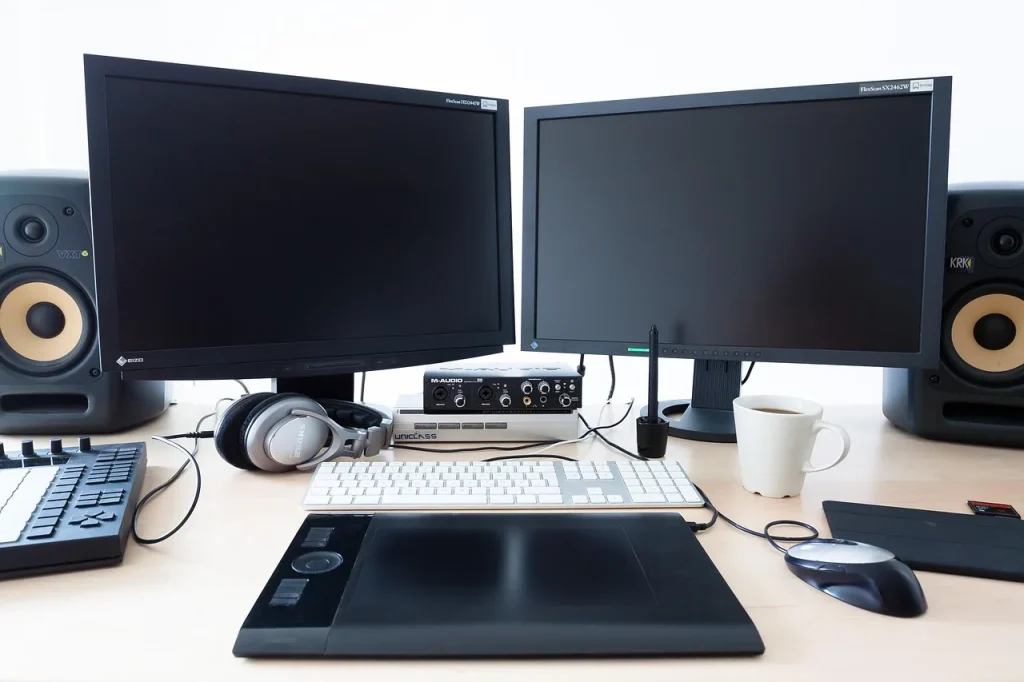
Our promise: to help you choose the best headphones for home use, improving your playing experience and comfort without disturbing those around you.
Digital pianos have a dedicated headphone jack. This makes using headphones at home simple.
Key advantage: playing quietly keeps the peace for those around you and can deliver more precise sound than speakers in a room with average acoustics.
This section is a product comparison. We compare models at different price points, focusing on value for money at home.
The right pair is an investment: you can also use it with a computer or hi-fi system. We favor accurate sound and a wide frequency response over features that artificially boost the bass.
Our selection covers isolation, comfort and neutrality, with practical reasons for each choice based on the needs of pianists at home.
Why play a digital piano with headphones at home?
Headphones turn late-night practice into a productive session without disturbing anyone. They let you play at flexible times while keeping the peace for those around you.
Quiet for others and freedom to practice whenever you like
The first advantage is clear: you can play even at night. Practice becomes possible in an apartment without disturbing the neighbors.
Immersion and better perceived sound quality
Good headphones often provide a more precise soundstage and a fuller sound than small speakers. Resonance, subtle changes in dynamics and the ends of notes become easier to hear.
“At a sensible volume, you hear more detail while protecting your hearing.”
- Isolation: closed-back means less background noise; open-back means more airflow and greater awareness of household sounds.
- Comfort: important for long sessions, along with breaks and a moderate volume.
- Psychological effect: without an audience watching, you may play more freely and concentrate more easily.
Which headphones should you choose for a digital piano at home?
Your choice of headphones affects how you hear the piano’s tonal balance and dynamics.
What buyers need: pianists seek a balance of comfort during long sessions, accurate sound and good value for money.
Sound profile: choose a neutral sound without artificially boosted bass. It preserves the instrument’s natural balance.
The frequency range should cover deep bass through high harmonics. Studio headphones are often recommended for their neutral sound.
- Comfort: soft ear pads, moderate weight and an adjustable headband.
- Compatibility: a cable long enough for your setup and a 6.35 mm adapter if needed.
- Budget: satisfactory options start at around €50; many good models cost about €100.
“For home use, choose accurate sound over excessively boosted bass.”
Essential criteria for choosing piano headphones
Good headphones change how you hear the nuances of your instrument.
Neutral sound and accurate reproduction
Choose a neutral sound: exaggerated bass masks harmonics. That makes it harder to hear textures and judge your technique accurately.
Frequency response
Look for a wide frequency response (for example, 5 Hz to 35 kHz on some models) to reproduce deep bass and sparkling highs.
Impedance and power
An impedance of around 48 to 80 Ω offers a reasonable balance when the piano is powered from the mains.
Very high-impedance models may need a headphone amplifier if the piano’s output is weak.
Comfort and ear pads
Check the weight, headband pressure and ear pad material (velour or faux leather).
AKG is often praised for comfort, even by people who wear glasses. Heat and pressure can increase fatigue during long sessions.
Isolation and sound leakage
In an apartment, a closed-back model reduces sound leakage and surrounding noise. Open-back models allow more airflow but let more sound escape.
- Quality > marketing: price is not everything, but better materials can improve durability and sound consistency.
Closed-back or open-back headphones: which should you choose for home use?
Isolation, soundstage and comfort: each design offers useful trade-offs for pianists. Your choice depends on your daily routine and the sound you prefer.
Closed-back: stronger isolation and controlled bass
Closed-back headphones contain the sound and limit leakage. They are a popular choice in apartments and busy households.
The bass can sound more controlled and precise, a real advantage when judging the piano’s lower register.
On the other hand, the enclosed design can trap heat and moisture. Take breaks during long sessions.
Open-back: an airy soundstage, natural sound and comfort over longer sessions
An open-back model offers a more spacious presentation and sound quality that may seem more natural. It supports expressive playing and clear perception of harmonics.
This type lets sound in and out, making it useful if you need to remain aware of children or other household sounds.
It also lets sound escape into the room and may disturb neighbors at night.
Semi-open: a compromise worth considering for some pianists
A semi-open model balances airflow with moderate isolation. It suits musicians seeking comfort over long sessions while keeping some control over noise.
Whichever design you choose, the quality of its materials and construction strongly affects bass perception and comfort.
“Match the design to the experience you want: an isolated, immersive sound or a natural, airy one.”

Headphone fit: in-ear, on-ear or over-ear
Whether headphones sit inside, on or around the ears determines their isolation, stability and sound. This choice affects comfort and how you hear harmonics while practicing.
Three styles and their uses
- In-ear: light, discreet and easy to carry. Ideal for travel, but less suitable for long sessions and sometimes less neutral, depending on the tips.
- On-ear: compact headphones that rest on the ears. They can work for short listening sessions, but may press directly on the ears and cause fatigue.
- Over-ear: surrounds the ears completely. It often offers the best balance for playing at home.
Why choose over-ear headphones?
Over-ear headphones spread pressure between the headband and ear pads. This makes them more comfortable during long practice sessions.
The space inside the ear cups helps stabilize the tonal response. Nuances may be easier to hear, and sound quality is often better.
Passive isolation is generally better, too. It helps you focus without raising the volume.
Test the fit: check the pads, ear cup depth and headband adjustment. If you wear glasses, check the pressure where the arms rest against your head.
Connections and compatibility: plugging headphones into your piano
To connect your headphones, first find the socket marked PHONE or OUTPUT on your instrument. These outputs are designed for listening and provide the best sound reproduction.
Most headphones use a 3.5 mm plug, while keyboards often have a 6.35 mm jack. You may therefore need a 3.5 mm-to-6.35 mm adapter. One is sometimes included; otherwise, expect to pay €7 to €10.
Check where the sockets are located: a front socket is easy to reach. For one at the back, leave some slack in the cable to avoid strain and intermittent connections.
- Where to connect: the PHONE or OUTPUT socket; avoid MIDI and pedal sockets.
- Cable: choose a length that suits your furniture and playing position, avoiding tangles and rubbing.
- Tip: a coiled cable or good-quality extension gives you more freedom to move.
Practical advice: choose a sturdy adapter and route the cable securely to prevent snags and preserve sound quality.
| Item | Recommendation | Effect |
|---|---|---|
| Socket used | PHONE or OUTPUT (at the front if possible) | Easy access and less strain on the cable |
| Adapter | Sturdy 3.5 mm-to-6.35 mm adapter | Fewer intermittent connections and longer life |
| Cable length | Suited to your furniture, or use a coiled cable | Less pulling and mechanical noise |
| Cable routing | Secure the cable along the furniture | Prevents snags and interruptions |
Wired or wireless: the truth about latency at home
Wireless listening may be appealing, but it often creates a noticeable delay between playing a note and hearing it.
Why Bluetooth is discouraged for real-time playing
Latency: Bluetooth requires audio processing and buffering. Even a seemingly short delay interferes with rhythmic accuracy and timing. Beginners and experienced performers alike quickly notice the lag.
Other effects: wireless transmission can suffer from household interference and compression that affect sound quality. In practice, the perceived response and power become less faithful.
- Most instruments do not have a dedicated Bluetooth audio output.
- Adapters exist, but they add latency and complexity.
- Even premium wireless headphones may have a noticeable delay.
“For real-time practice and recording, choose a stable, immediate wired connection.”
Recommendation: use wired headphones by default. They provide accurate reproduction and an immediate response, both essential for effective practice. Save wireless listening for leisure or situations that do not require precise synchronization.
Our selection of the best headphones for digital piano
This short selection ranges from budget models to studio headphones favored by professionals. It focuses on neutrality, comfort and isolation for home use.

Beyerdynamic DT 770 PRO 80 Ω
A closed-back studio standard: excellent isolation, velour ear pads, 5 to 35,000 Hz, 284 g. Ideal if you use a mains-powered instrument and want highly accurate sound.
Sony MDR-7506
Durable and light (230 g), closed-back, with a 10 to 20,000 Hz range and a clear sound. Excellent value for working on nuances with a pair of headphones built to last.
AKG K240 MKII
Semi-open, 15 to 25,000 Hz, 226 g. Its airy sound and comfort make it a good compromise if you want some openness without excessive sound leakage.
Yamaha HPH-150
Open-back and light (163 g), 20 to 20,000 Hz. Its neutral sound and natural soundstage suit quiet rooms and pianists who prefer a less enclosed listening experience.
the t.bone HD 815
A budget closed-back model, 10 to 35,000 Hz, 304 g. Clean sound and reasonable isolation make it a sensible starting choice.
At a glance: closed-back = isolation; open-back = airflow; semi-open = compromise. Check the impedance and cable length, then connect your headphones with the appropriate adapter.
| Model | Type | Impedance / frequency | Weight |
|---|---|---|---|
| Beyerdynamic DT 770 PRO 80 Ω | Closed-back | 80 Ω / 5 to 35,000 Hz | 284 g |
| Sony MDR-7506 | Closed-back | 63 Ω / 10 to 20,000 Hz | 230 g |
| AKG K240 MKII | Semi-open | 55 Ω / 15 to 25,000 Hz | 226 g |
| Yamaha HPH-150 | Open-back | 48 Ω / 20 to 20,000 Hz | 163 g |
| the t.bone HD 815 | Closed-back | 32 Ω / 10 to 35,000 Hz | 304 g |
How much to spend: from affordable to premium
Setting a budget helps you choose between headphones for occasional use and a dependable practice tool.
Practical price points: reasonable quality starts at about €50. Around €100, quality and comfort improve noticeably.
What you are really paying for includes the materials, hinge strength, cable length and quality, and the ability to replace the ear pads. These features improve product life and keep its sound more consistent.
The mid-range offers the best balance for home use. It provides strong value without excessive spending.
Premium headphones are useful if you want a wider soundstage or higher-quality finish. They are not essential for everyone.
A tip for assessing long-term cost: calculate the cost per year of use. A better-built model is often more economical in the long run.
| Price range | Recommended use | What you pay for |
|---|---|---|
| About €50 | Occasional use, beginners | Basic function and materials |
| About €100 | Regular use, good sound | Comfort, better sound response, durability |
| €200 and above | Demanding pianists and professionals playing at home | Finish, soundstage, replaceable parts |
“Aim for the best value for your actual needs without paying for features you will not use.”
Comfort, weight and materials: play longer without fatigue
Manageable weight and a well-designed headband make a difference during a long session. A lightweight model reduces pressure on the top of your head and limits neck strain.
Ear pad materials affect how the headphones feel against your ears. Velour, as used on some Beyerdynamic models, stays cool and feels soft. Faux leather can last longer but gets warmer.
AKG is often praised for comfort, including by pianists who wear glasses. Deep ear cups and flexible glasses arms can improve the fit without pinching.
Practical advice: take regular breaks, especially with a closed-back model that traps heat. This helps you play longer and maintain attentive listening.
- Moderate weight + a headband that distributes pressure = less fatigue
- Velour = more airflow; faux leather = longer life
- Check whether replacement ear pads and cables are available
A good fit keeps the acoustic seal and sound response consistent. It improves accuracy while you play and lets you practice for longer.

| Item | Effect | Advice |
|---|---|---|
| Weight | Less pressure, more practice time | Choose a lightweight or well-balanced model |
| Ear pads | Heat, softness and durability | Velour for comfort, faux leather for easier care |
| Fit with glasses | Fewer pressure points | Test with flexible glasses arms and deep ear cups |
Common buying mistakes to avoid
Buying without trying can lead to unpleasant surprises in sound and comfort. If possible, listen to different models in conditions close to how you will use them.
Choosing an “extra-bass” model at the expense of accuracy
An “extra-bass” sound can impress during a demonstration. Be careful: it masks harmonics and changes how note attacks are reproduced. When playing an instrument, this makes textures and details harder to judge.
Overlooking impedance and plug compatibility
Check the impedance to avoid low volume or distortion. An unsuitable impedance may require an amplifier and affect the sound you hear.
Check the connector, too: a good 3.5 mm-to-6.35 mm adapter helps prevent intermittent connections. Cheap cables can cause dropouts and crackling.
- Do not judge by price alone: comfort and durability also matter to overall value.
- Be wary of bundled headphones supplied with some keyboards: they are often uncomfortable and inaccurate.
- Ignore marketing claims about features you do not need for playing. Look for reviews that address this specific use.
- Match your choice to how you actually practice: open or closed design, cable length and comfort should suit your routine.
Brands and models favored by pianists
Some brands are popular with musicians for their neutral sound and durability.
Beyerdynamic and Sony are often praised for accurate sound and comfort. Their studio models offer an even response useful for practice.
Yamaha and Audio-Technica offer balanced ranges with spare parts that are easy to find. This makes replacing ear pads and maintaining the headphones easier.
Sennheiser remains a reference for consistent sound across its models. Professionals appreciate the stable tonal character when using different digital pianos.
- Choose studio or professional ranges over “extra-bass” series.
- Check the availability of after-sales service and replacement parts (ear pads and cables).
- Compare models in the same range by their open or closed design and the comfort you need.
“A brand that supplies parts and after-sales service helps your investment last.”
At-home situations: apartments, families and children
In an apartment, headphones are often the most practical way to study without disturbing others. They let you play early or late without bothering the neighbors.
Apartment: sound leakage is the main concern. A closed-back model limits escaping sound and reduces the chance of complaints. It can also make the lower registers’ response easier to hear.
Open-back to stay aware; closed-back to shut out noise
Family setting: if you are watching children, open-back headphones let ambient sounds through so you can hear a call or an unusual noise.
Conversely, a closed-back model blocks more street noise and sounds from screens. It is a good choice for sessions that demand concentration or in a poorly insulated apartment.
Bear in mind that some piano mechanisms produce audible key noise even when you listen through headphones. Set the volume to balance clear listening with hearing protection.
- Tip: choose a cable long enough to sit comfortably without pulling on it.
- Benefits of open-back models: awareness of family members and comfort from greater airflow.
- Benefits of closed-back models: better isolation and less sound leakage to others.
| Situation | Recommendation | Why |
|---|---|---|
| Apartment | Closed-back model | Limits sound leakage and conflict with neighbors |
| Home with children | Open-back or semi-open | Lets you hear others and keep an ear on the children |
| Street noise or another noisy setting | Closed-back at a moderate volume | Isolation and more precise listening |
“Adapt your headphones to daily life: the balance between awareness and isolation should guide your choice.”
Improve your experience: settings, volume and hearing protection
Good sound settings protect your hearing and help you play accurately. Set the volume to preserve clarity and dynamics without tiring your ears.

Take regular breaks: 5 to 10 minutes every 45 minutes helps reduce hearing and muscle fatigue. Rest also helps you remember the music.
Choose a wired connection to reduce latency and keep the instrument’s rhythmic response consistent. It makes note attacks easier to synchronize and the tempo easier to control.
Explore your keyboard’s internal settings (equalization and reverb). Adjusting reverb or reducing certain frequencies can improve headphone sound and prevent sounds from masking one another.
Sit upright and choose comfortable equipment. A lightweight, well-fitting model reduces neck strain and improves your comfort while practicing.
| Advice | Action | Effect |
|---|---|---|
| Volume | Moderate, with clear sound | Less fatigue, better dynamics |
| Breaks | 5 to 10 minutes every 45 minutes | Hearing and physical recovery |
| Connection | Wired | Minimal latency, better articulation |
| Attentive listening | Check pedal use and intonation | Focused progress and better musicianship |
“Practice attentively and listen more closely: protecting your hearing is part of musicianship.”
Care and durability: get the most from your headphones
A few simple habits are enough to keep your equipment in good condition and preserve its sound.
Regular cleaning. Wipe the ear pads and headband after each session to remove sweat and dust. This protects the materials and keeps the pads hygienic.
Proper storage. Put your headphones on a dedicated stand. Avoid winding the cable tightly: twists can eventually cause intermittent connections.
Replaceable parts. Replace worn ear pads to restore the original seal and comfort. On some models, including Beyerdynamic headphones with velour pads, they are easy to change.
- Cable: if the model allows it, replace a damaged cable before it harms the connections.
- Plug and adapter: check them periodically to prevent crackling and loss of sound quality.
- Minor knocks: protect the headphones in a hard case when traveling.
In short: occasional cleaning and simple checks extend the life of good headphones. Regular care keeps the sound consistent and avoids unnecessary replacement.
Simple care helps maintain a consistent response and a longer useful life.
Conclusion
Playing with headphones gives you more freedom to practice and enriches your listening experience at home. The main benefits are straightforward: flexible hours, consideration for others and immersion that reveals more sonic detail.
To make the right choice, prioritize a neutral sound, a wide frequency range, comfort and isolation suited to your setting. An accurate response and good compatibility remain essential.
Wired headphones remain the recommended choice to avoid latency and preserve sound quality. Review the selection according to your budget and intended use.
Set your priorities, try models if possible and choose the pair that helps you get the most from your digital piano each day.