
2025 guide to finding the best instrument for your level, needs and budget.
Yamaha is the world’s largest musical instrument brand, active since 1887 and known for its value for money. This guide covers the P Series, Arius, Clavinova (CLP, CSP, CVP) and hybrid models.
We introduce current 88-key models and group them by player: beginner, intermediate, advanced, stage performer and home player. The key criteria are keyboard feel, sound quality, connectivity, portability and cabinet design.
The P Series prioritizes mobility, Arius offers a solid cabinet piano for learning, and Clavinova sets a high-end standard close to an acoustic piano. French price benchmarks and quick model summaries explain the benefits for playing and learning.
Our aim: to help you make an informed choice, from practicing with headphones to performing onstage, through performance comparisons and practical criteria at the end of the guide.
Introduction to the 2025 guide: Yamaha 88-key digital pianos for every level
This 2025 guide compares the Yamaha range for musicians taking their first steps through to stage performance. It covers Clavinova (800 Series), Arius, the P Series, Portable Grand and the Silent, TransAcoustic, AvantGrand and Disklavier hybrids.
The approach is simple: a summary of performance, features and design. We assess keyboard feel, sound quality, connectivity and learning tools such as Smart Pianist to improve the playing experience.
Key points:
- P Series: portability and durability for the stage.
- Arius: an accessible cabinet piano for learning at home.
- Clavinova (CLP/CSP/CVP): an experience close to an acoustic piano.
- Arranger models (DGX-670, CVP): built-in styles and accompaniment.
We also offer recommendations by budget and feature comparisons. We consider portability, size and support options for home use. See the quick picks by player profile to find the best balance between features and intended use.
Quick picks for your needs and budget
For a straightforward answer, here are clear recommendations by player profile. They make it easier to choose according to use, portability and budget.
Beginner on a tight budget
YDP‑145: a very popular cabinet model with a stable three-pedal unit and Smart Pianist compatibility. Excellent value for a first instrument, often priced below €1,000.
P‑145: a portable option with a GHC keyboard and CFIIIS sound. Its light weight and USB audio/MIDI connection make it ideal for small spaces and travel.
Versatile intermediate player
P‑225: a clear step up in sound, with the CFX engine, VRM Lite, 192-note polyphony and Bluetooth Audio. Ideal for nuanced playing and modern practice.
YDP‑165: GH3 action and synthetic ivory keytops provide a more expressive feel. Recommended for dedicated students who want to progress.
Premium portable and cabinet models
P‑525: a benchmark portable model with CFX and full VRM modeling. Premium power and expressiveness for the stage.
CLP‑845 / CLP‑875: cabinet models for a discerning home player, with wooden GrandTouch‑S or GranTouch action and three-way amplification for an experience close to an acoustic piano.
- Practical tip: match your choice to your setting (apartment or stage) and how often you travel.
- Compare connections (USB audio/MIDI, Bluetooth) and app support for smoother everyday use.
Yamaha P Series: portable digital pianos with quality and mobility
The P Series is for musicians who want a lightweight, capable instrument. Its design makes transport easier without sacrificing sound quality or keyboard feel.
P‑145 — compact and practical
The P‑145 has an 88-key GHC keyboard and the CFIIIS piano sound. It offers 64-note polyphony, four reverb types and Sound Boost.
With USB audio/MIDI, two 7 W speakers and a weight of 11.1 kg, it is well suited to beginners and provides access to 303 lessons through Smart Pianist.
P‑225 — a step up
It upgrades to the CFX engine and VRM Lite, with 192-note polyphony and 24 voices. Dual, Split and Duo modes, along with Bluetooth Audio, let you play along with your favorite tracks.
IAC, Wall EQ and Stereophonic Optimizer improve the sound through headphones and in the room.
P‑525 and P‑S500 — performance and learning
The P‑525 combines CFX, full VRM and a premium action for performance close to that of a professional instrument.
The P‑S500 adds illuminated keys and extensive Smart Pianist integration for interactive learning.
| Model | Weight | Polyphony | Key features |
|---|---|---|---|
| P‑145 | 11.1 kg | 64 | GHC, CFIIIS, USB audio/MIDI, 303 lessons |
| P‑225 | 11.5 kg | 192 | CFX, VRM Lite, Bluetooth, sound enhancements |
| P‑525 | Portable model | 256 (depending on configuration) | GrandTouch‑S, full VRM, high performance |
| P‑S500 | Portable | Standard | Illuminated keys, advanced Smart Pianist integration |
- Size and connections: compare weight and outputs for transport and amplification.
- Upgrade path: P‑145 for the essentials, P‑225 for greater expression, P‑525 for the stage.
Yamaha Portable Grand DGX-670: an all-in-one arranger piano
The DGX‑670 combines arranger features with the feel of a keyboard instrument in a format designed for practice and performance. It brings together an expressive keyboard, sound libraries and accompaniment styles to enrich every session.
Interactive features, accompaniment and audio
This instrument offers varied rhythms, automatic accompaniment styles and a built-in recorder for saving your ideas. Audio playback lets you play along with tracks, which is useful for practice or composition.
The interface remains intuitive: simple navigation, app compatibility and USB/audio connections for a recording device or sound system.
Complete setup: stand and pedals for the full experience
A package with a dedicated stand and three-pedal unit turns the DGX‑670 into a stable, engaging instrument at home. The stand improves its appearance and playing position. The three-pedal unit provides the control needed for classical repertoire.
- Versatility: play solo, accompany yourself or provide music for an event.
- Creativity: styles and sound libraries cover many musical genres.
- Practicality: check the audio and USB connections to integrate the model into your setup.
Clavinova CLP 800 Series: grand piano realism in a digital instrument
The CLP 800 Series reimagines grand piano realism in a cabinet designed for the home. Launched in June 2024 to replace the 700 Series, it brings together premium feel, sound and finish.
CLP‑825 / CLP‑835 / CLP‑845
The CLP‑825 offers CFX and Bösendorfer Imperial sounds, a GrandTouch keyboard and Bluetooth at an attractive price within the series.
The CLP‑835 adds binaural sampling for more immersive headphone sound and useful accompaniment features.
The CLP‑845 moves upmarket with its wooden GrandTouch‑S keyboard and improved sound projection, giving it a feel closer to an acoustic piano.
CLP‑875 / CLP‑885 and grand-style models
The CLP‑875 uses GranTouch action and three-way amplification for an experience worthy of a small concert room.
The CLP‑885 is aimed at demanding pianists, with counterweights, exceptional amplification and a premium finish.
For grand piano styling, the CLP‑865GP and CLP‑895GP offer greater projection and presence.
- Why these sounds: CFX and Bösendorfer offer different tonal colors for classical or modern repertoire.
- Tip: choose according to your preference for keyboard feel, your budget and the room’s acoustics.
- More information: see the CLP 800 Series for comparisons and specifications.
Clavinova CSP: guided learning, illuminated keys and Smart Pianist
The CSP Series combines teaching tools with performance. It uses illuminated guidance and the Smart Pianist app to make learning more visual and interactive.
The idea: these instruments help beginners and self-taught musicians progress before they can read sheet music fluently. The system helps structure practice and track progress.
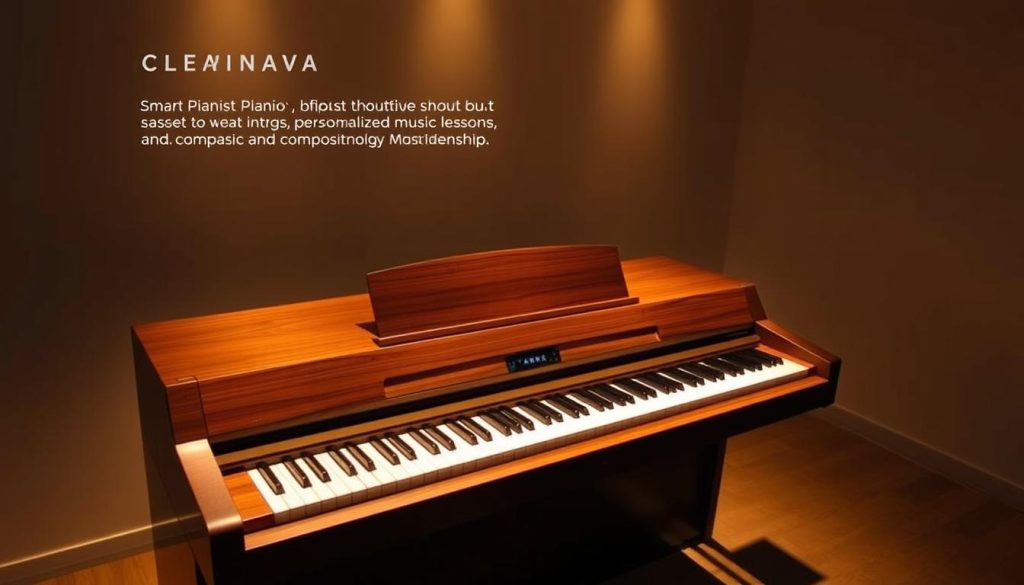
CSP‑255 / CSP‑275
The CSP‑255 offers CFX and Bösendorfer Imperial sounds and a GranTouch S keyboard. Its Smart Assist feature supports practice exercises.
The CSP‑275 adds two-way sound projection and wooden keys for a feel closer to an acoustic instrument.
CSP‑295 / CSP‑295GP
The CSP‑295 has an upright-style cabinet and a counterweighted wooden keyboard for refined response.
The CSP‑295GP builds on that foundation with grand piano-inspired styling and sound projection for a more immersive experience.
- Recommended for: self-taught players, families and schools seeking visual guidance and app-based tools.
- Strengths: a balance of teaching features and sound quality, with room to grow as the player progresses.
| Model | Main sounds | Keyboard | Key benefit |
|---|---|---|---|
| CSP‑255 | CFX and Imperial | GranTouch S | Illuminated guidance, Smart Assist |
| CSP‑275 | CFX and Imperial | Wooden keys | Two-way projection, improved feel |
| CSP‑295 | CFX and Imperial | Wood and counterweights | Upright styling, presence in the home |
| CSP‑295GP | CFX and Imperial | Wood and counterweights | Grand piano styling, immersive projection |
Try the illuminated guide and check how easy the lessons are to follow at home. For more resources on learning and practice, read this practical article.
Clavinova CVP: premium arranger digital pianos
The CVP Series includes instruments that serve as arrangers for home and stage. They combine a highly expressive keyboard with professional accompaniment libraries.
CVP‑701 / CVP‑905: realistic feel and varied styles
The CVP‑701 is an entry point to the range. It includes GH3X action, illuminated guidance and extensive style libraries. Its price is around €2,898.
The CVP‑905 moves upmarket with a feel close to a grand piano and an expanded sound palette. It offers more voices and accompaniment options for varied uses.
CVP‑909 / CVP‑909GP: immersive projection and grand piano styling
The CVP‑909 has a design between an upright cabinet and a grand piano silhouette. Its enhanced projection creates a wider soundstage.
The CVP‑909GP adopts grand piano styling and three-dimensional sound projection. It is for musicians seeking the strongest presence and immersion in the range.
- Uses: solo playing with accompaniment, musical entertainment, singing, and family or school performances.
- Added value: explore styles and orchestration without external equipment.
- Tip: try one in a store to assess the keyboard dynamics and accompaniment modes.
Yamaha Arius YDP: compact cabinet pianos for learning
Arius is an entry point to compact cabinet pianos designed for learning and daily practice. These models balance sound quality, keyboard feel and thoughtful design.
YDP‑145: a popular, practical model
The YDP‑145 is very popular in France. It combines a stable cabinet, a three-pedal unit and Smart Pianist compatibility. Its attractive price, often below €1,000, makes it a common choice for beginners.
YDP‑165: improved keyboard feel
The YDP‑165 takes a step up with GH3 action that improves note repetition and nuance. Synthetic ivory keytops give better grip for more expressive playing.
YDP‑S35 / YDP‑S55: slim designs
The S35 and S55 have slimmer profiles without sacrificing a full keyboard. The S55 offers a better finish and more sound options than the S35, making it ideal for small modern spaces.
The cabinet encourages good posture and stability, with an integrated stand that makes the instrument look at home in the room. Headphone outputs allow late-night playing, while USB makes connecting to Smart Pianist easy.
Compared with the P Series, Arius emphasizes a built-in cabinet and comfort at home, while the P Series favors portability. If you expect steady progress, choose the YDP‑145; for more demanding playing, the YDP‑165 is worth the investment.
Silent hybrid pianos: play acoustically or through headphones
Silent lets you switch from acoustic sound to headphone listening in one step. The technology retains the real action while adding a digital sound engine. It suits apartments and families.
SC3 systems
SC3 is fitted to entry-level and midrange uprights such as the B1, B2 and B3, as well as the GB1K grand. It provides ten built-in voices for silent playing.
SH3 systems
SH3 is fitted to higher-end instruments (U, P, YUS, SE, SU7). It offers 25 voices, including CFX and Bösendorfer Imperial samples, plus advanced DSP processing for improved sound quality through headphones.
- Benefit: switch instantly from acoustic sound to headphone listening.
- For practice: silent rehearsals, recording and USB/MIDI connections.
- Tip: check which systems are compatible with each model according to your needs and budget.
These solutions preserve the feel of an acoustic piano while offering the advantages of a digital one. To explore an entry-level upright equipped with Silent, see the B1 Silent page.
TransAcoustic: volume control and soundboard resonance
TransAcoustic turns the soundboard into a natural speaker. The technology projects digital sounds through the wood for gentle, controlled sound without external speakers.
TC3 is the module designed for the YUS, U, CX and GC series. It expands an acoustic instrument’s possibilities with built-in voices and precise volume control.
TA3 is the higher-end version. It offers richer immersion, more tonal options and greater versatility for practice and performance.
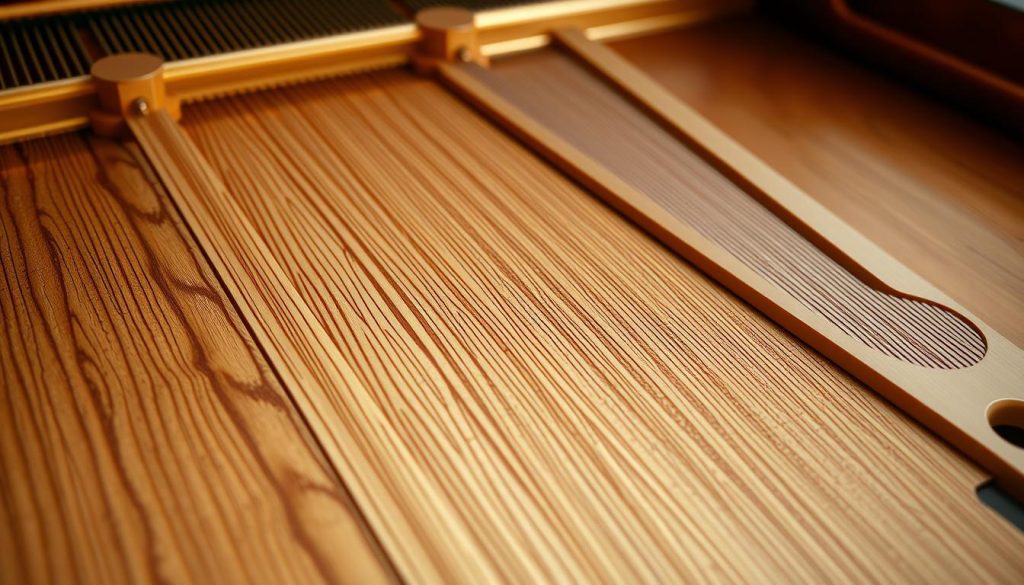
“TransAcoustic lets you keep the wood’s natural resonance while controlling the volume at home.”
The benefits are tangible: feel the cabinet vibrate even when using a digital sound engine, practice at low volume, layer acoustic and electronic sounds, or share the listening experience without headphones.
| Module | Compatibility | Key benefit |
|---|---|---|
| TC3 | YUS, U, CX, GC | Sound projected through the soundboard, volume control |
| TA3 | Higher-end series | Greater immersion, expanded sound options |
| Silent (comparison) | Many models | Headphone listening, silent practice |
- Recommended use: apartments and households that want room-filling sound without disturbing others.
- Practical tip: test the projection and evenness of the sound throughout the room in a store.
AvantGrand: acoustic action, digital sound
AvantGrand pairs a real piano action with a digital sound engine. The aim is to deliver the feel of an acoustic instrument with the flexibility of modern features.
NU1X / NU1XA — compact, connected uprights
The NU1X and NU1XA are compact upright-style pianos. They have authentic actions and offer Bluetooth and USB for modern practice.
N1X — grand piano action for faithful response
The N1X uses an action close to that of a grand piano. Its precise response allows fine control over dynamics and attack.
N2 / N3X — TRS and premium immersion
The N2 and N3X add the TRS system and CFX and Bösendorfer Imperial samples. Their sound and performance suit advanced pianists seeking immersion.
- Use: ideal for advanced study, silent rehearsal and recording without the maintenance demands of an acoustic piano.
- Strength: authentic feel combined with digital flexibility and Yamaha’s app ecosystem.
- Tip: try these models in a store to feel the difference from an acoustic instrument; consider available space and design, especially for grand piano actions.
Disklavier: high-resolution reproduction of piano performances
Disklavier turns an acoustic instrument into a high-fidelity system for recording and mechanically reproducing performances.
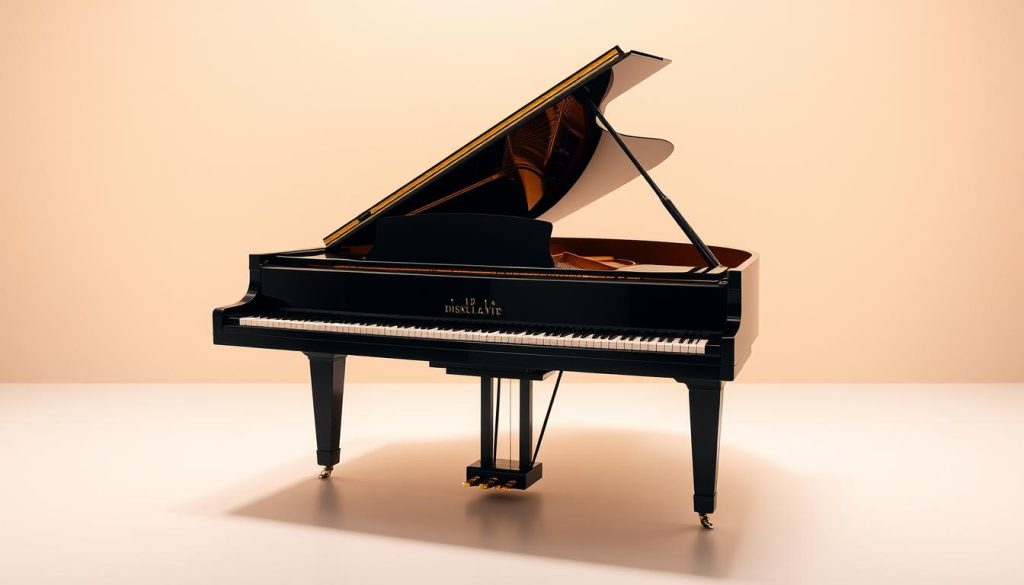
Definition: this is an acoustic piano equipped to record and reproduce playing in high resolution. Its mechanical precision recreates dynamics, pedal use and the finest nuances.
Enspire Pro
Enspire Pro is intended for large CFX/CF models. It captures and recreates performances with exceptional realism, suited to concerts and grand piano demonstrations.
Enspire ST
Enspire ST combines integrated Silent and DSP Servo. It is available on the C, X, GC, YUS and U series, bringing together silent practice and faithful mechanical reproduction.
“Play, record, then let the instrument play it back: a unique experience for teaching and presentation.”
- Teaching and performance analysis at conservatories.
- High-resolution recording for studios and concerts.
- Playing works in public spaces and demonstrations.
| Version | Models | Key benefit |
|---|---|---|
| Enspire Pro | CFX, CF | High-resolution recording and playback, grand piano realism |
| Enspire ST | C, X, GC, YUS, U | Integrated Silent and DSP Servo, versatile practice |
| Recommended use | Studios, conservatories, private homes | Analysis, demonstration, interactive playback |
Tip: assess your available space, budget and intended use before choosing an Enspire series. Connectivity and apps make control and access to performance libraries easier.
How to choose: keyboard feel, sound, features and uses
Choosing an instrument starts with three pillars: keyboard feel, sound and practical uses. Together, they help you balance comfort and performance.
Keyboard feel and action
GHC is used in portable models and provides a feel suited to mobility. GH3, found in cabinet models such as the YDP‑165, improves note repetition and nuance.
For greater control, look for GrandTouch‑S, GranTouch or counterweighted wooden keys. These actions reproduce dynamic nuances and playing sensitivity.
Sound and modeling
CFX and Bösendorfer Imperial samples offer complementary tonal colors for classical and modern repertoire.
VRM or VRM Lite modeling recreates string and body resonance, essential to a realistic experience through headphones or in a room.
Connectivity, apps and uses
Look for USB audio/MIDI to record directly and Bluetooth Audio/MIDI to play along with tracks. Smart Pianist brings settings, lessons and score display together.
Always test the keyboard and sound through both headphones and built-in speakers. Try Duo and Split modes for lessons, then choose a cabinet or stand according to your space.
| Criterion | Examples | Benefit | Recommended use |
|---|---|---|---|
| Keyboard feel | GHC, GH3, GrandTouch‑S | Response and control | Beginner to professional |
| Sound | CFX, Bösendorfer, VRM | Tonal colors and resonance | Home and studio |
| Connectivity | USB audio/MIDI, Bluetooth | Recording and playback | Studio and stage |
| Ease of use | Duo/Split, cabinet or stand | Comfort for teaching | Learning and lessons |
Prices in France: 2025 budget guide
To set a realistic budget in 2025, here are reference prices by instrument family and use. The ranges mainly reflect the action and sound projection, more than features alone.
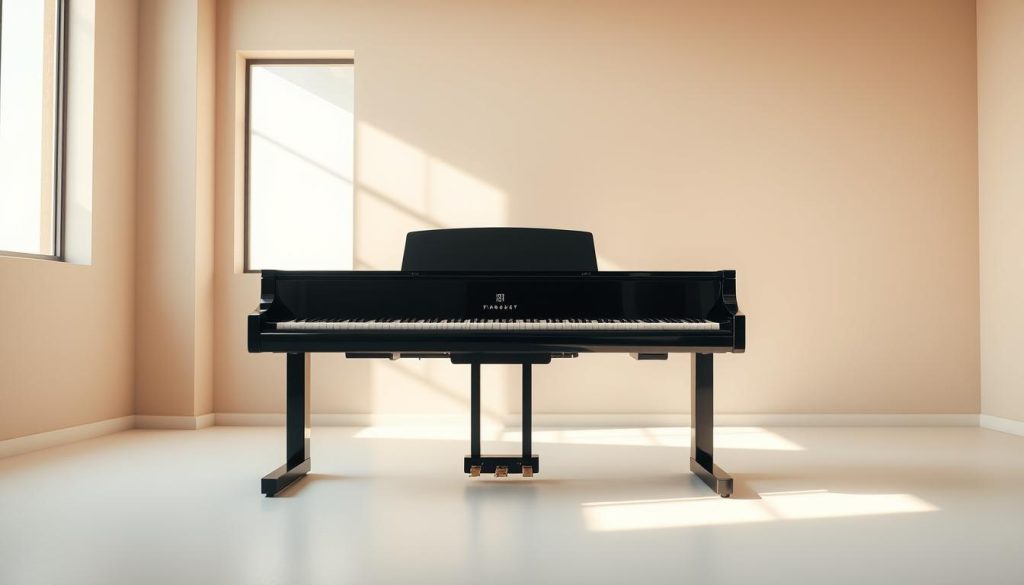
Entry-level and midrange
Useful price points: YDP‑S35 around €832, YDP‑145 often below €1,000, YDP‑S55 around €1,089 and YDP‑165 around €1,111 for a solid first cabinet piano.
The P Series (P‑145 / P‑225) sits in the entry-level and midrange categories. It offers excellent value and genuine portability.
The DGX‑670 is also a midrange choice for anyone seeking a versatile, all-in-one arranger piano.
Premium models and hybrids
Clavinova CLP prices range from about €1,429 (CLP‑825) to €2,290 (CLP‑845). The CLP‑835 costs around €1,769, the CLP‑875 around €3,200 and the grand-style CLP‑865GP around €5,698.
CVP models cost more: around €2,898 for the CVP‑701 and €6,000 for the CVP‑905, reflecting their styles and advanced features.
Hybrid models such as AvantGrand, Silent and TransAcoustic require a larger budget. They meet specific needs: acoustic feel, silent practice or natural sound projection.
- Budget tip: include the cost of a stand, pedal unit and headphones if they are not supplied.
- Buying tip: compare official packages to get the right equipment at the best price.
- Try before buying: play two similarly priced models to appreciate the real difference in feel and sound.
For more on the best models and offers, see our detailed selection: best digital piano.
Which Yamaha 88-key digital piano should you choose?
Here is a simple way to choose an instrument that will support your musical progress.
Beginner
P‑145 or YDP‑145: choose the P‑145 if you need portability (GHC, CFIIIS sound, 64-note polyphony). Choose the YDP‑145 if you prefer a stable cabinet and three-pedal unit for studying at home.
Intermediate
For more nuance, consider the P‑225 (CFX, VRM Lite, 192-note polyphony, Bluetooth) or the YDP‑165 (GH3), depending on the format you want.
If you want immersive headphone sound and a more refined cabinet, the CLP‑835 (binaural CFX and Imperial sounds) is an excellent compromise.
Advanced players and stage use
If portability is your priority for concerts, the P‑525 (CFX, full VRM) delivers power and expression.
For a living room and a feel close to an acoustic piano, choose the CLP‑845 or CLP‑875 (GrandTouch‑S or GranTouch and superior amplification).
- By use: apartment → headphones, studio → USB audio, stage → weight and connections, living room → amplification.
- Apps: Smart Pianist brings together settings and lessons, making it useful at every level.
- Buying priorities: keyboard feel first, followed by sound quality and features.
- Trial: play the same pieces on two similar models to feel the difference in dynamic control.
- Support: a portable stand or cabinet, with a single pedal or three-pedal unit to suit your repertoire.
- Looking ahead: consider your likely progress so you do not need to replace the instrument too soon.
Conclusion: choose the model that makes you want to play every day. To compare models and offers, see our detailed selection.
Accessories and setup: sustain pedal, stand, headphones and app
A well planned practice space improves comfort and supports progress. A carefully chosen setup makes daily sessions and performances easier.
Single pedal or three-pedal unit, dedicated stands and packages
Portable models, often supplied with a simple sustain pedal, suit basic playing and quick rehearsals.
Cabinet models offer a three-pedal unit to control sustain, sostenuto and soft pedals. This is essential for classical repertoire and nuanced playing.
For the P Series, choose a dedicated stand or a package with a stand and pedals for a stable playing position, onstage or at home. The DGX‑670 is often sold with a stand and pedal unit.
Headphones, USB recording and Smart Pianist support
Good headphones provide faithful sound and reduce fatigue during long sessions. Choose a closed-back model for home use.
The P‑145 and P‑225 offer a USB TO HOST audio/MIDI connection for recording without an external interface. The P‑225 adds Bluetooth Audio for playing along with tracks and practicing tempo.
Smart Pianist provides 303 lesson songs and lets you control keyboard features from the app. Together, the stand, pedal unit, headphones and app form a lasting setup to include in your budget.
Conclusion
Conclusion
To sum up, use a simple approach: choose the keyboard feel, sound and features that suit your needs and available space.
Some useful starting points: P‑145 / YDP‑145 for beginners, P‑225 / YDP‑165 / CLP‑835 for more nuance, and P‑525 / CLP‑845 / CLP‑875 for higher performance.
Test models in the conditions where you will play, use apps and connectivity to stay motivated, and allow for the full cost of a stand, pedals and headphones.
The range is consistent and reliable: choose the instrument that makes you want to play every day. Save this guide, compare two or three models, check delivery and setup, then enjoy the music.