
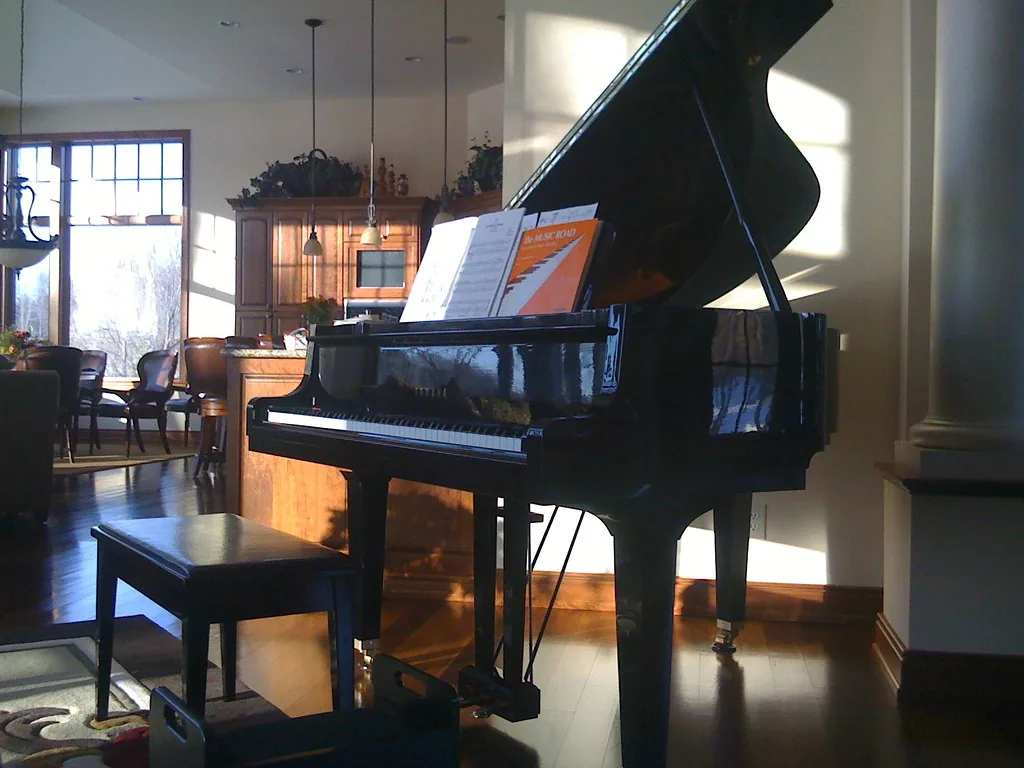
This guide covers the key points to help you choose between two distinct instruments based on the way you make music.
A synthesizer generates sounds using oscillators and amplifiers, then plays them through speakers. By contrast, an acoustic piano produces a natural sound when hammers strike strings.
Electronic instruments aim to recreate this realism with samples, weighted keys, velocity response and pedals. Synthesizers often offer extensive sound libraries, arpeggiators, modulation and high polyphony.
We will compare key action and playing feel, polyphony, sound quality, size, connections and uses for different musicians.
Goal: quickly determine which type of instrument suits learning, live performance or home production.
For a detailed comparison and practical recommendations, see this comprehensive guide.
Start with your goal: choose an instrument that suits the way you play
First, define your musical goal: study, creation or playing in a group. This simple starting point helps you choose between an instrument suited to a piano repertoire and one designed for performance.
- Clarify your goal: serious study, sound production or live performance.
- For learning classical pieces at home, a piano with weighted keys and pedals supports technical progress.
- If you want to explore several styles and perform live, a compact synthesizer offers portability, sound libraries and modulation.
- Your level matters: a beginner may focus on technique, while a musician who uses music production software may want different sound engines.
- Consider where you play: your home, home studio or touring setup affects your choice of instrument.
This guide will help you compare the options according to your needs. To explore the comparison further, see the digital piano comparison.
Digital piano vs. synthesizer: useful differences
The sound source—samples or oscillators—can make a substantial difference to the playing experience.
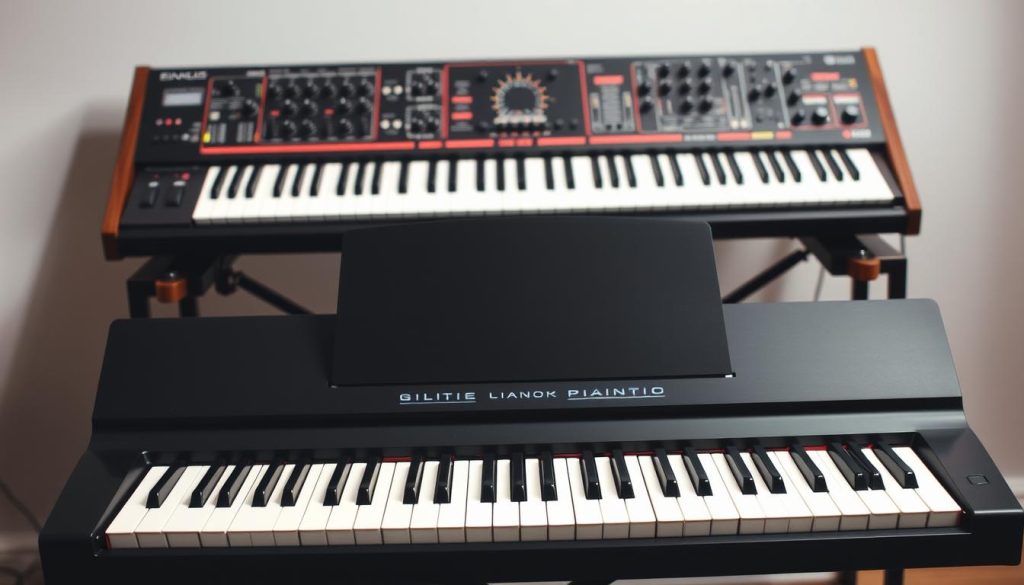
How sound is produced
Samples reproduce the tone of an acoustic piano using libraries of recorded sounds.
Oscillators generate synthesized sounds and a wide variety of tones for performance and production.
Key action and playing feel
Models designed for piano repertoire have weighted keys, velocity sensitivity and pedals for expressive playing.
Most synthesizers have lighter keys that allow fast playing and suit intricate patterns and quick passages.
Polyphony, modes and effects
Polyphony lets notes continue sounding while you play rich chords. Some high-end synthesizers offer up to 256 voices.
They include arpeggiators, sequencers and assignable effects for creating changing textures.
| Criterion | Sampling | Synthesis | Recommended use |
|---|---|---|---|
| Keyboard | Weighted keys, pedals | Light keys, quick response | Home practice and study, or live performance |
| Sounds | Realistic piano sound | Wide variety of tones | Classical repertoire or electronic music |
| Polyphony and effects | Enough for rich chords | Up to 256 voices, 4 assignable effects | Complex arrangements and concerts |
| Size | Bulky cabinet | Compact and portable | Living room or touring |
Practical tip: choose the instrument that suits your repertoire. For subtle expression and realistic sound, prioritize sampling. For creativity, textures and portability, consider synthesis.
Learning and playing: can you learn piano on a synthesizer?
Choosing an instrument for learning depends on how its keys feel and what you want to play. You can certainly play melodies on a synthesizer, but the technical skills you develop will vary with the instrument.
Develop piano technique, expression and control of the keys
For serious study of dynamics, touch and legato, a digital piano with weighted keys and pedals is recommended. Light, spring-loaded keys offer less resistance.
This different key action may mean relearning some movements when you move to a weighted keyboard. Pedals, especially half-pedaling, play an essential role in shaping the sound.
Use programming, styles and automatic accompaniment to create and play
A synthesizer, meanwhile, makes it easier to learn music creation: arpeggiators, styles and automatic accompaniments help you compose and perform sooner.
Depending on your level and goals, the most effective approach may combine both: develop technique on a digital piano during lessons while experimenting with sounds and arrangements on a synthesizer to stay motivated.
Uses and musical styles: which instrument suits which musician?
Each musician benefits differently depending on whether technique, creation or live performance comes first.
Beginners and returning pianists
For beginners, a piano with keys that feel like those of an acoustic instrument makes learning at home easier.
Digital pianos are recommended for building a sound technical foundation and mastering chords.
Music production and the home studio
Synthesizers appeal to producers: their wide range of sounds, sound libraries and built-in effects help them make demos quickly.
Many models offer more than 300 sounds, along with arpeggiators and playing modes useful in a home studio.
Playing in a band and onstage
Most instruments designed for live performance are compact and easy to connect to a PA system.
Synthesizers let you adjust sound layers and accompaniments instantly during a concert.
Children, budget, space and skill level
- Children and small spaces: choose a compact keyboard to encourage practice.
- Budget: choose the features you need most, such as key action, connections and memory.
- Versatile musicians: combine a piano at home for technique with a synthesizer for the stage.
Quick buying guide: essential criteria before you purchase
The starting point for a good purchase is the kind of music you play most. It guides your choice of instrument according to your styles and repertoire.
Playing goals, styles and repertoire
Classical music: choose weighted keys to work on dynamics and legato.
Pop and electronic music: look for portability, sound libraries and synthesizer features suited to live performance, such as up to 256 voices of polyphony, arpeggiators and 16 MIDI tracks.
Key quality, polyphony and essential features
Check how the keys respond, how they detect velocity and how sturdy the action feels.
Polyphony should be sufficient for layering pads and accompaniments. On some models, 4 assignable effects and a sequencer make a difference onstage.
| Criterion | Key points | Why it matters |
|---|---|---|
| Keyboard | Weighting, velocity response, stability | Playing comfort and note control |
| Polyphony | 64 to 256 voices | Sustained chords and complex textures |
| Features | Arpeggiator, effects, MIDI/USB | Creation, studio integration and live performance |
| Sound reproduction | Speakers, converters | Tone quality and realistic sound |
To compare models and price ranges for your budget, see a practical buying guide on quel-piano.
Conclusion
How you will use the instrument is the deciding factor: practicing a repertoire or exploring sounds.
For learning and realism, digital pianos offer weighted keys, pedals and faithful note reproduction. They support technical progress and chord control.
For live performance and production, a synthesizer may be more compact and offer more creative possibilities. It provides sound libraries, arpeggiators, automatic accompaniments, effects and often generous polyphony.
Choose according to your level, styles and playing environment. Trying different models, comparing their key action and listening to their sound quality remain essential. Sometimes, combining both instruments is the best solution.