
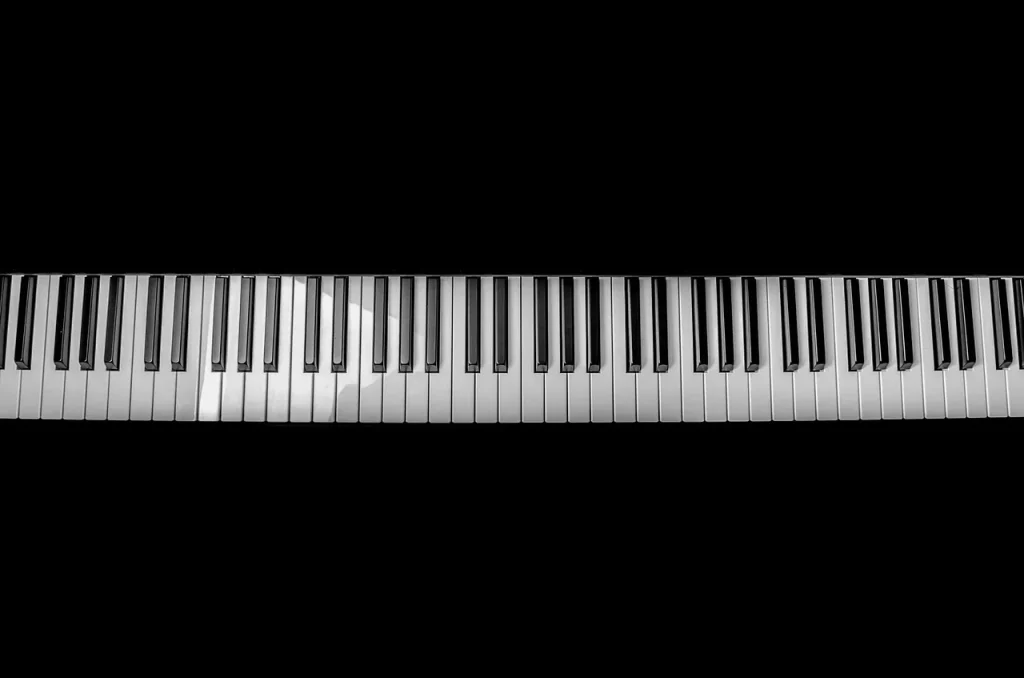
Review objective: give an initial assessment of this entry-level instrument and see whether it meets the needs of beginners and amateur players.
Quick summary: it has 88 NH weighted keys, 12 sounds, 120-note polyphony and 2 × 15 W speakers. Its understated design and compact size make it well suited to a music corner at home.
Why read on: we will examine the keyboard, sounds, speakers, connections and value for money. We will also cover the stand and available options.
This instrument is for anyone who wants a simple, reliable playing experience without unnecessary features. Its observed price puts it in an accessible range compared with other digital pianos.
The following sections examine each technical point and compare competing models before reaching a reasoned conclusion to help you decide whether to buy.
Korg B2: Is this digital piano worth buying?
Designed for learning, this instrument keeps the essentials and avoids an overload of features.
Who it is for: beginners and musicians returning after a few years away. Its straightforward controls make it easier to use and keep menu navigation to a minimum.
Models at a glance: the range includes the standard model, a lighter-touch variant and a furniture-style version with three pedals. You can choose according to your available space and how you plan to use it at home.
Sounds and specifications: 12 sounds cover grand pianos, electric pianos, harpsichord, organs and strings. Its 120-note polyphony is sufficient for practicing complex pieces without notes cutting off.
- Essential features: metronome, transposition, fine tuning and Partner mode.
- Approach: limit the options so you can focus on playing.
This model offers a solid starting point and a stepping stone toward more advanced instruments. The following sections examine its design, keyboard and sound performance to help you form a complete opinion. To learn more about the furniture-style version, read our Korg B2SP review.
Design, portability and ease of use
This instrument’s design and dimensions are clearly intended for home use, with a carefully finished appearance. Its clean lines and neat finish help it fit into a modern interior.

Dimensions: 1,312 × 336 × 117 mm; weight: 11.4 kg. This compact format suits small rooms, apartments and offices. Its portability makes it easy to rearrange a music corner or share the instrument.
Its controls are minimalist. A few buttons and clear key combinations provide access to the features. The keyboard and keys remain central to the experience.
- Stand: no integrated stand; you will need a stable table or stand.
- Speakers: front-facing placement provides direct sound and a good sense of volume.
- Quality: the assembly and materials inspire confidence at this price point.
In short, this compact digital piano suits everyday use. It delivers clear sounds without taking over the room, making it a good choice for getting started.
Keyboard and touch: playing feel across 88 weighted keys
The keyboard brings together the essential qualities that connect the musician to the instrument.
NH action: Natural Weighted Hammer Action reproduces a graded hammer mechanism. The keys feel heavier on the left and lighter on the right, as they do on an acoustic piano.
NH action: a realistic touch
The 88 fully weighted keys provide a firm, consistent feel. They respond well to playing velocity, helping you shape the piano and other sounds.
Adjustable touch sensitivity and dynamics
Three touch settings (light, normal and heavy) let you tailor the response to your playing style.
This makes it easier to learn dynamic control, from legato to staccato.
Partner mode for lessons
Partner mode splits the keyboard into two identical zones. It is ideal for lessons: student and teacher can work side by side in the same register.
- Key surfaces: glossy white keys and matte black keys provide a dependable feel, although your fingers may slip slightly during fast passages.
- Useful settings: metronome, transposition and fine tuning for daily practice.
For beginners, this substantial, stable action helps build good technique from the first few months.
Sounds, speakers and effects: the Korg sound
Its sound is built around a straightforward engine and a focused selection of tones. Stereo PCM sampling, combined with 120-note polyphony, delivers clear, stable playback, even in pieces with many simultaneous notes.

Stereo PCM engine and polyphony
This combination provides clear sound and sustained notes. The dynamics remain consistent with the keyboard response, helping you play expressively.
Built-in sound selection
Twelve sounds span several categories: five grand pianos (German, Italian, classic, jazz and ballad), several electric pianos, a harpsichord, organs and strings. The selection is deliberately limited but useful for everyday playing.
Speakers and effects
The front-facing speakers, rated at 2 × 15 W and equipped with MFB technology, provide ample volume while limiting distortion. Reverb and chorus add space to the sound without complicated settings.
Listening through headphones remains clear. To expand the selection, you can connect Korg Module LE for additional sounds.
Features and connectivity for everyday music making
The connections and controls shape how you use this instrument every day. Its ports make practice, recording and connection to an audio system easier.

USB/MIDI, audio input and headphone output: connections for playing and practicing
The USB Type B port sends audio and MIDI to a computer or digital audio workstation. This lets you record your playing without an additional interface.
The PHONES jack also works as a line output, allowing you to connect powered speakers. The audio input lets you play along with a backing track from an external player.
The damper jack accepts a sustain pedal. There is no Bluetooth, and the instrument has no built-in recording feature.
Korg Module, Gadget 2 LE and Skoove: more sounds and learning tools
The included software bundle contains Skoove (lessons), Korg Module LE (sounds) and Gadget 2 LE (music production). These tools expand its sound selection and studio uses.
| Connector | Use | Practical note |
|---|---|---|
| USB Type B | Audio and MIDI to a digital audio workstation | Record directly to a computer |
| PHONES / LINE OUT | Headphones / line output | Quiet practice or connection to speakers |
| AUDIO IN | Accompaniment | Play an external track |
| Damper | Sustain pedal | Use a standard pedal |
In summary, the instrument has the essential features (metronome, transposition, fine tuning and Partner mode) and a useful range of connections. It remains easy to use, letting you focus on the keyboard, add more sounds through software and choose between the speakers and headphones as needed.
For more buying advice and reviews, see our equipment guide.
Which pianists and needs does it suit?
It suits musicians who want to focus on learning without getting lost in complicated menus.
It is aimed primarily at beginners and adults returning to the piano. These musicians need an instrument they can use straight away. Its simple controls encourage regular practice.

Who will benefit
For beginners, it offers a weighted keyboard and useful sounds. It helps build good technique without distractions.
After a few years away, it can provide a way back. Its realistic touch makes it easier to resume playing and regain familiar movements.
- Apartment: controlled speaker volume and a headphone output for playing without disturbing others.
- Teaching: Partner mode is useful during lessons.
- Progress: its simplicity and included software support learning.
| Player | Main use | Key advantage |
|---|---|---|
| Beginners | Learning at home | Weighted keyboard, simple controls |
| Returning players | Regaining technique and dynamics | Realistic touch, consistent sounds |
| Apartment dwellers | Quiet practice | Headphone output, compact size |
One qualification: if you need stage features, advanced keyboard splits or more extensive connectivity, another model may be a better choice.
Variants and accessories: B2, B2N, B2SP and options
Depending on your available space and preferred touch, three versions address different needs. The instrument retains the same essential characteristics, but the equipment varies by version.
Differences between the models and the role of the stand
The first model favors a compact format, without a furniture cabinet or stand. The second has a keyboard with a lighter touch. The third includes a furniture-style stand and an integrated three-pedal unit.
The stand improves stability and posture. The integrated furniture-style stand provides a suitable playing height and a neat finish.
Pedals, compatibility and options
A damper pedal is included. Compatibility with an optional three-pedal unit brings it closer to traditional piano playing, with sostenuto and una corda functions.
Useful accessories include a sturdy X-stand, good headphones and a dedicated stand. Together, they make this entry-level instrument a versatile home setup.
| Version | Equipment | Advantage |
|---|---|---|
| B2 (compact) | Keyboard, sustain pedal | Portable, entry-level |
| B2N | Lighter touch | Touch suited to personal preference |
| B2SP | Furniture-style stand and three-pedal unit | Attractive appearance, comfortable setup |
The range lets you adjust your budget while staying within the same product family. Finally, Korg includes a software bundle with Korg Module, Gadget 2 LE and Skoove to expand the sounds and support learning.
Price, value and alternatives in this range
With an observed price of around €430 to €450, it is aimed at buyers seeking a simple, well-designed instrument.
At this price: a simple, reliable instrument with strong amplification
Positioning: at this price, it prioritizes a weighted keyboard, a straightforward sound engine and solid amplification (2 × 15 W).
Practical advantage: the headphone and line output, audio input and USB audio/MIDI make home practice easier.
Comparison: Roland FP-30X and Yamaha P-145 — strengths and limitations
The Roland FP-30X stands out for its well-regarded PHA-4 action, 256-note polyphony and Bluetooth MIDI/audio. It offers 35 sounds, but less powerful amplification (2 × 11 W).
The Yamaha P-145 has a GHS action, 64-note polyphony and 10 sounds. Its amplification is less powerful (2 × 7 W), and its polyphony is more limited.
- Strengths of the model reviewed: 2 × 15 W speakers, a sound selection focused on grand pianos, organs and strings, and a useful range of connections.
- Limitations: no Bluetooth or built-in recording; its features are deliberately more limited than those of models aimed more at stage use.
| Model | Polyphony | Power |
|---|---|---|
| Model reviewed | 120 notes | 2 × 15 W |
| Roland FP-30X | 256 notes | 2 × 11 W |
| Yamaha P-145 | 64 notes | 2 × 7 W |
Overall, it offers good value for money. Our overall rating reflects a well-rounded instrument for study and practice. Before buying, compare online offers, check whether a stand or headphones are included, and consider the return policy so you can try its feel at home.
Conclusion
Ultimately, it is a reliable choice for anyone who wants to improve without unnecessary extras. Our assessment is positive: 88 weighted NH keys, carefully chosen sounds and 2 × 15 W speakers deliver a convincing experience at home.
The overall rating reflects good quality in this range. The included software and USB/MIDI connectivity add value and help justify the price.
A qualification: this instrument may feel limited if you want a versatile stage piano, advanced keyboard splits or Bluetooth. The Korg digital piano can be excellent for touch and sound while being less suited to professional needs.
Try the keyboard in a store or at home: how it feels to play remains decisive before you buy.