
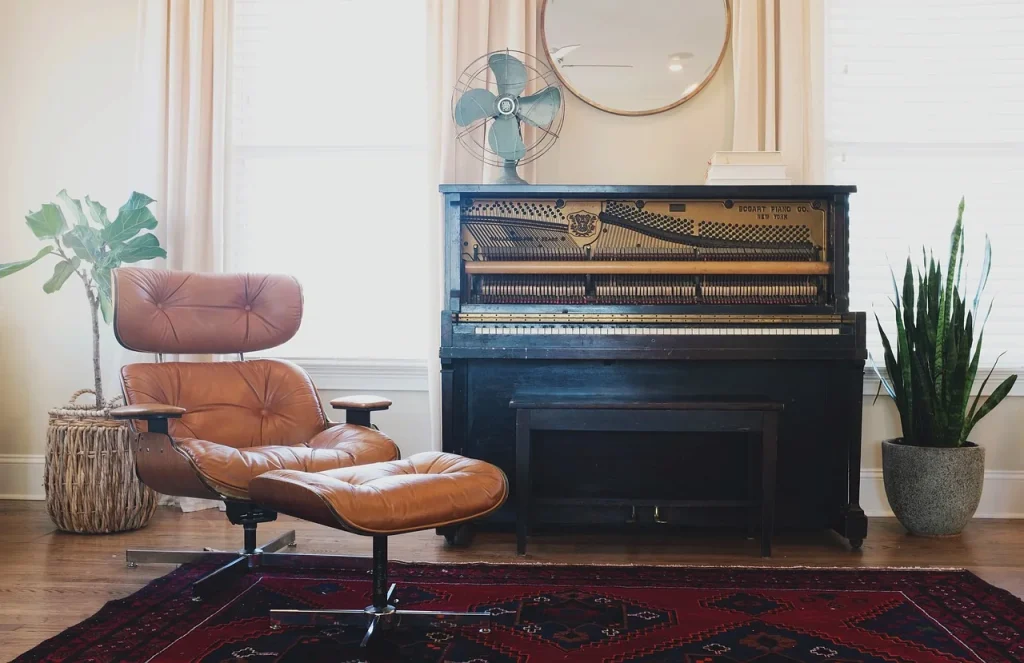
A clear guide to making your choice. This article helps you quickly find a piano that suits your space and budget. We explain the brand’s strengths and the criteria that matter in everyday use.
Design, playing feel and simplicity are at the heart of this guide. We explain how to read a specification sheet and turn its features into practical benefits. You’ll save time and avoid buying mistakes.
The guide compares leading pianos on their essential features: key action, sound, connectivity and ease of use. Each point helps you assess value for money.
Who is it for? Whether you’re a beginner or an amateur pianist, this practical guide gives you simple pointers for bringing a digital piano into your living room and choosing a model that meets your expectations.
Who this buying guide is for and how to use it
This guide is for anyone who wants to buy a piano and compare models quickly, without jargon.
It is for beginners, people returning to the piano and anyone looking for a reliable digital piano. You’ll find a simple method for defining your needs and narrowing your choice.
How to use it:
- Start by assessing your available space, skill level and budget.
- Scan the selection using the product summaries.
- Use the comparisons by type to find the model best suited to your living room.
Each section explains a practical criterion: key action, sound, connectivity and speaker quality. The practical notes clarify concepts that matter in everyday use.
You can examine each piano in more detail according to your priorities. This approach makes it easier to choose thoughtfully for the way you play.
| Player | Goal | What to look for |
|---|---|---|
| Beginner | Learn with confidence | A straightforward digital piano with good value for money |
| Amateur | Return to playing or improve | Realistic key action and rich sound |
| Flexible use | Living room or small space | Compact size, suitable connectivity and adequate power |
Understand your needs at home: space, skill level, uses and budget
Start by measuring your room and deciding how you’ll use the instrument each day. This first step guides the rest of your choice. An apartment may call for a compact model, a spacious living room may accommodate a larger cabinet piano, and a dedicated room gives you more options.
What kind of pianist are you? Whether you’re a beginner, returning to playing or a demanding amateur, be clear about your level. A simple instrument is enough to learn on. An experienced musician may want a more refined key action and better sound quality.
Consider how you’ll actually use it: daily practice, leisure, accompaniment or recording. This helps you avoid paying for features you don’t need. Think about your neighbours, too: volume control and headphone use are crucial in an apartment.
- Choose a type that fits your space: portable, compact or cabinet-style.
- List your priorities: key action, sound and connectivity.
- Set a realistic budget that balances quality and features.
The essential features of a digital piano for home
For comfortable playing at home, focus on the features that affect playing feel and sound.
Weighted keys and hammer action
Realistic key action makes a difference. Look for a weighted keyboard with hammer action. It gives you a dynamic response closer to that of an acoustic piano.
Check how the keys respond and how stable the cabinet feels. The graded hammer action should feel consistent across the keyboard.
Polyphony, sounds and built-in speakers
Polyphony affects how smoothly notes sound together, especially when you use the pedal. Look for rich, natural sounds.
Quality speakers provide a full, balanced sound in a living room. They also mean you won’t always need an amplifier.
Power supply, noise and playing time
Choose mains power for a piano that stays in one place, or batteries if you need portability. Check battery life and power consumption.
Mechanical key noise can be disruptive in an apartment, so test it before buying.
- Ease of use: clear controls and an easy-to-read display.
- Match these criteria to your room so the setup is neither too small nor unnecessarily large.
- Test the consistency of the action and the quality of the keys in a shop.
| Criterion | What it means | Effect on use |
|---|---|---|
| Key action and mechanism | Weight, grading and hammers | An acoustic-piano-like feel and greater expression |
| Polyphony and sounds | Number of simultaneous notes and available sounds | Clarity in dense passages and when holding the pedal |
| Speakers | Power and clarity of the built-in system | Sound quality without external equipment |
| Power supply | Mains or batteries, and battery life | Fixed or portable use and practice duration |
For a fuller guide to buying your first instrument and understanding the technical differences, read our buying guide.
Casio Privia: Which model is right for home?
Here is a concise overview of instruments suited to your space and playing needs. We distinguish design-focused, premium options from more compact and affordable models.
Choose according to sound, key action and how the piano fits your room. If the living room is where you mainly play, the balance between immersive sound and appearance matters as much as keyboard quality.

The brand emphasises reliability and ease of use. Its value for money often appeals to people seeking performance and a good finish without excess.
- If sound comes first, choose a piano with high polyphony and powerful speakers.
- If portability comes first, choose a compact, practical model.
- On a tight budget, focus on affordable options with the essential features.
| Need | Recommended type | Main advantage |
|---|---|---|
| Design-focused living room | Premium model | Immersive sound and a refined appearance |
| Small space | Compact portable model | Small footprint and portability |
| Limited budget | Entry-level model | Good value for money |
This overview points you towards detailed model reviews. Use comparisons to choose between two similar models according to your priorities.
A quick look at the Privia range and types of digital piano
Understanding the main types helps you choose a piano for your living room. Here, we distinguish three types by use, design and footprint.
Portable, compact or cabinet-style: which suits your living room?
Portable pianos are ideal when space is limited or you move the instrument often. Popular models show that good value can be found at around €600.
Compact models have a more refined design and fit elegantly into a living room. They take up little space while offering more sound presence than a portable model.
Cabinet-style models prioritise appearance and sound projection. They feel closer to an acoustic piano and suit you if sound matters as much as looks. Indicative 2025 prices help place these categories and set your budget.
- Choose the balance of design, footprint and sound that suits you.
- Compare the range with other pianos on the market to assess its price and quality.
- For a detailed comparison, see this dedicated page.
Casio Privia PX-S7000: a premium design choice for the living room
The PX-S7000 aims to combine clean styling with strong sound performance for a discerning living room player.
Design and ease of use. Its wooden legs and three-pedal unit give it the look of a piece of furniture. The music rest is acrylic, and the finish evokes an understated, modern grand piano.
Sound and power
The Multi-Dimensional Morphing AiR sound engine offers 400 sounds and 256-note polyphony. Three surround levels and four speakers delivering 32 W in total create an immersive soundstage.
Keyboard and feel
The 88-key Smart Hybrid Hammer Action keyboard has a weighted feel. Its ivory- and ebony-style surfaces improve grip and touch.
Connectivity and uses
Bluetooth through the WU-BT10 adapter, the Casio Music Space app and touch controls make the piano easier to use. Connections include headphone, USB, microphone and L/R outputs, plus an expression-pedal input.
Living with it at home
Supplied with a cover, the piano weighs around 29 kg. It is stable, but you should think carefully about where to put it. At around €2,000, it sits in the premium range.
“A fine balance of design, playing feel and sound power.”
Casio Privia PX-S1100: portable and practical for small spaces
A sensible choice if you want a capable instrument without crowding your living room.
Compact and light, this portable piano weighs 11.2 kg and measures 132.2 × 23.2 × 10.2 cm. It is easy to move and fits into a corner without compromising playing comfort.
The 88-key Smart Scaled Hammer Action keyboard offers a feel close to an acoustic piano. Its 192-note polyphony lets you play dense pieces without notes cutting out.
Speakers, sounds and recorder
The 2 × 8 W speakers and 18 sounds cover the essentials for practice and playing at home. The two-track MIDI recorder stores a piece of around 10,000 notes so you can follow your progress.
Connectivity, batteries and uses
Bluetooth audio 5.0 makes it easy to play audio from a smartphone. The instrument runs on six AA batteries for around four hours, or on a 12 V adapter. Two headphone outputs and the USB-B port support quiet, connected practice.
- Strength: excellent value for a versatile digital piano.
- Plenty of useful features, including a metronome, effects and temperaments.
- Manageable weight and battery operation for greater flexibility.
Sound at home: virtual grand pianos and how they fill the room
Good sound in a real room depends on both sampling and playback.
At home, favour well-sampled virtual grand pianos. They reproduce the harmonics and resonances of an acoustic instrument more convincingly. Your choice of piano sound also shapes the character of your playing.

Berlin, Hamburg and New York: the PX-S7000’s piano sounds
On the PX-S7000, the Berlin, Hamburg and New York sounds offer three distinct characters. Berlin favours warmth, Hamburg a defined attack and New York a forward presence.
The AiR engine, together with three-level surround, strengthens the impression of a grand piano in the room. Four speakers with a combined output of 32 W broaden the sound and improve projection through their placement.
“Well-chosen reverb can turn a compact sound into a convincing soundstage.”
- Set the reverb to suit the size of your living room.
- Choose a piano sound that suits your repertoire.
- This range aims for an enveloping, natural sound.
| Element | Effect | Tip |
|---|---|---|
| Berlin, Hamburg and New York sounds | Tone and attack | Try each one with the music you play |
| AiR engine and surround | A sense of depth | Use a medium surround setting in a living room |
| Four speakers, 32 W | Projection and spaciousness | Point the piano’s open side towards the listening area |
Everyday playing feel: hammer action, key surfaces and response
How the keys feel matters more to your progress than any extra feature.
A good hammer action brings the feel closer to an acoustic piano. The PX-S7000’s Smart Hybrid Hammer Action provides a weighted, stable response. Its synthetic ivory- and ebony-style surfaces improve finger grip.
The PX-S1100’s Smart Scaled Hammer Action offers five touch-sensitivity levels. It includes key-on and key-off simulators that add realism to its dynamic response.
- Weighted keys affect precision, endurance and dynamic control.
- Consistent key weight and sound construction help preserve a stable feel over time.
- Multiple sensors and key-on and key-off simulators add realism.
“Test the response at both soft and loud dynamics: that is where the keyboard’s real quality becomes clear.”
A well-adjusted action helps you develop sound, consistent technique. Always assess the feel of the keys before buying.
Power and sound projection: speakers, volume and large rooms
A piano with well-placed speakers can turn a living-room corner into a small listening space.
Speaker power and placement determine how well a piano fills a room. The PX-S7000 has four speakers delivering 32 W, arranged to create enveloping sound. That is enough to fill a large room comfortably.
More compact models such as the PX-S1100 have 2 × 8 W speakers. They suit practice at moderate volume and are not intended to provide sound for a large gathering.
The surround effect increases the sense of immersion and helps widen the soundstage. Cabinet design and speaker position also affect how wide the sound seems.
| Model | Power | Weight |
|---|---|---|
| PX-S7000 | Four speakers · 32 W | Approximately 29 kg |
| PX-S1100 | 2 × 8 W | 11.2 kg |
- Adjust volume, equalisation and effects to balance clarity and warmth.
- Position the instrument to limit unwanted reflections and make the most of its speakers.
- Consider weight and stability when choosing a more powerful instrument.
Power supply: mains or batteries, playing time and safety
The power supply directly affects a piano’s everyday convenience and reliability.
Mains power is the usual choice for an instrument that stays set up and ready to play. It provides steady power and avoids interruptions. The PX-S7000 runs on 24 V mains power (20 W), making it well suited to a fixed position.
Battery operation gives you freedom to move the piano. The PX-S7000 lasts around five hours on eight AA batteries. The PX-S1100 lasts around four hours on six AA batteries and also accepts a 12 V adapter (10 W).
Check the automatic power-off settings: they save battery life and help if you forget to switch the piano off. Depending on the power source, the PX-S1100 switches off automatically after about six minutes on batteries or four hours on mains power.
- Safety: use suitable adapters and handle batteries correctly.
- Practical tip: keep spare batteries if you move the instrument often.
- Choosing: consider how often you move it, the battery life you need and the sound quality you want.
To put your spending in context and compare models, see our guide to the best digital pianos.
Connectivity and learning: Bluetooth, apps and useful features
Connecting your instrument to your phone can make practice more interactive. Good connectivity makes it easier to listen, play along and work on pieces at home.
The PX-S7000 connects through the WU-BT10 adapter and works with Casio Music Space, letting you control sounds, effects and settings from an app. Touch controls give you easy access to settings without interrupting your playing.
The PX-S1100 offers Bluetooth audio 5.0 (A2DP SBC/AAC) for playing along with backing tracks, as well as two headphone outputs for quiet practice. Its built-in, two-track MIDI recorder lets you review a piece and listen back to your playing.

Practical tools to help you progress
- Metronome and temperaments for working on pitch and timing.
- Surround and chorus for adjusting the soundstage to your room.
- MIDI recorder for listening back and improving your playing.
- Headphone outputs for practising without disturbing the neighbours.
Apps such as Casio Music Space and Chordana Play for Piano add learning tools. They display scores, control effects and offer lessons or playback. Ultimately, how well these tools fit the way you play matters more than the number of features.
“Useful connectivity helps you focus on the quality of your practice, not just the available options.”
Budget, price and value for money: how to spend wisely
Understanding what justifies a higher price helps you avoid an impulse purchase.
Your budget should reflect key action, sound and features you’ll use. At around €2,000, the PX-S7000 owes its price to its premium design, 32 W output, 400 AiR sounds and Berlin, Hamburg and New York piano sounds. Its extensive connections and surround mode also account for much of the price.
The PX-S1100 offers excellent value for money. It combines 2 × 8 W output, 192-note polyphony, Bluetooth audio and a MIDI recorder in a portable model weighing around 11.2 kg. This balance keeps the cost down while retaining useful learning features.
Weigh up the technical trade-offs: power, number of sounds and learning tools. Don’t pay for extras you won’t use.
| Model | Strength | Indicative price |
|---|---|---|
| PX-S7000 | Premium design, 32 W, AiR | Around €2,000 |
| PX-S1100 | Portable, 192 notes, Bluetooth | Accessible entry-level option |
Final tip: compare models at similar prices and choose according to how you’ll actually use the piano. The best piano is not always the most expensive; it is the one that best fits your needs and offers the quality you expect.
Alternatives by type to help you compare (Roland, Yamaha, Kawai)
Other models on the market help you judge the value you should expect.
Popular portable models: these pianos are designed for transport and small spaces. Common points of comparison include the Roland FP30X (around €599), Yamaha P145 (around €385 to €462) and Kawai ES120 (around €599).
These instruments balance key action, power and learning features. Use them as points of comparison when making your choice according to your budget and needs.

Compact and cabinet-style models
Fitting into the living room: compact and cabinet-style pianos aim for a refined appearance and better projection. Examples include the PX-870 (around €919), Yamaha YDP 145 (around €833), YDP 165 (around €1,119) and CLP-825 (around €1,329).
These options show the level of key action and power you can expect from a permanent setup. Depending on your sound priorities, some come close to the experience of a traditional piano.
| Category | Model | Indicative price |
|---|---|---|
| Portable | Roland FP30X | Around €599 |
| Portable | Yamaha P145 | Around €385 to €462 |
| Portable | Kawai ES120 | Around €599 |
| Compact or cabinet-style | PX-870 | Around €919 |
| Compact or cabinet-style | YDP 145 and YDP 165 | Around €833 and €1,119 |
| Cabinet-style | CLP-825 | Around €1,329 |
- Compare key action, power and learning features according to your needs.
- Prices help you set a realistic budget for the quality on offer.
- Check French retailers’ services and warranties before buying.
“A well-chosen digital piano can come close to the experience of a traditional piano if you prioritise key action and sound.”
Where to buy in France: availability, services and accessories
Buying a piano in France takes a little planning if you want to avoid surprises.
Look for established retailers with clear prices, reliable delivery and warranties valid throughout France. Woodbrass, Thomann and Cultura offer wide piano selections, payment options and after-sales services for the French market.
Woodbrass, Thomann and Cultura: prices, delivery and warranties
Indicative 2025 prices: Roland FP30X at €599, Yamaha YDP 145 at €833 and Yamaha CLP-825 at €1,329. These retailers often carry such models, making it easy to compare value for money.
Services: delivery across France, manufacturer warranties, financing options and returns subject to conditions. Check return policies and after-sales support before completing a purchase.
Pedals, stands, headphones and covers: equip your instrument well
Compare bundles that include a three-pedal unit, a dedicated stand, headphones or a cover. A three-pedal unit improves expressiveness and supports traditional playing techniques.
Quality headphones reduce listening fatigue and make quiet practice easier. Covers protect the instrument during transport and storage.
| Retailer | Main services | Common accessories |
|---|---|---|
| Woodbrass | Delivery in France, warranty, financing | Three-pedal units, stands, headphones, covers |
| Thomann | Large stock, convenient returns, European after-sales service | Dedicated stands, pedal bundles, studio headphones |
| Cultura | Nationwide network, collection in store, promotional offers | Covers, three-pedal units, beginner accessories |
“Extra services and availability often matter more than a few euros’ difference in the listed price.”
Our home piano picks by playing needs
These two choices meet different needs: immersive sound, or portability and simplicity.
Design-focused living room and immersive listening: choose the PX-S7000
For a carefully furnished living room and rich listening experience, the PX-S7000 is the premium option. Its 32 W output and Berlin, Hamburg and New York piano sounds create a convincing soundstage.
The AiR engine and WU-BT10 connection support streamed audio and recording. Indicative price: around €2,000, an investment in quality and appearance.
Small space, limited budget, flexible use: choose the PX-S1100
If space is limited, the PX-S1100 puts compactness first. It weighs 11.2 kg and offers 2 × 8 W output, 192-note polyphony and a useful MIDI recorder.
It also runs on batteries, making it flexible for different uses at home. It is a sensible choice if you want good value without giving up essential features.
- In short: the PX-S7000 prioritises immersion, while the PX-S1100 prioritises portability.
- How to choose: consider how often you play and how much sound quality matters to you.
“These two options serve different needs: premium immersion on one hand, portability and simplicity on the other.”
Conclusion
Here are the essentials to help you choose with confidence.
The right piano should meet your priorities for key action, sound and appearance. Test these qualities in person and notice how they affect your playing.
The PX-S7000 offers a premium experience and powerful sound projection. The PX-S1100 stands out for its compact size, simplicity and excellent value for money.
Assess your available space, budget and skill level before buying. Careful comparisons and hands-on trials will help you form a reliable opinion.
Remember to consider accessories and retailer services. With these points in mind, you’re ready to choose the piano best suited to your daily practice.