
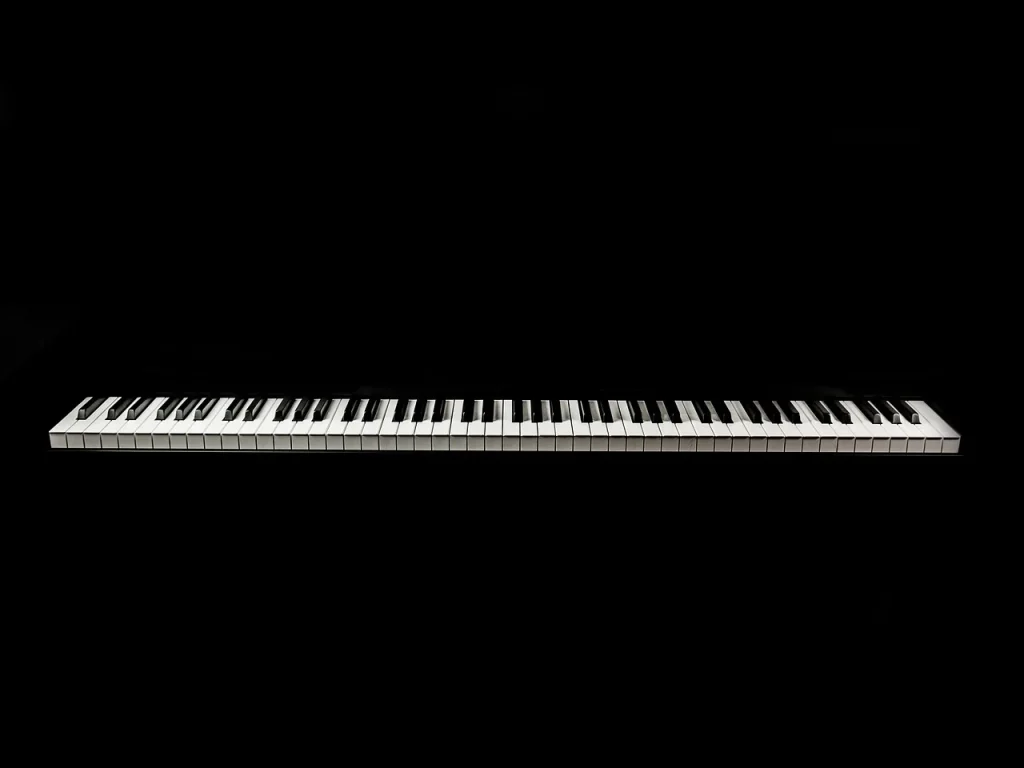
Goal: to help you decide between two major brands and choose an instrument that will keep you motivated to play for years.
A good 88-key keyboard with weighted action is essential. It provides a solid technical foundation and makes playing enjoyable from the start.
For an entry-level budget of around €400 to €500, models such as the Yamaha P-145 and Roland FP-10 stand out in reviews. The P-145 has a GHC keyboard, 64-note polyphony and the Smart Pianist app. The FP-10 offers 96-note polyphony, SuperNATURAL technology and Bluetooth.
Prices rise to around €700 to €1,000 for compact or cabinet-style models, and higher for more advanced instruments. Key feel, sounds and connectivity (USB, MIDI, Bluetooth) remain decisive.
This guide compares model quality, polyphony, pedals and value for money in the €400 to €900 range. Try the instruments in a shop when possible to choose between two close contenders.
Understand your needs: choose a reliable, motivating first digital piano
To choose well, start by deciding who will play and where the instrument will be used. In France, common situations include a child starting out, an adult returning to piano and a musician who needs a quiet keyboard.
Beginner child, adult or returning player: needs and constraints
A suitable piano takes account of available space, neighbours and budget. Digital pianos have real advantages: headphone practice, a smaller footprint and a cost often around €400 to €500, compared with several thousand euros for an acoustic piano.
Keep motivation high: choose a genuinely good instrument
Avoid light-action keyboards and unfamiliar brands. An 88-key keyboard with hammer action remains the foundation for making progress while enjoying playing.
| Player | Constraints | Priority | Price guide |
|---|---|---|---|
| Child | Space, parental support | Adjustable volume, headphones | €400 to €500 |
| Adult returning to piano | Time, neighbours | Responsive keyboard, inspiring sound | €400 to €700 |
| Professional musician | Portability, recording | MIDI and Bluetooth features | From €700 |
Conclusion: a measured investment in a capable instrument improves value for money and greatly reduces the risk of giving up.
Kawai or Yamaha: Which Digital Piano Is Best for a Beginner?
Feel, responsiveness and tonal character: each manufacturer has a distinct approach that can guide your choice.
Distinctive feel
Approach 1: the focus is on a carefully developed piano-like feel through Responsive Hammer actions (RH/RHIII). These mechanisms aim to provide a precise attack and consistent response, qualities valued in classical playing.
Distinctive sound
Approach 2: a broad range of sounds draws on concert piano samples (CFX, Bösendorfer) and engines that model resonance. The result favours balance and versatility.
Differences between ranges
There are three main formats:
- Portable: light and easy to move, ideal for beginners and for practising elsewhere.
- Compact with cabinet: the integrated stand and pedal unit provide stability for home practice.
- High-end: more sophisticated actions (GrandTouch/GrandFeel), modelled resonances and better sound projection.
Practical advice: choose the format first (portable or cabinet-style), then test the key feel and, finally, the sounds that inspire you.
Note: Bluetooth options, apps and accessories vary by model and generation; a stable cabinet remains an advantage for regular use.
Key criteria for beginners: keyboard quality, hammer action and 88 keys
Keyboard quality often determines progress and the desire to play. Without credible hammer action, practice can quickly become frustrating and exercises less rewarding.
Graded Hammer or Responsive Hammer
Two main families dominate: graded actions such as Graded Hammer (GHS/GHC) and Responsive Hammer actions (RHC/RHIII). GHC appears on models such as the P-145; RHIII is found on higher-end models such as the ES 920. Graduated key weight recreates the feel of an acoustic instrument.
Touch sensitivity, escapement and feel
Touch sensitivity should respond to how firmly you press, allowing you to play from ppp to fff. Escapement provides a slight notch in the action that helps with rapid repetition and fine control.
Synthetic ivory or ebony key surfaces improve grip and comfort during long sessions. Remember: 88 keys remain the standard. They avoid a mismatch with the repertoire and teaching requirements.
Practical advice: test the attack, repetition and dynamic response in a shop. Invest in the best keyboard you can before adding secondary features.
Sounds and realism: sampling and key technologies
The richness of the samples and the simulation of resonances shape how realistic a piano sounds. These elements determine whether the instrument feels alive under your fingers.
Sampling: recording a concert grand piano note by note, often at several velocities, then assembling those recordings in the keyboard. The more layers there are, the more closely the sound follows your attack and legato playing.
Concert piano references:
- CFX and Bösendorfer Imperial: power, brilliance and warmth (Yamaha references).
- SK-EX: a warm, singing character prized for Romantic repertoire (featured on some Kawai models).
- SuperNATURAL (Roland): a modelling approach that offers a compelling alternative.
Resonance technologies: VRM and VRM Lite simulate sympathetic resonance in the strings and body. Harmonic Imaging (HI/HI XL) recreates the virtual sound of a concert grand piano and its harmonics.
| Technology | Effect | Sound through headphones | Example model |
|---|---|---|---|
| VRM/VRM Lite | Dynamic resonances | Depth, natural sustain | P-225 |
| Harmonic Imaging (HI/HI XL) | Rich harmonic colours | More natural pedalling | KDP 120 |
| SuperNATURAL | Continuous modelling | Clarity and projection | FP-10/FP-30X |
Listen through headphones and then the speakers to assess projection and tonal colour. Sampling layers and resonance handling directly affect inspiration, precision of articulation and the pleasure of playing with nuance.
Polyphony, sustain pedals and expressive playing
Knowing how many notes a keyboard can produce at once helps you understand its playing capabilities.
Why 64-, 96-, 128- or 192-note polyphony makes a difference
Polyphony is the number of notes that can sound simultaneously. It affects layered sounds, pedal use and resonances.
As a guide, 64 notes are enough to begin with (P-145), 96 provide more room (FP-10), and 128 to 192 offer headroom for complex textures. 192-note polyphony helps prevent notes from cutting off during sustained pedal use.
Single pedal or cabinet-mounted pedal unit: nuance and progress
The included pedal, usually a simple sustain pedal, is convenient but limited. A three-pedal unit attached to a cabinet adds stability and lets you learn finer control of the sound.
“The pedal transforms a musical phrase: it connects notes, colours the sound and creates harmonic space.”
Some models support half-pedalling for more nuanced releases. Also check speaker power: sustain and polyphony benefit from sufficient acoustic headroom.
| Feature | Effect | Example model |
|---|---|---|
| 64 notes | Suitable for simple accompaniments | P-145 |
| 96 notes | More room for layered sounds | FP-10 |
| 192 notes | Ample capacity for dense pieces | YDP-145/KDP 120 |
Connectivity and useful everyday features
Connections and built-in learning aids make the instrument an effective practice tool.

Key connections: USB, MIDI and Bluetooth audio/MIDI let you connect the keyboard to apps, music production software or learning resources. Check compatibility with your phone or tablet and identify any cables or adapters you need.
Apps and recording
Smart Pianist and Piano Partner 2 provide quick settings, accompaniments and access to sounds. A built-in recorder helps you listen back and track your progress.
Practical modes and study tools
A built-in metronome is essential for working on tempo without an extra accessory. Dual and Split modes let you layer sounds or divide the keyboard between two players.
Transpose and fine-tuning functions make it easier to accompany a singer. Bluetooth audio lets you play along with backing tracks or instructional videos, strengthening everyday motivation.
| Function | Use | Example |
|---|---|---|
| USB/MIDI | Record, compose, use music production software | Studio and apps |
| Bluetooth audio/MIDI | Play backing tracks without a cable | FP-10 (example) |
| Recorder | Track progress and correct mistakes | Practice sessions |
Tip: favour useful, proven features over a long list of gimmicks. Well-chosen options help you practise regularly and stay keen to play.
Head-to-head comparison for beginners: Kawai and Yamaha at around €400 to €900
Between €400 and €900, the choice mainly comes down to key feel and available polyphony.
Yamaha P-145: a dependable choice
The P-145 offers a GHC keyboard, 64-note polyphony and sounds derived from the CFIIIS. It is compact and easy to use.
Advantages: stability, the Smart Pianist app and excellent value for money.
Kawai: recommended models
The KDP 75 features RHC action and the SK-EX sound. The KDP 120 adds 192-note polyphony, ideal for dense repertoire.
The ES 920 offers RHIII action and HI XL technology: portability and advanced key feel for players seeking mobility and expression.
Which model suits you?
- Tight budget: the P-145 for its simplicity and range of accessories.
- Key feel first: the KDP 75 or ES 920 for a more piano-like response.
- Classical practice at home: the KDP 120 for its polyphony and sound capacity.
Try each model through headphones and then its speakers. For a complete guide and detailed comparison, see our dedicated page. The Roland FP-10 is also an appealing alternative for its price and features.
Recommendations by budget: from entry-level to high-end
Price differences mainly reflect improvements in key feel, sound projection and features. Here are useful price brackets to guide your purchase.
Entry-level: the P-145 remains a dependable option (around €385 to €413) thanks to its reliability and ecosystem. The FP-10 (around €399) offers excellent value for money on a tight budget.
Mid-range, cabinet-style or compact: the YDP-145 (around €833 to €866) offers 192-note polyphony and VRM Lite. The KDP 120 (around €925) draws on the SK-EX sound and has useful sonic headroom for home playing. This range often offers the best balance for serious learning.
High-end: the CLP-825 (around €1,329 to €1,500) and CA-701 (around €2,577) add advanced modelling, premium actions and a touchscreen. The investment brings improved key feel and sound projection.
Practical tips: set aside part of your budget for a cabinet or sturdy stand, a stable bench and good headphones. Check bundles that include a cabinet and pedal unit, as well as Bluetooth availability. Finally, try the model in a shop to avoid long-term disappointment.
| Range | Examples | Price guide |
|---|---|---|
| Entry-level | P-145, FP-10 | €385 to €413 / €399 |
| Mid-range | YDP-145, KDP 120 | €833 to €925 |
| High-end | CLP-825, CA-701 | €1,329 to €2,577 |
The best alternative digital pianos to consider
To broaden your choice, several instruments from other brands offer real musical value and useful everyday features.
Roland FP-10 and FP-30X
The Roland FP-10 stands out as an entry-level model, with the SuperNATURAL engine, Bluetooth and an attractive price (around €399 according to Le Monde).
The FP-30X moves up the range with greater polyphony, improved key feel and escapement. It is an excellent option if you want good value for money.
Korg and Casio
The Korg B2 and C1 remain compact, straightforward, practical choices. They suit players who want capable instruments that take up little space.
Casio’s Privia and Celviano ranges often provide generous features for the price. These models are well worth trying in a shop.
NUX NPK-20
The NUX NPK-20 offers 271 sounds, a large display and comfortable key surfaces. It appeals to pop and electronic music players, though its piano sound may seem too bright for classical repertoire.
Depending on your style (jazz, pop, electronic music), prioritise versatile sounds and connectivity. Try these alternatives if the major brands do not suit you, and budget for accessories (stand, headphones, pedal) to make the most of them.
Digital or acoustic piano: an honest comparison
Choosing between an electronic and an acoustic instrument depends mainly on your musical goals and where you will play.
Practical advantages of a digital piano
Lower initial cost and no regular tuning: a new acoustic upright often costs more than €3,500, while a used one costs around €1,500 (Le Monde).
Less maintenance: no annual tuning (€80 to €100) and no sensitivity to changes in climate.
Convenience: headphone playing, a small footprint and instant sound adjustments make home practice easier.

When an acoustic piano is the better choice
For conservatory study or very advanced playing, the acoustic piano remains the benchmark.
Hammer rebound, the action’s response to the keys and the wood’s natural resonance produce nuances that an electronic model struggles to reproduce.
- Natural projection and sound throughout a room.
- Fine control of note endings and attacks for classical repertoire.
- A tactile experience essential for advanced study.
| Aspect | Digital | Acoustic |
|---|---|---|
| Initial price | Lower | New: around €3,500; used: around €1,500 |
| Maintenance | Almost none | Annual tuning: €80 to €100 |
| Feel | Good, but simulated | Authentic touch and resonance |
Daily practice at home on a digital piano, complemented by regular sessions on an acoustic piano, is often the best solution.
Note: hybrid and silent systems offer an appealing compromise, but at a high price. If you play pop or popular music at home, a well-chosen instrument is enough. For classical music, arrange regular access to an acoustic piano at a school or through a rental.
Formats and cabinets: portable, compact or cabinet-style with pedals
Choosing a portable, compact or cabinet-style model means deciding whether mobility, stability or ergonomics matters most.
Portable: light and easy to carry, it suits rehearsals away from home and tighter budgets. A good portable model on a stand can also become a lasting home setup.
Compact with cabinet: this format often includes a three-pedal unit and has a refined appearance. Its main advantages are stability and a better playing posture.
Cabinet advantages: a stable position, a complete pedal unit and better sound projection, ideal if you have a dedicated room.
Drawbacks: greater weight, more space needed and higher cost. Quality cabinets tend to hold their resale value better but make transport difficult.
Examples of ranges: P and ES series (portable), YDP and KDP (compact), CLP and CA (high-end cabinet-style). Consider your available space, how often you play and your budget.
Tip: a quality portable model is preferable to an unstable, inexpensive cabinet-style piano. For a full comparison, read our buying guide.
Essential accessories for getting started
A well-chosen set of accessories protects your investment and improves daily practice. These items make sessions more comfortable and productive.

Bench, stand and stability
Adjustable bench: essential for healthy posture and relaxed playing. A stable bench helps prevent bad habits.
Stand or cabinet: choose a stand compatible with your keyboard or a cabinet with an integrated pedal unit for greater stability.
Headphones, pedal and protection
- Quality headphones: useful for playing late and hearing subtle differences.
- Sustain pedal: choose a sturdy pedal or a three-pedal unit if you want to progress.
- Carrying case: protects a portable instrument when travelling.
Add a sturdy music rest, sheet-music lighting, USB/MIDI cables and a tablet holder. Consider a microfibre cloth and a dust cover too. Include these purchases in the total price from the outset: accessory quality directly affects comfort and the playing experience.
Credible testing methods: what our sources teach us
A well-designed test combines blind evaluations, a range of player profiles and quick comparisons between instruments. This helps produce a reliable, useful verdict.
Panel, procedure and test conditions
Le Monde assembled eight pianists, from beginners to concert performers, to assess instruments in an auditorium. The models were grouped to allow quick comparisons and capture immediate impressions.
Criteria assessed
- Action responsiveness and accuracy of key feel.
- Expressive range and richness of sampling.
- Polyphony, amplification and headphone sound.
- Ergonomics, features (Bluetooth, recorder, Dual and Split modes) and connectivity.
- Size, stability and build quality.
Scores are weighted by budget to assess value for money. Reviews often agree on dependable entry-level and mid-range choices, but nothing replaces trying a piano in a shop: personal feel is decisive.
Mistakes to avoid and good buying habits
Avoiding common pitfalls helps you invest in an instrument you will actually want to play. Check the key feel, build quality and connections before being swayed by marketing claims.
Action that is too light, unfamiliar brands and unnecessary features
Do not compromise on key feel: avoid light or semi-weighted keyboards if you want to progress. An 88-key keyboard with hammer action remains the foundation.
Being cautious about unfamiliar brands can help you avoid problems with after-sales service. Remember, too, that hundreds of sounds are of little use if the main piano sound is unconvincing.
Try before buying; check connections and cabinet stability
Test through headphones and speakers, playing the same piece on two different models. Check the USB and MIDI ports, Bluetooth, and headphone and line outputs.
Check the stand or cabinet for stability: it should neither wobble nor make unwanted noises during energetic playing.

| Mistake | Risk | Recommended action |
|---|---|---|
| Light key action | Slower progress | Try an 88-key keyboard in a shop |
| Vague specifications | Uncertain after-sales service | Choose a reliable brand and check parts availability |
| Unnecessary gimmicks | Wasted money | Prioritise sound and keyboard quality |
Where to buy in France and current price guides
If you are buying in France, it helps to know reputable retailers and current price ranges. This makes it easier to set a budget and buy with confidence.
Online sales and specialist shops
Thomann, Woodbrass, Fnac and Cultura are recommended retailers for their service, return policies and clear product specifications.
These retailers often make it easier to buy confidently, with clear warranties and predictable delivery times.
Practical price guides
These observed prices give you an idea of the budget:
| Model | Indicative price (€) | Note |
|---|---|---|
| FP-10 | Around €399 | Good entry-level model |
| P-145 | Around €385 to €413 | Dependable choice |
| YDP-145 | Around €833 to €866 | Mid-range cabinet-style model |
| KDP 120 | Around €925 | Ample sonic headroom |
| CLP-825 | Around €1,329 to €1,500 | High-end |
| CA-701 | Around €2,577 | High-end model |
Promotions, bundles and versions to watch for
Watch for seasonal promotions, bundles (stand and pedal unit) and cashback offers that can substantially reduce the final cost.
Also check for Bluetooth connectivity: some models come with or without it. That can affect both the price and the features available for everyday use.
- Compare warranties and after-sales terms between shops.
- Calculate the total cost: instrument, accessories and cabinet.
- Try the instrument in a shop for immediate setup advice and a hands-on test.
To complete your setup, look at bundles or ask for a price match. For a selection of compatible accessories, see this page too: bundles and accessories.
Conclusion
Choosing a capable, motivating instrument is essential: it should make you want to play and support your progress.
Priority: an 88-key hammer-action keyboard and high-quality piano sounds provide the best technical and sonic foundation.
At entry level, the P-145 remains a dependable choice, with the FP-10 as an excellent alternative. For a compact cabinet-style model with 192-note polyphony, consider the YDP-145 or KDP 120. If you want a feel much closer to a grand piano, the CLP-825 and CA-701 ranges move upmarket.
Always test the key feel and tonal colours. Consider connectivity and apps according to your needs, buy from a reputable retailer and watch for bundles. A very good instrument helps you stay motivated and supports daily practice.
For a comparison of the best digital pianos, read our guide.