
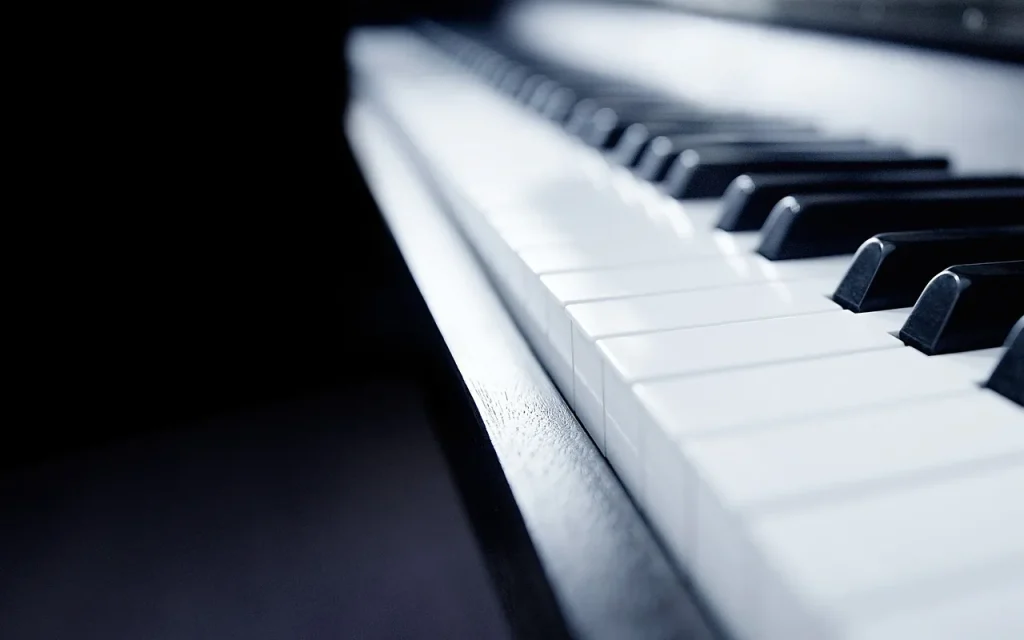
Purpose of this guide: to help you choose a piano in France based on how you will use it, your budget and your skill level. This article explains why the feel of the keyboard affects playing accuracy and technical progress.
Background: a well-designed digital piano reproduces the mechanics of an acoustic piano using weights, springs and sometimes a graded hammer action.
What you will find: an overview of the technologies (weights, sensors and hammer actions), quick in-store tests (turning off the volume and pressing a key very gently), the players each option suits (beginners, intermediate and advanced players, performers and music producers), and price ranges.
Specific examples: Thomann SP-320 (around €240), Roland FP-30X (around €599–€650), Yamaha CLP-825 (around €1,329) and CLP-735 (around €1,750). These reference points help you assess the quality of the action and how realistically it feels compared with an acoustic piano.
Why it matters: choosing the right keyboard helps maintain motivation and prevents poor technical habits. The sections below cover definitions, how the mechanisms work, tests and recommendations for different players.
Understanding piano action before buying in France
Before buying, it helps to understand why the feel of the keyboard shapes your musical progress.
First, define your needs: budget, format (portable, console or stage) and use (practice, performance or music production). These choices will guide you toward a type of instrument and a price range.
Digital pianos offer practical advantages: adjustable volume, headphone playing, MIDI/USB connections and no need for tuning. Depending on the range and technology, they can reproduce a highly convincing piano feel.
The standard remains an 88-key keyboard, as on an acoustic piano: choosing this format makes learning easier and helps you develop reliable technical reference points.
Prioritize what matters to you: realistic action, portability, speaker power, connectivity or practice features. The action often improves as the price rises; set a realistic budget for your level.
“Trying the instrument in a store is essential for judging the quality and consistency of its feel.”
- Compare portable, console and stage models according to their size and connections.
- Plan quiet tests with headphones and dynamic tests to check the response.
- If you want to choose a digital piano, try models in several price ranges before deciding.
Weighted keys vs heavy action: what’s the difference?
The feel beneath your fingers makes a difference. Here is a simple explanation of two common keyboard terms.
Simple definitions
Weighted keys: weights or a mechanism beneath each key recreate a sense of mass and inertia. The action may be graded, with heavier keys in the bass and lighter keys in the treble.
Heavy action: an overall sense of firmness and resistance similar to an acoustic piano mechanism. It is often found in quality hammer actions.
Effect on playing and interpretation
These characteristics improve control over dynamics. They help you play pianissimo notes more precisely and maintain steadier fingering.
A graded action makes articulation and release easier, supporting musical expression and pedal work.
Moving to an acoustic piano
Key advantage: fewer surprises when you move to an acoustic piano. Consistent resistance helps you adapt your technique more quickly.
| Feature | Effect on playing | Recommendation |
|---|---|---|
| Weights beneath the keys | Better dynamic response | Good for beginners and developing players |
| Hammer action | Grading from bass to treble and greater realism | Essential for classical pianists |
| Firm overall action | Pressure cues comparable to those of an acoustic piano | Choose according to your repertoire and physical comfort |
How weighted keys work on a digital piano
Understanding what lies beneath the keyboard helps you choose a digital piano that suits your playing.
Weights, springs and graded weighting
The role of weights: small weights add inertia to each key. They reproduce a sense of mass and continuous movement for a better dynamic response.
Springs: found in some entry-level and mid-range models, they produce a quicker return. This mechanism feels different from a hammer action and can suit portable keyboards.
Grading: this system makes bass keys heavier than treble keys, as on an acoustic piano. The progression supports balanced playing and precise dynamics.
Hammer action and high-resolution sensors
The best actions include small internal hammers that activate sensors. They simulate the movement of a stringless piano mechanism and improve note repetition.
High-resolution sensors translate key velocity into changes in sound. Their placement and quality affect repetition speed and the precision of each attack.
Finally, materials such as wood and textured composites improve durability and provide a better grip beneath the fingers. Manufacturers refine these systems to approximate an acoustic piano, so it is worth trying several models to feel the characteristics of each system.
Heavy action explained: feel, resistance and realism
Feeling progressive resistance helps you shape the sound and control phrasing. What is called a “heavy action” depends on several factors: the force needed to depress a key, the velocity curve, simulated escapement and rebound.

From bass to treble: progressive resistance
On a good keyboard, bass notes require more effort than treble notes. This grading supports rhythmic stability and sound control.
Hammer actions and sensor quality play a major role. Together, they create a feel close to an acoustic piano, rather than simply making the keys harder to press.
Why classical pianists favor this feel
This type of action allows better control of dynamics, more controlled legato and consistent attacks. Classical performers rely on these cues to develop fingering and use of arm weight.
Caution: excessive resistance causes fatigue. Play the instrument long enough to find a balance between firmness and comfort.
| Factor | Effect | Impact on the pianist |
|---|---|---|
| Key-depression force | Greater dynamic response | Control of dynamics |
| Velocity curve | Smooth transitions from pianissimo to forte | Greater expressiveness |
| Hammer action | Simulates acoustic piano mechanics | Easier adaptation to an acoustic piano |
Advantages and limitations: heavy action vs weighted keys
Your need for portability and your playing level both affect which keyboard feel is right for you.
Technique, expression, fatigue and finger endurance
Technical benefit: a firm action improves control of weight, precision of attacks and management of velocity. It helps with classical practice and expression.
Limitation: excessive resistance quickly causes fatigue, while an instrument that is too light does not help develop the necessary endurance.
Portability, instrument weight and practical constraints
Semi-weighted keyboards with 61 or 76 keys often weigh less than 8 kg. They suit live performance and music production.
Instruments with hammer actions are heavier but feel closer to an acoustic piano. They are ideal for a fixed setup.
“Choose according to how you will use it: practise with headphones if you live in an apartment, and prioritize connections for music production.”
- Intermediate and advanced pianists: favor a firm action to keep progressing.
- Musicians on the move: choose a semi-weighted keyboard for transport and performance.
- Apartment use: test the headphones and volume control.
| Criterion | Advantage | Advice |
|---|---|---|
| Technical control | Greater dynamic precision | Favor a hammer action |
| Fatigue | Can increase if the action is too stiff | Try it at length in a store |
| Portability | Better with a semi-weighted keyboard | Choose according to how often you travel |
Key sensitivity, velocity and aftertouch: what to check
Checking keyboard sensitivity is essential for playing with nuance and precision. A good piano translates each keystroke into dynamics and responds consistently across the registers.
A simple test: play very softly to check the dynamics
Turn off the sound or lower the volume to feel the initial resistance beneath your fingers. Then restore the sound and press a key very gently: if the threshold is well managed, an extremely light press should produce no sound.
Test rapid repetition and the consistency of the response between bass and treble. This reveals gaps in the dynamics and inconsistencies across the keyboard.
Essential velocity sensitivity; monophonic or polyphonic aftertouch according to your needs
Velocity: it translates the force of a keystroke into sound intensity and enables nuanced playing. It is essential on any piano, acoustic or digital.
Aftertouch: the monophonic version applies modulation to all held notes. The polyphonic version controls each note of a chord separately, which is useful for synth textures and expressive effects.
| Test | What it checks | Advice |
|---|---|---|
| Play very softly | Threshold and linearity | Test with the sound off, then with the volume on |
| Repeat notes rapidly | Sensor quality | Check consistency across registers |
| Velocity curve | Relationship between touch and sound | Adjust the setting in the menu |
Weighted keyboards and graded weighting for a more realistic feel
A weighted keyboard distributes different amounts of weight across the registers to imitate piano mechanics. This distribution makes key movement feel more natural and closer to that of an acoustic piano.
Weighting by register:
- Heavier in the bass and lighter in the treble to reflect real inertia.
- More consistent tone and better balance across registers.
Weighting by register: heavier in the bass, lighter in the treble
Grading reproduces the difference in weight between bass and treble keys. It improves control of attacks and makes legato easier across the entire keyboard.
When a weighted keyboard becomes essential
Essential for classical piano study, exam preparation or any serious work on dynamics.
Weighting reinforces muscle memory and allows a smoother transition to an acoustic piano. Test whether the grading is even, with no abrupt changes between sections of the keyboard.
| Criterion | Effect | Advice |
|---|---|---|
| Weight distribution | Realistic playing feel | Favor smooth grading |
| Dynamic control | Improved dynamics and legato | Try playing a classical piece |
| Transition to acoustic piano | Consistent muscle memory | Choose this type of keyboard if you also play an acoustic piano |
Keyboard types at a glance: weighted, semi-weighted and unweighted
Comparing keyboard types helps you choose an instrument suited to your playing.
Three main categories:
- Unweighted — very light and quick to respond, but less realistic for piano playing; useful for synths or mobile keyboardists.
- Semi-weighted — often spring-based, offering a balance between lightness and resistance. Suitable for performance and music production; 61- or 76-key models often weigh less than 8 kg. Example: Thomann SP-320 (around €240).
- Weighted or hammer action — resistance closer to an acoustic piano, better grading and more useful technical reference points.
Which should you choose for your level?
Beginners: choose at least a decent semi-weighted keyboard to develop good habits. Ideally, look for an affordable hammer action.
Developing players: favor graded weighting and a clear velocity response. Quality digital pianos offer better control over dynamics.
Performers: choose a light, sturdy, well-connected semi-weighted keyboard. Favor a compact model if you often transport your equipment.
“A good choice from the outset makes progress easier and helps prevent poor habits.”

Number of keys: why 88 remains the standard
Choosing the right keyboard range avoids frustrating compromises in daily practice.
Origin and standard: the acoustic piano sets the 88-key reference, with 52 white keys and 36 black keys. This range covers most classical and contemporary repertoire.
Practice and learning: working on 88 keys preserves fingering reference points and makes reading scores easier. Moving to an acoustic piano then feels more natural.
Keyboards with 61 or 76 keys remain useful for performance or limited spaces. They are a practical compromise for music production and mobile musicians, but they restrict some exercises and pieces that require a wide range.
Advice: aim for 88 keys if you intend to study regularly or prepare for exams. Also check that the size and layout of the keys are close to those of an acoustic piano so you can develop accurate movements.
“A full keyboard supports technical development and makes it easier to adapt to different instruments.”
- 88 keys: ideal for study and the full repertoire.
- 61 or 76 keys: practical, but limiting for some works.
- Choose according to your use and available space.
Choosing for your level: beginners, intermediate and advanced players
A good match between your level and your instrument helps prevent technical obstacles and unnecessary fatigue. Adjust your budget and expectations to your level so you can progress comfortably.
Beginners
Beginners should choose at least a semi-weighted keyboard to develop sound technique. An instrument that is too light makes it harder to learn how to use arm weight properly.
Check the consistency of the keys and their velocity response to build a good foundation for learning.
Intermediate players
Intermediate pianists benefit from a hammer action with precise sensors. At around €600–€700, models such as the Roland FP-30X offer good dynamic control and a convincing piano feel.
Advanced players
Advanced pianists should favor fine grading and an escapement feel for a response close to an acoustic piano. Higher-end models, such as the Yamaha CLP-735, offer the materials and dynamic range needed for demanding repertoire.
- Practical advice: match your investment to your progress so you avoid both an inadequate instrument and unnecessary expense.
- Compare several models in a store before buying.
Choosing for your use: classical piano, music production, stage or apartment
The ideal instrument changes depending on whether you compose, perform or live in an apartment. Define your main goal first to identify the essential features.
Music production and MIDI controllers
For music production, favor a semi-weighted MIDI controller with aftertouch. USB/MIDI connectivity to a computer and low latency are essential.
Monophonic or polyphonic aftertouch makes it easier to modulate and control synths. Portability is also useful if you move your equipment often.
Quiet playing, headphones and portability
In an apartment, a digital piano with a headphone output and volume control is recommended. Built-in speakers are often enough for daily practice.
For live performance, look for a sturdy instrument, dedicated audio outputs, split/layer functions and performance memories to save time at shows.
| Use | Priority | Advice |
|---|---|---|
| Classical piano | Heavy action, grading, 88 keys | Favor a hammer action and consistent feel |
| Music production | USB/MIDI, aftertouch, low latency | Lightweight, semi-weighted MIDI controller |
| Apartment | Headphones, adjustable volume, quiet pedals | Choose a compact digital piano |
| Stage | Durability, audio outputs, manageable weight | Performance features and easy transport |
To compare models and narrow your choice, consult a digital piano comparison guide. It can help musicians find the instrument best suited to their playing.
How to test a piano in a store: quick methods that make a difference
A focused in-store trial helps you notice details that affect how an instrument plays. Allow 10 to 15 minutes per piano and focus more on its mechanical feel than on the sound you hear at first.

Zero-volume test: feel the initial resistance and rebound
Turn the volume off or use silent headphones. Move across the entire keyboard, placing each finger gently on the keys.
Feel for resistance at the start of each keypress, rebound and consistent pressure. Play slow scales to detect differences in weight or friction between keys.
Dynamic test: from pianissimo to fortissimo without gaps
Restore the sound and test the triggering threshold: begin with the lightest possible press, then gradually increase the force until you reach fortissimo.
Check for gaps in the response: no note should sound too early or remain silent under a very light but deliberate keystroke. Compare several pianos in the same price range to refine your judgment.
- Tip: play a fast passage, followed by a long legato passage, to check response and note consistency.
Budgets and price ranges: from entry level to premium
Setting a budget quickly shows which pianos genuinely suit your needs. Whether you prioritize mobility, technical consistency or realism, price often affects the type of action and sound quality available.
At around €240
For about €240, expect a portable, semi-weighted instrument that is easy to transport.
These models offer basic features: a headphone output, built-in sounds and a basic pedal. They are a good choice for mobility, but the quality of the action and its grading are limited. Example: Thomann SP-320.
At around €600–€700
In this range, you can find hammer actions and a clear improvement in dynamic control.
Velocity response is more faithful, repetition is better and consistency improves. This range suits committed students and intermediate musicians. Reference model: Roland FP-30X.
Above €1,500–€1,700
Higher-end models offer fine grading, better materials and advanced sensors.
Sound projection and fidelity to an acoustic piano are markedly better. This is an option for anyone seeking a very good digital piano for professional preparation. Examples: Yamaha CLP-735 and CLP-825.
Advice: consider your current and future needs to avoid unnecessary expense or an instrument you may soon outgrow.
Keyboard brands and technologies: Yamaha, Roland, Kawai, Casio and Korg
Each manufacturer offers distinct mechanical characteristics. Yamaha, Roland, Kawai, Casio and Korg strike different balances between realism and portability.

Understanding the names and how the actions feel
Yamaha: GHS/GH/GrandTouch — graded actions suited to study.
Roland: PHA-4/PHA-50 — wood inserts on higher-end models and carefully tuned rebound.
Kawai: Graded/Responsive Hammer (Grand Feel) — progressive resistance and repetition.
Casio: Smart Scaled Hammer/Hybrid — compact designs and good value.
Korg: RH3 — stage-focused responsiveness.
Reference models and prices
Examples of prices in France: Yamaha P-145 (around €385–€436), YDP-145 (around €833), CLP-825 (around €1,329); Roland FP-10 (around €398), FP-30X (around €599), FP-90X (around €1,749); Kawai ES920 (around €1,100); Casio PX-S1100 (around €511), PX-770 (around €749) and mid-range AP-470.
“Higher-end actions stand out through more even grading, precise sensors and, sometimes, keys with wood inserts.”
| Manufacturer | Action family | Emphasis |
|---|---|---|
| Yamaha | GHS/GH/GrandTouch | Study, dynamic balance and durability |
| Roland | PHA-4/PHA-50 | Precise rebound and wood inserts on higher-end models |
| Kawai | Graded/Grand Feel | Realistic grading and repetition |
| Casio | Smart Scaled/Hybrid | Portability and good value |
| Korg | RH3 | Stage responsiveness and fast playing |
Digital or acoustic piano: which offers a better feel?
Choosing between a digital model and an acoustic instrument involves balancing practicality and musicality. The action and sound projection remain central to the decision.
Digital advantages: volume, headphones, connectivity and maintenance
A digital piano is practical in urban settings: adjustable volume and headphones reduce disturbance. It also offers MIDI/USB ports, a built-in recorder and effects useful for music production.
These instruments require little maintenance and no tuning. Modern keyboards provide good quality of action for home practice.
When an acoustic piano is preferable for musicality
An acoustic piano retains an advantage in tonal richness and natural sound projection in a room. For group rehearsals or demanding repertoire, its dynamic response remains superior.
In practice, compare the strengths of different pianos according to how often you play, your budget and your available space. One practical approach is to use a digital piano for daily practice and an acoustic piano when performing on stage or in a hall is your priority.
Useful learning features to check in the specifications
Look for features in the specifications that will genuinely help you progress.
Some functions are essential in a piano for learning. Look for a built-in metronome, recorder and learning modes. Sound libraries, effects, transposition and a sequencer make exercises more flexible.
Polyphony should be at least 64 notes. The higher it is, the less likely notes are to cut off when you layer sounds or use accompaniment. Also check the quality of the keyboard response to ensure faithful dynamics.
Connections matter: USB/MIDI for connecting the piano to a computer, Bluetooth audio/MIDI depending on your needs, and headphone and line outputs for quiet practice or recording.
- Practice tools: metronome, recorder and learning modes.
- Ease of use: headphone outputs, included pedals and split/dual functions.
- Technical features: at least 64-note polyphony and consistent key response.
| Feature | Impact | Advice |
|---|---|---|
| Polyphony | Prevents notes from cutting off in layered sounds | At least 64 notes, preferably 128 or more |
| Connectivity | Connection to a computer and other devices | USB/MIDI; Bluetooth can be useful |
| Headphone output and speakers | Practical for apartment use | Test quality and latency |
Conclusion
Ultimately, choosing a realistic action pays off technically and musically. ,
Summary: weighted keys already improve playing comfort; a firmer, graded piano action feels more realistic and makes the transition to an acoustic piano easier.
To choose a piano, first define how you will use it and set your budget. Shortlist two or three models, such as the Roland FP-30X and Yamaha CLP-735, then test their dynamic response and key comfort in a store.
Practical advice: choose a very good digital piano that meets your needs rather than an unsuitable compromise. It is a lasting investment in motivation and playing quality.