
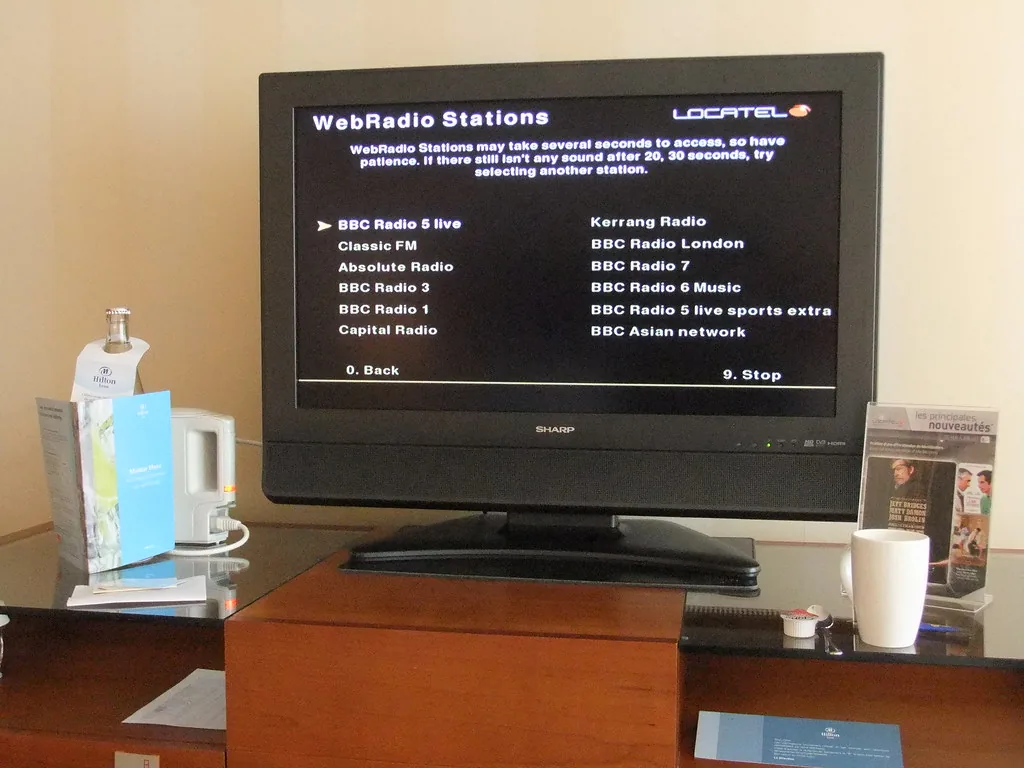
Radio is one of the oldest and most popular media. It continues to evolve in the digital age. Since its invention in the nineteenth century, it has come a long way to reach continuous audio streaming over the Internet, known as web radio. This section traces the history of radio, from the earliest experiments in wireless transmission to the emergence of today’s web radio stations.
Radio’s first technological advances
Radio broadcasting emerged from several major technological advances that transformed the way we listen to radio. One decisive discovery was that of electromagnetic waves by Heinrich Rudolf Hertz in 1886. It laid the groundwork for wireless sound transmission, a concept that would give rise to radio broadcasting.
Wireless transmission required a device capable of detecting and reproducing radio waves. Édouard Branly invented such a radio-wave receiver in 1890. The device made it possible to convert electromagnetic waves into sound signals, paving the way for music and speech to be transmitted over long distances.
These technological advances laid the foundations of modern radio as we know it. Thanks to radio broadcasting, audio programs could be transmitted on a large scale, giving broad audiences access to varied content. Radio quickly became a popular and essential medium.
| Technological advances | Year |
|---|---|
| Discovery of electromagnetic waves | 1886 |
| Invention of the radio-wave receiver | 1890 |
With these early advances, radio took off and began to play a major role in spreading information, music, and entertainment. These discoveries, however, were only the beginning of its technological evolution. In the next section, we will explore how radio became popular with the general public and what developments followed.
How radio became popular with the general public
During the 1920s and 1930s, radio grew increasingly popular with the general public. Technological progress enabled many radio stations for mass audiences to emerge around the world. Their varied broadcasts quickly captured listeners’ attention. These radio stations became part of daily life in many households, offering entertainment, news, and music.
Radio receivers also played a key role in radio’s growing popularity. Thanks to technological progress, they became smaller, more affordable, and more accessible. Families could now buy a radio set and enjoy daily broadcasts from their living rooms. Radio thus became an essential part of everyday life, connecting listeners to a world of information and entertainment.
Daily broadcasts
Daily broadcasts helped make radio popular by offering varied programs that met the public’s expectations and interests. Listeners could enjoy comedies, live concerts, radio plays, and variety shows. News and commentary programs also helped them follow current events and form opinions on the issues of the day.
The variety of daily broadcasts helped build loyal audiences and made radio indispensable in everyday life. Listeners developed the habit of tuning in to their favorite programs at set times, creating a routine that strengthened their attachment to radio. The medium’s popularity with the general public opened new opportunities for the radio industry and marked a turning point in the history of audio broadcasting.
Table
| Radio station name | Type of program | Broadcast hours |
|---|---|---|
| Radio Paris | Music, news, commentary | 7 a.m.–10 p.m. |
| BBC Radio | Entertainment, news, documentaries | 6 a.m.–11 p.m. |
| Radio Berlin | Concerts, cultural programs | 8 a.m.–8 p.m. |
Radio’s growing popularity with the general public marked an important stage in the medium’s evolution. Radio stations multiplied, offering varied programs for every taste. Radio receivers became common in homes, allowing listeners to enjoy daily broadcasts there. Radio thus took an essential place in everyday life and opened new opportunities for the audio broadcasting industry.
The rise of modern radio and pirate stations
In the 1950s, the arrival of the transistor revolutionized radio by making miniaturization possible. Radio sets became more portable and their use more personal, creating new opportunities to listen outside the usual places. Thanks to this technological advance, listeners could tune in while traveling or in the comfort of their homes.
This evolution also led to the emergence of pirate radio stations, which broadcast illegally on unauthorized frequencies. Pirate radio stations sparked controversy because they offered an alternative to the programming of official radio stations. They gave listeners a wider variety of music and programs, challenging the dominance of traditional media.
Pirate radio stations played an important role in broadcasting underground music genres and helped popularize rock and roll and various countercultural movements. They defied existing regulations and attracted large audiences despite authorities’ attempts to shut them down.
The popularity of pirate radio eventually prompted authorities to revise radio-frequency regulations, paving the way for greater diversity across the airwaves. Today, although pirate stations are less common than before, their influence can still be felt in music and popular culture.
The rise of modern radio and pirate stations
| Technological advance | Impact on radio |
|---|---|
| Transistor | Miniaturization of radio sets |
| Pirate radio stations | Illegal broadcasting on unauthorized frequencies |
| Revised regulations | Greater diversity across the airwaves |
Conclusion
The emergence of web radio marks a new stage for radio in the digital age. Web radio stations offer new media opportunities by giving listeners access to a variety of audio content streamed continuously over the Internet. By bringing the evolution of radio broadcasting together with online platforms, Internet radio opens new possibilities for the radio industry.
Today, radio is more accessible than ever and continues to evolve to meet listeners’ changing needs in the digital age. Thanks to Internet radio, they can enjoy a wide range of music genres, podcasts, and special programs at any time and wherever they are.
Web radio also offers new opportunities for content creators: it allows them to broadcast their programs and reach a global audience without the geographic limits of traditional radio. This evolution opens a new era of diversity and experimentation in the radio industry and gives listeners access to new voices and perspectives.
FAQ
What is the history of web radio?
Web radio grew out of traditional radio’s evolution toward continuous audio streaming over the Internet. It offers a variety of audio content available through streaming.
What were radio’s first technological advances?
Early advances include Heinrich Rudolf Hertz’s discovery of electromagnetic waves and Édouard Branly’s development of the first radio-wave receiver. These discoveries made the wireless transmission of music and speech possible.
How did radio become popular with the general public?
In the 1920s and 1930s, the first radio stations for mass audiences began to emerge. Their daily broadcasts became part of life in many households. Radio receivers became smaller and more accessible.
What impact did the transistor have on modern radio?
The arrival of the transistor in the 1950s revolutionized radio by enabling miniaturization. Radio sets became more portable and their use more personal. This evolution also led to the emergence of pirate radio stations, which broadcast illegally on unauthorized frequencies.
What opportunities does Internet radio offer?
Web radio stations offer new media opportunities by giving listeners access to a variety of audio content streamed continuously over the Internet. They therefore open new possibilities for the radio industry in the digital age.