
Goal of this guide: to help you choose between two common keyboard sizes based on how you play, your experience, and the space you have. It offers practical advice and examples of instruments suited to beginners and developing players.
The main difference: a compact, affordable keyboard suits smaller spaces, while a standard keyboard gives you access to the full repertoire and a feel closer to an acoustic instrument.
This article is for beginners looking for an instrument to learn at home, amateur musicians playing pop songs, and pianists interested in more demanding works.
The rest of the guide explains the standard keyboard size, compares 61 and 88 keys, covers the main buying criteria, recommends options for different players, and ends with advice to help you decide.
Consider the number of keys, but also polyphony, key action, weight, and accessories to avoid a disappointing purchase. Our promise: to save you time and help you avoid common mistakes.
For a full comparison and recommended models, see this detailed buying guide.
Understanding key counts and the standard acoustic piano keyboard
Understanding a keyboard’s range helps you anticipate what music you can play and the technical demands it brings.
Why 88 keys? From piano history to today’s acoustic standard
The modern acoustic piano established the 88-key standard around 1890, driven by makers such as Steinway & Sons. This size provides a full range suited to human hearing.
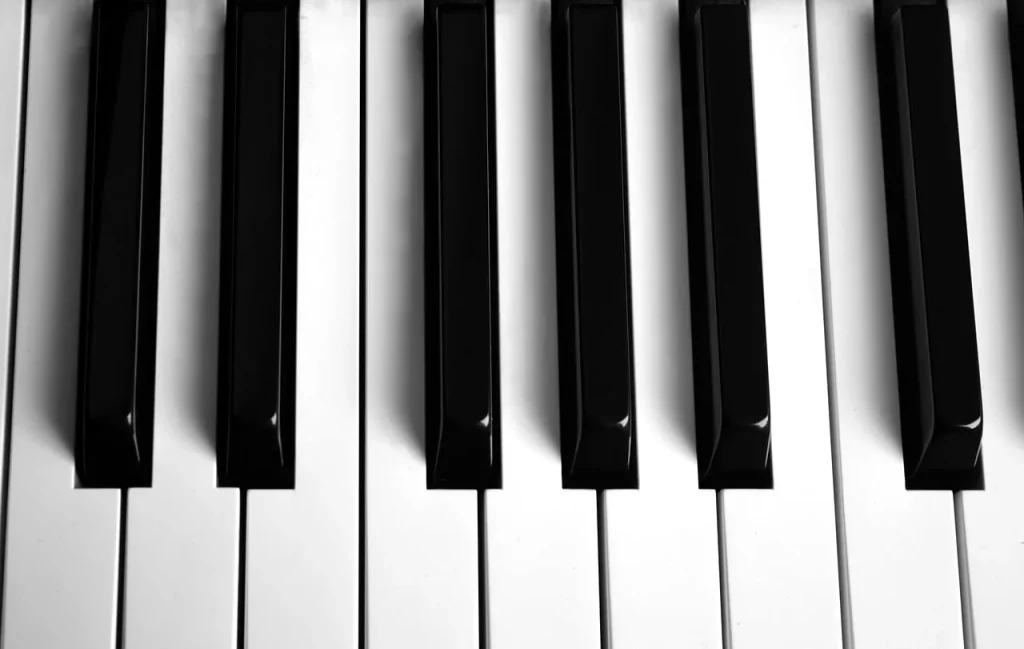
The keyboard has 52 white keys and 36 black keys. Their visual and tactile pattern helps you find notes and position your fingers. Piano keys make it easier to move intuitively across the keyboard.
The range runs from approximately 27.5 Hz at A0 to 4,186 Hz at C8, spanning nearly seven octaves and a minor third. In the 18th century, keyboards typically covered about five octaves.
Modern keyboards also come in smaller sizes. Models with 25 to 88 keys serve different needs, from portability and learning to advanced playing.
61 or 88 keys on a digital piano: a quick comparison
Compare keyboard range, playing feel, and the music each size lets you play.
Range and octaves
Five octaves cover most melodies and modern accompaniments. A full keyboard provides about 7.25 octaves, reaching deep bass notes and the highest treble notes.
Repertoire and styles
For pop, rock, and popular music, a shorter range is often enough.
For classical music, advanced jazz, or demanding compositions, the full range soon becomes necessary.
Key action and playing feel
Many 88-key models offer weighted, graded action, which helps develop technique and expression.
Compact keyboards tend to have a lighter action, useful for learning and rehearsing on the move.
Size, transport, and price
Compact keyboards often weigh less than 10 kg and fit easily in a carrying case. Larger models weigh between 7 and 20 kg, depending on their design.
Models to consider: Casio CT‑S100, Rockjam 61, Roland GO‑61P, and Yamaha NP‑12 among compact keyboards; Roland FP‑10, Yamaha P‑145, and GO:PIANO 88 among full-size keyboards.

Key factors when choosing a digital piano
To spend wisely, start by listing your practical constraints and musical goals.
Budget and price ranges
Budget: within a comparable range, an 88-key model often costs more than a compact one. Compare brands and finishes to assess value for money.
Price varies with the brand, key mechanism, and electronics. Set a price range before trying instruments.
Available space and portability
Think about size: more keys generally mean a larger, heavier instrument. Measure the available space and the height of the stand.
If you travel often, choose a folding stand and a protective case. These accessories protect the instrument and make it easier to carry.
Skill level, learning, and repertoire
Beginners can start with a compact model and make quick progress.
If your goal is to play a broad classical repertoire, choose an instrument with a wider range as soon as you can.
Polyphony and key count
Do not confuse key count with polyphony: polyphony, whether 64, 128, or 256 voices, indicates how many notes can sound at once.
For layering sounds and making extensive use of the pedal, 128 voices or more provide a richer sound.
“Compare models in similar price ranges before deciding; playing comfort and sound quality matter more than keyboard range alone.”
| Criterion | Compact | Mid-range | Full-size |
|---|---|---|---|
| Average price | Low | Medium | High |
| Portability | Excellent | Good | Limited |
| Recommended repertoire | Pop, accompaniment | Popular music, introductory classical pieces | Classical music, advanced jazz |
| Recommended polyphony | 64–128 | 128 | 128–256 |
List your priorities: budget, transport, headphone use, connections, and accessories. For an overview, see this buying guide, which explains each criterion and helps you decide.
Which keyboard size suits which musician? Practical recommendations
Depending on your goals and available space, some models make playing easier and more motivating.
Ideal for beginners and smaller budgets: a compact instrument remains the best way to start learning without spending too much. Light and easy to carry, it lets you get started quickly.

Recommended beginner models
Casio CT‑S100: very affordable and able to run on batteries, but it has no pedal input.
Rockjam 61: a complete set with a stand, stool, pedal, and headphones, ideal for getting started with confidence.
Roland GO‑61P: useful if you want Bluetooth and lessons through Skoove.
Yamaha Piaggero NP‑12: good sound and portability, with battery life of up to 16 hours.
What if you are making progress?
A 76-key keyboard offers a useful middle ground, giving you more range without the size of a larger instrument.
To strengthen your technique, entry-level 88-key models such as the Roland FP‑10 and Yamaha P‑145 remain sensible investments.
Practical tip: check for USB/MIDI and Bluetooth connectivity, a pedal input, a suitable stand, and a case if you travel often. To explore more options and detailed model reviews, see our selection.
Conclusion
The best choice depends on your priorities: space, budget, portability, and repertoire. A compact model lets you start learning at a lower cost, while a keyboard with a wider range supports technical progress and opens up classical works.
Do not overlook key action, polyphony, or speaker quality. These directly affect playing enjoyment and dynamics, beyond the number of keys alone.
If you are still unsure and want to play demanding music, choose a full keyboard. Otherwise, a light, well-equipped model is enough to start and keep improving.
For a detailed overview and recommended models, see our complete guide, and budget for a suitable pedal, stand, and case.