
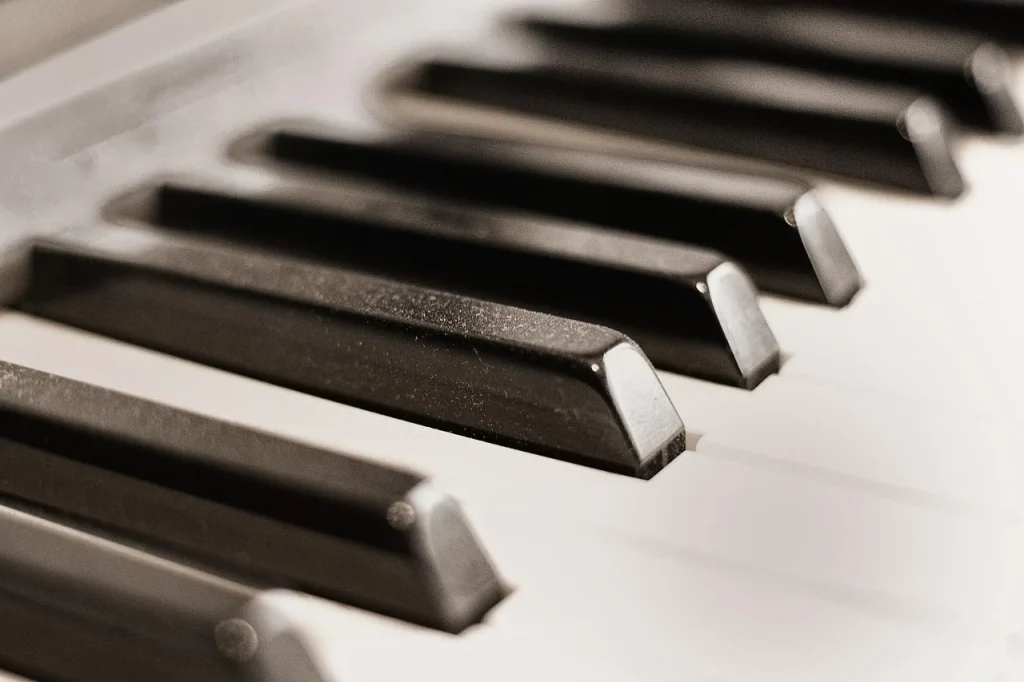
2025 guide to choosing the right instrument for your budget, needs and skill level.
Roland offers a wide range, from compact cabinet pianos to stage models and grand pianos. The HP, RP, F, FP, RD, LX and GP families cover home practice, travel and performance.
This article also explains the difference between a digital piano and an acoustic piano: sampling, sound engines and keyboard action shape expressiveness. PHA-4, PHA-50 and Hybrid Grand keyboards directly affect the feel and playing experience.
Finally, we look at the SuperNATURAL, PureAcoustic/Piano Reality and ZEN-Core sound engines, as well as speaker systems and connectivity (Bluetooth Audio/MIDI, USB). Use this guide to compare quality, price, technology and resale value.
Quick buying guide for France: how to choose a Roland digital piano for your needs
Start by deciding how you will use the instrument, how much space you have and what you can spend. Consider a cabinet piano for home or a portable model for performances and travel.
Clear priorities: choose a PHA-4 keyboard for an encouraging feel while learning. Beginners will find a good balance in the FP-10, RP102 and F107.
- Look for enough polyphony—some models offer up to 256-note polyphony to prevent notes from cutting off in complex pieces.
- Assess the audio system for your room: powerful speakers are useful in a large living room.
- If you play in a band, check the audio outputs, USB ports and stage controls.
“Bluetooth Audio/MIDI connectivity makes online lessons, recording and accompaniment easier.”
| Use | Recommended models | Key benefit | Price range |
|---|---|---|---|
| Beginners | FP-10, RP102, F107 | PHA-4 keyboard, learning features | Entry level |
| Value for money | FP-30X, RP701, F701 | 256-note polyphony, Bluetooth | Mid range |
| Stage and professional use | RD-88, RD-2000, FP-90X | Stage-friendly controls, advanced sound engine | High end |
Tip: plan for future needs: connectivity and sound quality affect resale value. For a more immersive experience, consider PHA-50 keyboards and PureAcoustic/Piano Reality technology.
Roland ranges at a glance: understand the options by use
This guide compares options for home, travel and stage use. It helps you choose a piano based on your space, mobility needs and playing level.

Cabinet digital pianos (HP, RP, F): style and comfort at home
The HP, RP and F series are designed for the living room, with integrated cabinets, three pedals and speaker systems. The HP704 and HP702 offer a PHA-50 keyboard and the SuperNATURAL engine for an expressive feel.
FP portable digital pianos: mobility and versatility
The FP series runs from the FP-10 to the FP-90X. Compact models suit musicians and students. The FP-30X stands out for its high polyphony and Bluetooth Audio/MIDI.
RD stage pianos: live performance and advanced connectivity
RD instruments prioritize durability, sound libraries and hands-on controls. The RD-88 and RD-2000 provide ZEN-Core, faders and buttons for controlling sound on stage.
“Choose according to how you will play: comfort at home, a compact instrument for travel or practical controls on stage.”
Roland cabinet digital pianos: HP, RP and F series for the home
When creating a comfortable piano space at home, the cabinet affects the sound as well as the playing experience.
HP series—premium finish and refined feel
The HP704 and HP702 offer a PHA-50 keyboard and SuperNATURAL technology for dynamic responses close to those of an acoustic piano.
The HP704 has a four-speaker system and Headphones 3D Ambience for an immersive headphone experience.
RP series—value for money as you progress
The RP102, RP701 and RP107 use the PHA-4 keyboard and SuperNATURAL. The RP701 adds Bluetooth Audio/MIDI and up to 256-note polyphony.
These models include three pedals and learning features useful to beginners.
F series—compact, practical and connected
The F701 and F107 save space. They combine PHA-4, SuperNATURAL and Bluetooth for apps and audio streaming.
The F701 offers 2 × 12 W amplification and an effective headphone mode for playing without disturbing others.
“For home use, choose the series that best balances keyboard feel, speaker power and learning features.”
| Series | Key benefits | Recommended use | Price range |
|---|---|---|---|
| HP704 / HP702 | PHA-50, SuperNATURAL, four speakers (HP704), Headphones 3D | Discerning pianists, living rooms | High end |
| RP102 / RP701 / RP107 | PHA-4, SuperNATURAL, Bluetooth (RP701), 256-note polyphony | Beginners to intermediate players, learning | Entry to mid range |
| F701 / F107 | Compact design, PHA-4, Bluetooth, 2 × 12 W (F701), convenient headphone use | Small spaces, families | Mid range |
Roland FP portable digital pianos: from the FP-10 to the FP-90X
FP models span a wide range, from entry-level keyboards to premium portable instruments. They suit beginners, travelling musicians and discerning pianists seeking a good balance of sound, feel and portability.

FP-10—a strong entry-level option
The FP-10 has an 88-key PHA-4 keyboard with escapement and an Ivory Feel finish. Its SuperNATURAL engine offers 96-note polyphony, a natural feel for beginners and an attractive price.
FP-30X—a popular all-round model
The Roland FP-30X stands out for its 256-note polyphony and Bluetooth Audio/MIDI. With 2 × 11 W amplification, it suits online lessons, USB recording and light production work.
FP-60X / FP-E50—more features for playing and learning
The FP-60X includes the PHA-50, more powerful speakers and a microphone input. The FP-E50 adds engaging accompaniment features to help maintain motivation.
FP-90X—premium portability
The FP-90X offers PureAcoustic/Piano Modeling, unlimited piano polyphony and a 2 × 25 W + 2 × 5 W speaker system. It is a suitable choice for an experience close to a living-room piano or for a small stage.
“Choose according to use: weight, speaker power and keyboard feel determine long-term satisfaction.”
- Portability: check the weight and available stands and pedal units.
- Connectivity: check Bluetooth, USB and recording outputs.
- Value: the most popular models retain good resale value.
Roland RD stage pianos: a benchmark for live performance
For stage use, the RD series combines practical controls, rich sounds and reliable hardware.

RD-88 and RD-88 EX
The RD-88 emphasizes portability. Lightweight, it offers more than 3,000 sounds through ZEN-Core and accessible stage controls.
The RD-88 EX adds a PHA-4 keyboard and built-in stereo speakers. It is ideal for rehearsals and small venues.
RD-08
The RD-08 echoes the spirit of the RD-1000. It emphasizes vintage character while incorporating SuperNATURAL technology.
This model is valued in studios and concerts for its acoustic and electric piano sounds and authentic feel.
RD-2000 and RD-2000 EX
At the high end, this model combines two engines, V-Piano and SuperNATURAL. It offers nine faders, LED buttons and multiple outputs for touring.
USB/MIDI connectivity supports integration with software and sound systems. Its controls deliver reliability and precision.
- Choosing: prioritize portability for touring, and the keyboard and controls for larger stages.
- Studio: the outputs and USB make direct recording and control of external modules easier.
| Model | Benefits | Recommended use | Price range |
|---|---|---|---|
| RD-88 | ZEN-Core, low weight, stage controls | Travelling performances, rehearsals | Entry-level professional |
| RD-88 EX | PHA-4, built-in stereo speakers | Small stages, practice | Mid range |
| RD-2000 / EX | V-Piano + SuperNATURAL, faders, outputs | Touring, professional studios | High end |
“The RD series remains a benchmark for demanding musicians seeking consistent sound and control on stage.”
Premium Roland LX upright digital pianos: style and acoustic realism
The LX series pairs considered design with sound close to that of an acoustic piano.

LX-5—compact and expressive
The LX-5 offers a more compact design with a PHA-4 keyboard. It combines Piano Reality modeling and SuperNATURAL for a feel very close to an acoustic piano.
LX-6—power and modern tools
With PHA-50, the LX-6 improves keyboard feel and dynamics. Its Acoustic Projection system widens the soundstage through multiple speakers.
Built-in Bluetooth and recording make it easier to record and learn with apps.
LX-9—top of the series
The LX-9 includes a Hybrid Grand keyboard and Piano Reality Projection. Polished black and white finishes give it a premium appearance, while touch detection provides great precision.
Why choose the LX series: it suits demanding pianists seeking an inspiring playing experience, fine nuances and comfortable headphone use. Its design fits the living room while providing a true everyday piano.
Choose according to space and skill level: pick the LX-5 if space is limited, the LX-6 for a good balance and the LX-9 for a sound closer to a grand piano. Durability and resale value remain strong, helping to manage the total cost of ownership.
For more information, see this practical guide to the instrument and its uses.
Roland GP digital grand pianos: elegance and advanced technology
The GP series offers a fresh take on the grand piano: refined finishes, a striking presence and advanced sound engines for realistic results.
GP-3 and GP-6
The GP-3 offers a compact design with Piano Reality modeling for an immersive experience.
The GP-6 suits more spacious rooms, with more powerful speakers for expansive projection.
GP607
The GP607 combines Bluetooth, PHA-50 and SuperNATURAL. It suits modern living rooms seeking a connected, elegant instrument.
GP-9 and GP-9M
At the top of the range, these models offer advanced modeling, XLR outputs and a microphone input. They suit concert performers and demanding studios.
“A GP digital grand piano offers the appearance of a premium cabinet while remaining versatile for recording and performance.”
- Use: private concerts, conservatories, studios and premium living rooms.
- Choosing: select a compact or larger model according to your space and desired sound power.
- Value for use: a premium investment justified by quality, finish and technology.
| Model | Benefits | Recommended use |
|---|---|---|
| GP-3 | Piano Reality, compact design | Living rooms, smaller spaces |
| GP-6 | Optimized speakers, powerful projection | Private rooms, conservatories |
| GP607 | Bluetooth, PHA-50, SuperNATURAL | Receptions, modern living rooms |
| GP-9 / GP-9M | Professional modeling, XLR, microphone | Concerts, professional studios |
Roland digital pianos: ranges and key factors for deciding in 2025
A successful purchase rests on three pillars: keyboard feel, sound engine and projection.
Keyboards and feel
Compare PHA-4, PHA-50 and Hybrid/Grand by how they feel to play. The PHA-4 keyboard suits entry- and mid-range models. PHA-50 offers greater precision and dynamics. Hybrid/Grand (LX-9) offers escapement and an Ivory Feel finish close to those of an acoustic instrument.
Sound engines
Choose according to use: SuperNATURAL for natural sound, PureAcoustic/Piano Reality for highly realistic modeling, and ZEN-Core for a broad range of stage sounds.
Sound, projection and polyphony
Assess the speaker system: multiple speakers for living rooms and Headphones 3D Ambience for headphone use. Aim for at least 128 notes of polyphony; some models offer 256.
Connectivity, budget and durability
Bluetooth Audio/MIDI and USB recording support learning and live performance. By budget: entry level (FP-10, RP107, F107), mid range (Roland FP-30X, RP701, F701) and high end (FP-90X, LX-9, GP-9).
- Care: dust the instrument, avoid sunlight and changes in humidity, and arrange periodic servicing.
- Value: a well-maintained piano retains strong resale value.
“Prioritize keyboard feel and sound projection for the space where you will play.”
Conclusion
The best choice balances playing comfort, sound power and portability.
First, define your intended use, budget and skill level. Then compare the feel, sound engine and speaker system to narrow your choice.
Quick guide: FP for portability, HP/RP/F/LX for home, RD for the stage and GP for the elegance of a grand piano.
For a controlled budget, consider the FP-10 or FP-30X. For the highest demands, look at the FP-90X, LX-9 or GP-9. The RD-88 and RD-2000 remain stage benchmarks.
Try models in a shop to assess the keyboard feel and listening comfort. Modern connectivity makes learning, recording and creating easier.
The result: easy maintenance, durability and resale value help protect your investment. Compare two or three models and choose according to your music, space and budget.