
This article provides a clear overview of instruments from the Japanese brand founded in 1946. It aims to help you choose according to your budget, intended use and available space.
Here you will find a structured selection: compact entry-level models, portable 88-key keyboards, Privia models for the stage and cabinet-style models. Each instrument is assessed for its keyboard, sound quality, features, portability and price.
Casio remains synonymous with innovation thanks to its AiR and AiX sound engines and Tri-Sensor key actions. These strengths explain its good value and appeal for playing at home, in the studio or on stage.
We offer practical advice to help you balance your choice of model, price and space requirements. For an overview of cabinet-style and Celviano models, see the Celviano series.
Why choose a Casio digital piano today?
Choosing a Casio instrument today means choosing a combination of innovation and practicality. The brand pairs its own sound engines with lightweight designs to suit a range of uses.
AiR and AiX sound innovation, reliability and mobility
AiR and AiX are central to the sound. These technologies deliver rich sound quality and expressive tones. They make practice and stage performance more convincing.
High-end keyboards offer up to 256-note polyphony and a Tri-Sensor key action. This improves dynamic control and the precision of the touch.
The range also includes compact models that can run on batteries. USB and Bluetooth connections make them easier to use with other devices. The result is a selection of portable, reliable instruments for rehearsing anywhere.
Recognized value for players at every level
The consistency of the range is a real advantage. From a first instrument to stage models, the brand maintains a consistent standard of finish.
“Carefully designed sounds, useful features and an accessible price: a combination that suits most players.”
- Advantages: varied sounds, accompaniments and connectivity.
- Uses: quiet practice, composition or stage performance.
- Value: accessible prices and solid technical features.
Casio digital pianos: models worth choosing
Our selection is based on practical criteria and verified user feedback. We assessed the balance between sound quality, touch, features, portability and durability.
How we chose the models
Each model was tested in real-world conditions. We examined keyboard ergonomics, the range of sounds and stability during regular use.
Connectivity (USB, Bluetooth), learning modes and room to grow all influenced the selection. User feedback confirmed the models’ reliability.
61 keys or 88 keys: uses and skill levels
The Casiotone CT-S100, CT-S200 and CT-S300 have 61 keys for beginners, portability and accompaniment styles. They are ideal for first lessons and travel.
The CDP-S110 and CDP-S360, with 88 weighted keys, suit technical practice and classical repertoire. The CDP-S360 adds more features and a dedicated stand.
- Tip: choose a 61-key model to explore playing and stay motivated with accompaniments.
- Long-term choice: choose an 88-key model to progress through every level and explore the full repertoire.
For a broader guide to the best digital piano, read our feature.
Affordable entry-level Casio keyboards: compact models that are easy to play
This entry-level range combines portability, low prices and enough features to get started with confidence. All three models have 61 keys, run on batteries and are lightweight. They are practical for lessons, rehearsals and travel.
CT-S100: a simple, accessible starting point
The CT-S100 provides the essential sounds and rhythms for learning on a budget. It is intuitive to use and offers good value for beginners. It is ideal for finding out whether you want to keep playing.
CT-S200: more sounds and accompaniments
The CT-S200 expands the selection of sounds and accompaniment rhythms. This helps you explore different styles and develop your sense of rhythm. It is a sensible choice for progressing without greatly increasing your budget.
CT-S300: touch sensitivity and more features
The CT-S300 adds touch sensitivity for better control of dynamics. It also includes additional features useful for learning. For a motivated beginner, it is the best of the least expensive models.
- Portability: lightweight, battery-powered and easy to carry.
- Value: surprisingly good perceived quality for the price.
- Tip: headphones and a music stand complete an affordable setup.
Versatile mid-range models: accompaniments, Bluetooth and lighted keys
This mid-range selection brings together keyboards designed to enrich your playing through automatic accompaniments, connectivity and engaging features. They suit the home, workshops and small stages.
CT-X700: a practice partner
The CT-X700 stands out for its automatic accompaniment and varied styles. The AiX engine provides more detailed sounds. It is a solid choice for structuring practice sessions and training your ear.
CT-S1: design and connectivity
The CT-S1 emphasizes a clean design and modern connectivity (Bluetooth depending on the version). Compact and understated, it is designed for contemporary music and home use.
LK-S450: learning through play
The LK-S450 combines Bluetooth and lighted keys for step-by-step learning. Ideal for beginners who want to have fun, it guides the hands and encourages practice.
- Learning: accompaniments that structure your playing and improve your sense of rhythm.
- Connectivity: USB and Bluetooth for playing with apps, listening to tracks and recording.
- Portability: lightweight designs, simple interfaces and quick access to features.
Quick comparison: styles and accompaniment for the CT-X700, looks and simplicity for the CT-S1, and visual learning for the LK-S450. These instruments make for a useful mid-range selection for players at every level.
High-end portable 88-key models: touch and sound quality
A portable 88-key model offers the comfort of a traditional piano while taking up less space. These models suit pianists who want a realistic response for practice and small stages.
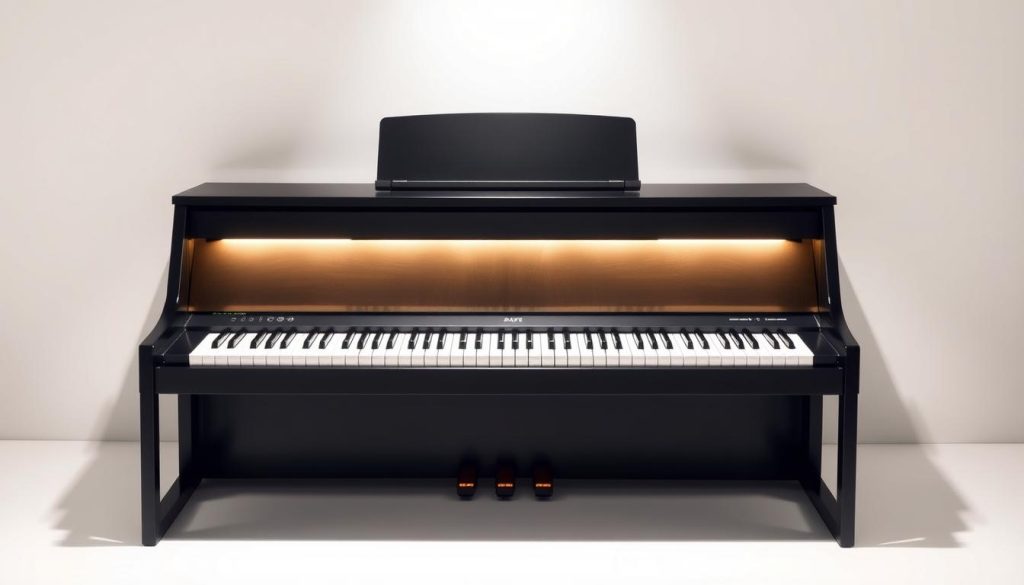
CDP-S110: this accessible 88-key weighted model offers excellent value. Ideal for developing technique, it responds to subtle changes in touch and encourages good fingering habits.
CDP-S360
CDP-S360: it offers a natural weighted feel and an expanded set of features. This model adds more sounds and registration memories, along with more extensive connectivity. It can be supplied with a dedicated stand for a setup closer to that of a traditional cabinet-style piano.
The benefit of 88 keys: they let you play the full range of classical and modern repertoire. This format also makes it easier to learn fingering and master dynamics.
- Sound quality: faithful reproduction through headphones or amplification.
- Features: memory, controls and options vary by model.
- Use: suitable for the living room, studio or rehearsal room thanks to their shallow depth.
| Feature | CDP-S110 | CDP-S360 |
|---|---|---|
| Keys | 88 weighted keys | 88 keys with a natural weighted feel |
| Sound quality | Very good sound | Richer, more customizable sound |
| Features | Enhanced basic features | Registration memories, more sounds and expanded controls |
| Stand option | Optional | Dedicated stand available |
| Recommended for | Budget-conscious players seeking weighted keys | Musicians who want more sounds and settings |
For stage and studio: Privia models to consider
For stage performance or studio work, the Privia range offers capable, versatile options.
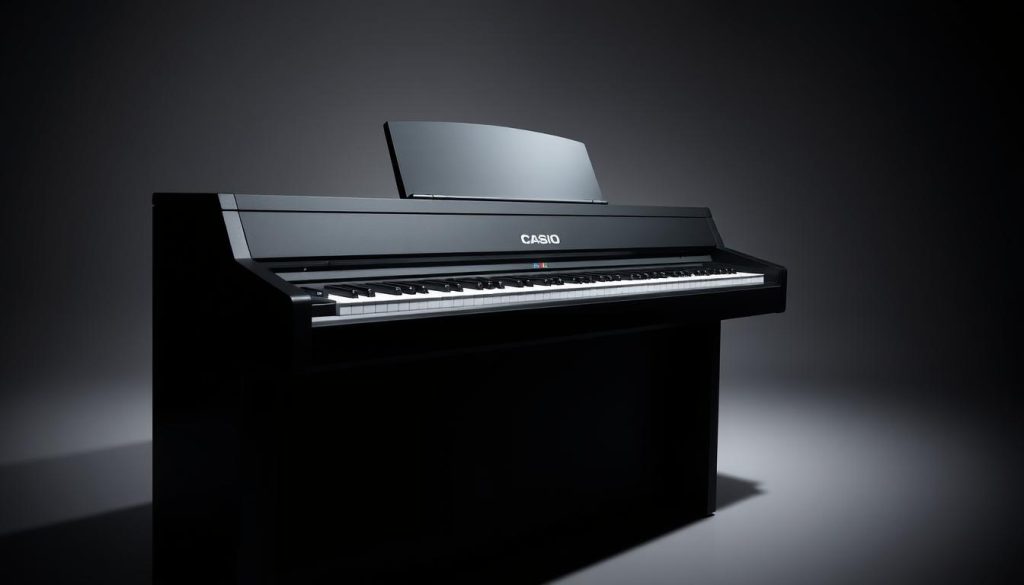
PX5S: a stage-oriented model combining Tri-Sensor Scaled Hammer Action II with the AiR sound engine.
It offers 256-note polyphony, vintage electric piano sounds and an interface designed for performance.
PX-160: portable and expressive, this model has 88 Tri-Sensor keys, 128-note polyphony and weighs about 9 kg.
It suits rehearsing, recording and playing away from home while retaining good sound quality.
Cabinet-style models for home or school: the PX-850, PX-860, PX-750 and PX-780 feature the AiR engine, textured keys and USB connectivity.
The PX-780 stands out for composition, with 250 tones, 180 accompaniment rhythms and a 17-track recorder via USB/MIDI.
Advantage: the Privia series’ balance of performance and price means it can sometimes replace a grand piano in a home or teaching setting.
Choose according to your space and use: portable models (PX5S, PX-160) for mobility; cabinet-style models (PX-860, PX-780) for stability and appearance.
For a broader comparison of the options and leading choices, see our digital piano guide.
Which model suits you: beginners, intermediate players and professionals
Choosing an instrument starts with defining how you will use it and what matters most to you. Consider your practice time, available space and essential features.
Beginners and children
For an easy start, consider the CT-S100, CT-S200 and CT-S300. These models offer 61 keys, good portability and an affordable price.
The LK-S450 adds guided learning through lighted keys and Bluetooth. It is ideal for motivating younger players.
Intermediate and casual players
To broaden your repertoire, the CT-X700 offers accompaniment and varied styles that are useful for everyday playing.
The CT-S1 appeals through its design and connectivity. These instruments offer rich sounds and features that encourage creative playing.
Demanding pianists
For technical practice, consider the 88-key CDP-S110 or CDP-S360. These models offer a dependable touch and comfort close to that of a traditional piano.
Whether you play on stage or in your living room, the PX range, with AiR and Tri-Sensor technologies, suits rehearsals and concerts.
- Practical tip: start with 61 keys if your budget or space requires it, then move to 88 keys to expand your repertoire.
- Match your choice to your playing: variety of sounds, accompaniments and keyboard comfort.
- Useful accessories: a stable stand, sustain pedal, headphones and USB cable.
For a Casio comparison and an overview of the best options, see our guide. This approach will help you make a strong choice, whatever your level.
Conclusion
Your best choice will depend on the touch, features and intended use. Casio digital pianos cover every budget, from compact beginner models to stage-ready Privia instruments.
Bear in mind that keyboard size and key quality affect your progress. Lighted keys and accompaniment options help beginners and make practice more enjoyable.
Compare sound quality, touch sensitivity, connectivity and value. Try two or three instruments, then assess how comfortable the keyboard feels and how the sounds come across. Trying them remains the best way to make a strong choice.