

Goal: help beginners avoid the most costly mistakes when buying a piano and over the long term, so they can make steady progress in music.
The start of the school year often inspires people to begin, but the 2025 market is full of models. Without a clear method, it is easy to choose an unsuitable instrument.
In this article, we offer a method based on clear criteria—key feel, sound, polyphony, pedals, connectivity and budget—and on how you will use the piano: in an apartment, with headphones and for learning.
Practical advice and concrete information will help you compare models and find an instrument that suits your goals and your space.
We will also explain the difference between a digital piano and a synthesizer, why it matters to try instruments in a showroom in Paris-Levallois or Guyancourt, and options such as rent-to-own.
The aim: choose a piano today that will make you want to play day after day.
Understand why you want to buy: avoid mistakes from the start
A good choice starts with defining what you want to play and how much time you can devote to it each week.
Clarifying your goals guides your choice of instrument, whether you want to play classical music, accompany singing, compose or play for pleasure. It helps you identify useful features and unnecessary ones.
Define your musical goals and practice time
Assess your practice time honestly. A realistic schedule helps you decide whether built-in learning features would be useful and maintain your motivation over time.
Match your space, budget and level in France
- Measure the available space: depth, room to move around and sound insulation. In an apartment, plan to use headphones and keep the instrument away from radiators and large windows.
- Calculate the total budget, including the instrument, bench, headphones and delivery, so you do not focus only on the advertised price.
- A digital piano may suit you if your budget is limited, you need to play quietly or you want learning features. Otherwise, an acoustic piano remains recommended for developing technique.
Before any purchase, set concrete criteria such as key feel, sound and polyphony to find the model that suits you best. To compare options, consult specialist guides such as quel-piano.
Digital piano for beginners: mistakes to avoid
Choosing the right instrument requires a clear understanding of how you will use it and how its keyboard works.
Confusing a digital piano with a synthesizer
Key difference: an 88-key model with weighted keys simulates an acoustic instrument. A synthesizer offers a range of sounds and arrangement features, often without a weighted action.
Starting on a synthesizer can hinder control of your touch and limit your technique. Remember to choose an instrument suited to your musical goal.
Ignoring neighbors and headphone practice
In an apartment, quiet hours and the building’s structure impose limits. A digital piano lets you play with headphones and needs no tuning.
Choose good-quality headphones so you can play comfortably at any hour without disturbing your neighbors.
Overlooking a future move to an acoustic piano
Plan for the transition: a sturdy cabinet, compatibility with a three-pedal unit and a convincing key feel make it easier to move to an acoustic instrument.
Consider resale or rent-to-own to upgrade without losing too much money.
Choosing the wrong keyboard action and key sensitivity
How the keys feel under your fingers often determines whether you will play every day. Key feel affects accuracy, endurance and enjoyment.
Heavy or light action: heavier keys strengthen classical technique but require more effort. Lighter keys make pop playing and speed easier, but can sometimes limit dynamics.
Velocity sensitivity and response: velocity sensitivity depends on the sensors and response curve. Good key rebound makes trills easier; a sluggish return tires the fingers and hinders repeated notes.
A synthetic ivory texture improves grip and helps manage perspiration. The quality of the action determines how long this feel lasts.
Concrete examples: the Roland FP-30X, with its PHA‑4 action, feels closer to an acoustic piano; the Yamaha P-145 has a lighter action. Test the keyboard in a store with chords, staccato notes and trills, then try the pedals to assess the complete setup.
“Playing slowly and then quickly reveals the qualities of a keyboard action.”
Underestimating sound quality and acoustic modeling
An unconvincing sound can reduce your desire to practice, even if the keyboard is perfect. Sound quality depends on harmonics, sympathetic resonance, clarity in the treble and depth in the bass.
A good sound reproduces the interactions between strings and the tonal character of a soundboard. Treble notes should remain clear without sounding metallic. Bass notes should be deep but distinct.
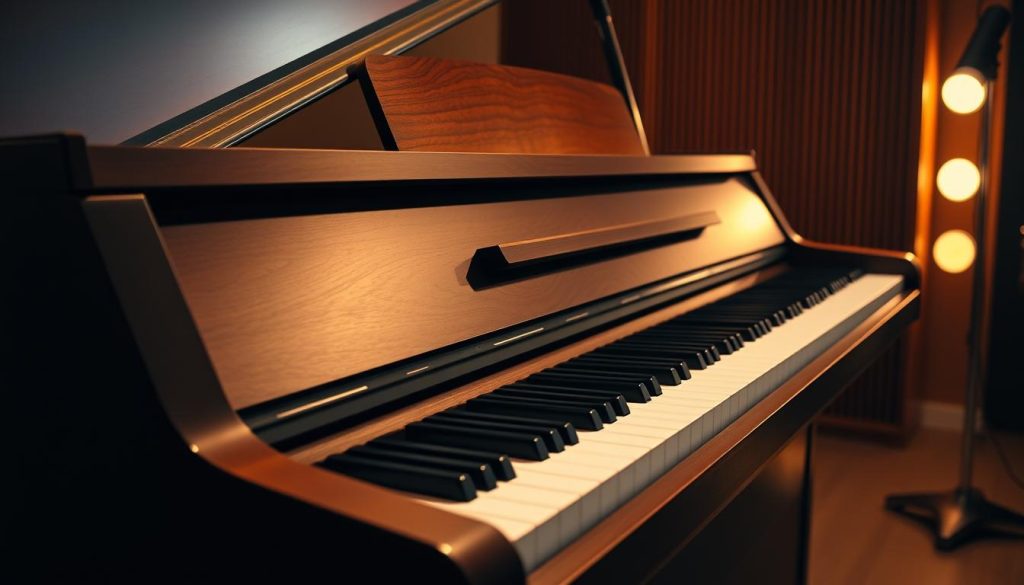
Modeling engines and hybrid sampling add complexity and dynamics to the sound. For example, the Kawai CA-701 offers high-end SK-EX Rendering modeling. At the entry level, the Casio PX-S1100 offers an adequate AiR sound engine for beginners.
Practical tip: listen through headphones to hear the details, then use the built-in speakers to judge how the sound fills the room.
- Check that the tone remains consistent across the keyboard.
- Test how the pedal affects the fullness of the sound.
- Play familiar pieces in several registers.
“Motivation often comes from a sound that makes you want to play a piece again.”
Remember that powerful speakers cannot compensate for a poor sound engine. Good sound quality encourages practice and supports your progress in music.
Ignoring polyphony and its effects in practice
How many notes an instrument can play at once changes how it responds when you use the pedal or layer sounds.
Definition: polyphony is the number of sound voices the instrument can produce at the same time. A polyphony of 64 voices is enough for simple playing, but its limits soon become apparent.
Recommended levels:
- Aim for at least 128 voices to play dense pieces without notes cutting out.
- Polyphony of 256 voices provides comfortable headroom for layer, split and duo modes, as well as resonances.
One example is the Roland FP-30X, which offers 256 voices. This type of model handles piano-and-strings layers and long sustain-pedal passages well.
Always test passages with extended sustain and layered sounds, such as piano and strings, to detect notes cutting out. Duo mode often doubles the number of voices needed.
“Choosing enough polyphony when you buy helps avoid an early replacement.”
Polyphony improves sound quality and learning. Read the specifications and choose models suited to your level. A good choice supports your practice and your enjoyment of playing the piano.
Missing useful learning features
Do not underestimate how built-in tools can improve your practice routine.
Key features: a metronome for steady timing, built-in recording to hear yourself, transposition to accompany a singer, and split and layer modes for practicing both hands with different sounds.
Metronome, recording, transposition, split and layer
The metronome helps you keep a steady tempo. Recording lets you assess your playing and spot problems with your touch.
Transposition makes accompaniment easier by changing the key without requiring you to relearn the piece. Split mode divides the keyboard into two zones; layer mode combines two tones for a richer sound.
Compatibility with learning apps
MIDI, USB and Bluetooth connectivity make it easier to use apps and software. The Casio PX-S1100 and Roland FP-30X are accessible, well-equipped models.
Tip: check Bluetooth stability, compatibility with iOS and Android, and how easily you can export via USB. A clear interface makes the instrument easier to use and supports your progress in music.
“Use recording to spot timing and touch problems without a teacher’s help.”
Neglecting pedals and the cabinet pedal unit
Well-designed pedals make a good keyboard more expressive.
Three standard pedals: sustain, ideally with half-pedaling, una corda and sostenuto. Each has a specific role in harmony and resonance.
Musical use: the sustain pedal controls how long notes ring and resonate; the una corda pedal changes the tone; the sostenuto pedal holds selected notes. Half-pedaling allows subtle nuances essential to Impressionist and Romantic music.
The sensitivity and travel of the sustain pedal make a real difference. A pedal that works only as an on-off switch can blur repeated notes. Test pedal releases timed with chord changes to judge precision.
Check whether portable models support a three-pedal unit. For example, the Yamaha P-225, at about €600, is compatible with one, while the Kawai ES-520, at about €950, often offers a more complete setup that feels closer to an acoustic piano.
A fixed pedal unit improves posture and consistency, especially for beginners. Check durability too: a sturdy frame, reliable sensors and good stability on the floor help prevent early replacements.
“Planning for a complete pedal unit avoids compromises later.”
Forgetting modern connectivity
Connectivity turns a standalone keyboard into a creative tool linked to a wider ecosystem.
USB and MIDI are essential for recording, computer-based music production and communication with teaching software. The USB port can also be used for firmware updates.
Bluetooth audio and MIDI make it easier to connect wirelessly to a tablet for learning apps and audio playback. Check latency and app compatibility before buying.
Useful outputs and inputs
Distinguish a headphone output from a proper line output: the latter is designed for sound systems and preserves signal quality.
An auxiliary input lets you play along with a track and train your ear. Check that the ports are sturdy and conveniently placed for everyday use.
- Roland FP-30X: Bluetooth audio and MIDI, offering comprehensive connectivity.
- Yamaha P-145: USB only, sufficient if your needs are simple.
“Modern connectivity extends an instrument’s useful life and opens up creative possibilities.”
On the seller’s website, read the specifications of the models and confirm that they work with your music apps. A considered choice protects your investment and your enjoyment of playing.
Underestimating design, ergonomics and playing comfort
Design and ergonomics directly affect how regularly you practice. A good setup makes playing enjoyable and protects your body.
Keyboard height: check that your elbows can sit slightly above the keys. An adjustable bench helps prevent wrist and shoulder strain.
Control-panel position: readable, accessible controls make everyday use easier. Test the buttons and check whether the menus are clear.
Measure the space: allow room to open the lid, place the music rest and provide lighting. An instrument that is too deep obstructs movement around an apartment.
A practical choice: very compact models such as the Casio PX-S1100, which is 23 cm deep, suit small spaces. Cabinet models such as the Yamaha YDP-145 offer a living-room-friendly appearance and an integrated stand.
- Consider the weight if you move the instrument often.
- Match its finish—wood, matte black or white—to your interior.
- Choose a stable, adjustable bench to set your posture correctly.
Conclusion: thoughtful design and ergonomics support technique and encourage daily playing. For more advice, consult a guide to playing comfort and responsiveness.
Overlooking durability, warranty and brand reputation
Investing without checking an instrument’s sturdiness often leads to regret and unexpected costs. Durability depends on a stable action, reliable electronics and solid construction. Check the key materials, frame rigidity and speaker quality.
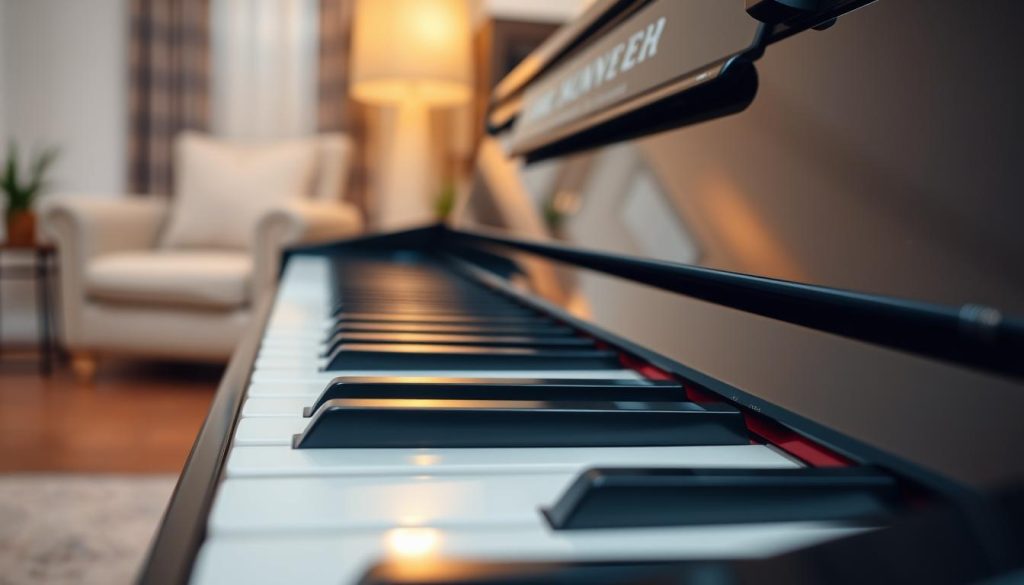
Build quality and component reliability
Before buying, read independent reviews and feedback from people who have owned the instrument for some time. Ask a teacher too: their experience helps them spot flaws that could slow your progress.
- Established brands: Yamaha, Roland, Kawai and Casio have a record of reliability and provide after-sales service in France.
- For example, the Yamaha CLP-735, at about €1,750, comes with an extended five-year warranty, a sign of the manufacturer’s confidence.
- Check the availability of parts and a local service network to avoid long delays and high costs.
When trying the instrument, check its finish and any side-to-side movement in the keys: clicking and rubbing can reveal defects. Initial savings on build quality often lead to breakdowns or a poorer playing feel.
“A well-built instrument protects your investment and supports long-term motivation.”
Misjudging the total budget and neglecting accessories
The real budget is the cost of playing your first chord at home, not just the keyboard’s store price. Forgetting additional expenses often delays practice or forces you to compromise on quality.
Costs to plan for: a stand or cabinet, bench, pedals, headphones, cables, delivery, insurance and maintenance. Each adds to the total and changes the value for money.
A realistic example: a Yamaha P-225 at about €600, a stand at about €100, a bench at €50–100 and headphones at €100–200 add up to €850–1,000. This shows the difference between the advertised price and the cost of a usable setup.
Priorities and contingency funds
Invest first in what affects your playing: a stable bench, suitable pedals and good headphones for playing in an apartment.
Set aside money for unexpected costs too: cables, a case, delivery and any charge for carrying the piano upstairs. Consider rent-to-own if you want to spread payments and keep the option to change course.
- Compare ready-made bundles with separate purchases: a bundle can be convenient, but buying separately lets you choose the quality of each item more carefully.
- Check for buyback guarantees or trade-in offers, such as those available for some Yamaha or Kawai models.
- Allow for delivery times and costs for heavy cabinet models.
“Planning the full budget helps you choose a good piano within your means.”
Acoustic or digital piano: assessing your situation incorrectly
Choosing between an acoustic instrument and a digital piano affects your progress over the long term.
Learning benefits of an acoustic piano: an acoustic piano trains your ear and develops dynamics and sensitivity of touch. Its durability and resale value are generally higher.
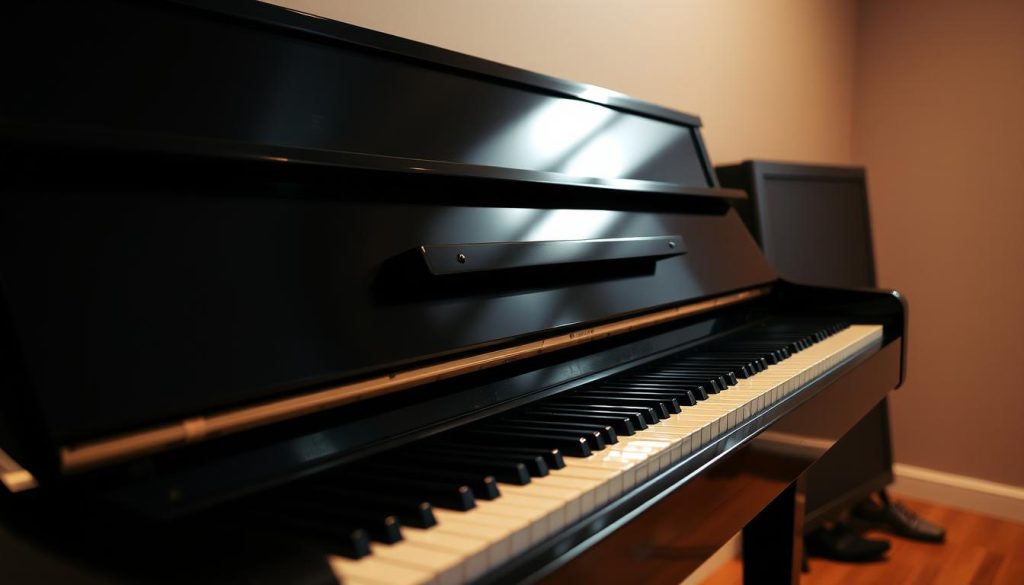
When an acoustic piano is preferable
Choose an acoustic instrument if you practice regularly, aim to study at a conservatory or work on demanding classical pieces.
Silent systems are available for upright pianos: they let you play with headphones while retaining the real action.
When a cabinet digital piano is a good starting point
If noise, space or budget limits your options, a good-quality cabinet digital piano is an excellent compromise.
Useful examples: compact upright pianos, the Yamaha B1 and Kawai K15, and higher-range models, the Yamaha B2 and Kawai K200. Entry-level grand pianos: the Kawai GL10 and Yamaha GB1K.
| Use case | Recommended option | Main advantage |
|---|---|---|
| Intensive classical practice | Acoustic instrument | Better dynamic response and longevity |
| Apartment or tight budget | Cabinet digital piano | Quiet playing, connectivity and manageable cost |
| Gradual transition | Start with a digital piano, then move to an acoustic one | Room to progress and better resale prospects |
“Trying both types of instrument lets you feel the real difference in sound and touch.”
In conclusion, define how you will use your piano: for pleasure in an apartment or for more demanding musical study. A plan to move from a cabinet digital piano to an acoustic one protects your investment and motivation.
Common learning mistakes on a digital piano
Poorly learned movements become habits that are hard to correct. Adjust your posture and routine early so you can progress without technical obstacles.
Seating, height and finger position
Height: keep your elbows slightly above the keys, your wrists neutral and the pedals within easy reach.
Fingers: keep them gently curved and lift them clearly as you move; avoid letting them stick to the keys or lie flat.
Tempo, separate hands and practice method
Remember to use the metronome regularly to steady your tempo. Work slowly, bar by bar, or even note by note if necessary.
When sight-reading, practice each hand separately first, then bring them together gradually while watching the rhythm.
Pedal use and good habits
Be careful with the sustain pedal: overusing it creates a muddy sound. Learn to use half-pedaling and press the pedal deliberately.
- Focused practice: repeat a short passage eight times, then gradually increase the speed.
- Learning: memorize small sections so you can work on interpretation.
- Routine: even 10 minutes of daily practice helps build good habits.
“Correcting mistakes from the beginning prevents lasting technical difficulties.”
Space, neighbors and apartment practice in France
Setting up an instrument in a small home calls for careful practical and sound-related choices.
Playing with headphones remains the best way to avoid disturbing neighbors in an apartment. Choose comfortable closed-back headphones suited to long sessions.
Respect quiet hours and let your neighbors know if you plan to practice without headphones on a particular day. Communication often prevents tension.
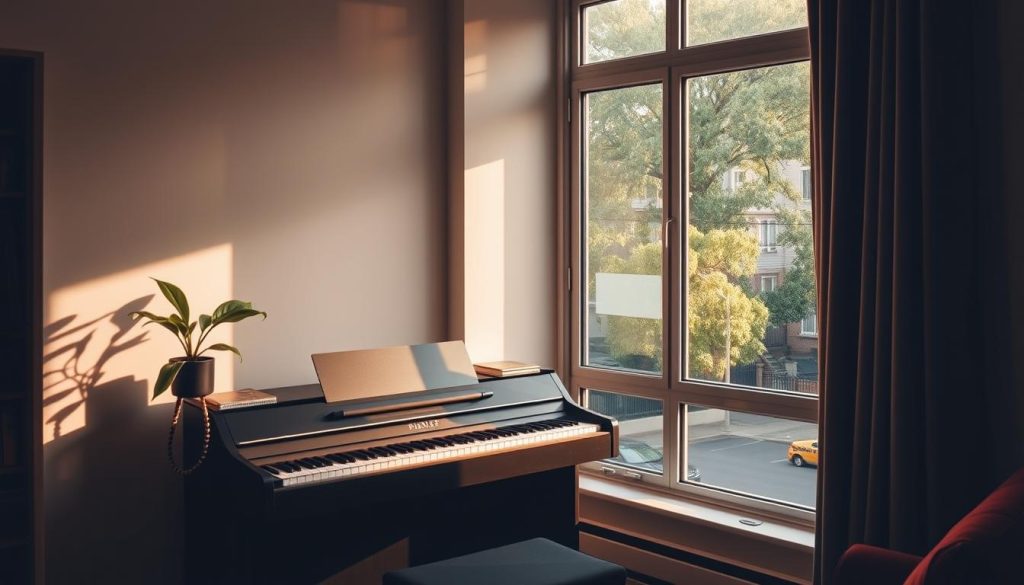
Placement and insulation
Place the instrument away from radiators and large windows: heat and humidity can damage the action and cabinet.
Improve insulation with a thick rug and a stable stand to reduce vibrations transmitted through the floor.
- Silent system: if you prefer an acoustic piano, a silent kit lets you play with headphones while keeping the real action.
- Test the sound level in a showroom in Paris-Levallois or Guyancourt to hear how the piano projects in the room.
- The compact size of some models makes them easier to install in small rooms.
“Planning for apartment constraints makes practice sustainable and peaceful.”
Set up a dedicated music corner and follow a few simple principles: comfort, insulation and communication make practice more enjoyable over the days ahead.
Choosing models suited to the start of your learning
To start with confidence, choose proven models over gimmicks.
Recommended models for beginners: the Roland FP-30X, with PHA‑4 action, 256-voice polyphony and Bluetooth; the compact Casio PX‑S1100, compatible with the Chordana app; the Yamaha P‑225, compatible with a three-pedal unit; the cabinet-style Yamaha YDP‑145; and the Kawai CA‑701, with SK‑EX modeling.
Depending on the range and your budget, consider a capable entry-level model, the PX‑S1100 or P‑225; an immersive mid-range model, the FP‑30X; a cabinet model for the living room, the YDP‑145; or a durable high-end model, the CA‑701.
How to choose your piano
Check the key feel, polyphony, learning features and connectivity. These criteria determine whether the piano will continue to motivate you and meet your needs as you improve.
Rent-to-own and resale
Rent-to-own lets you adjust monthly payments and offers a useful trade-in option if you plan to upgrade. Consider the overall value for money, including the instrument and accessories.
- Try two or three models in a showroom, or compare them on a specialist website, to find the one that suits you best.
Conclusion: a clear shortlist and guided trials will help you find a motivating, durable instrument.
Conclusion
The final decision becomes clearer when you match your goals, practice time, space and budget. Make a shortlist and test each model in a showroom.
Quick summary: do not confuse a synthesizer with an instrument that has weighted keys; check the key feel, sound, polyphony, pedals, connectivity, ergonomics and durability. Ask a teacher for an opinion to confirm your impressions.
Choose an acoustic piano if possible; otherwise, a good-quality cabinet digital piano remains an excellent starting point. Plan for future options such as a three-pedal unit, connectivity, rent-to-own or resale, and choose a model that makes you want to play.
The right piano is one that makes you want to play every day. Use PDF guides, professional advice and in-store trials to make a considered purchase that will last.