

What this guide promises: to help you narrow your options to one or two suitable models and get your purchase right the first time. It explains why a good initial choice affects your motivation, progress, and enjoyment of playing.
The 2025 landscape: the range of portable, console, stage, hybrid, and Silent models is expanding rapidly. We clarify the terminology and essential technical criteria.
Prioritize the keyboard: 88 keys, a realistic feel, and touch sensitivity matter far more than marketing gimmicks. Polyphony, speaker quality, and connections also deserve your attention.
The guide covers common mistakes (misleading prices, overly light keys, insufficient polyphony) and sets out the goal: getting the best value for your space, headphone use, and skill level.
With a lifespan of around 12 years, it pays to choose established brands (Yamaha, Roland, Casio, Kawai, Korg) and consult our secondhand checklist. For more detail, see our article on 10 mistakes to avoid.
Cheap digital piano: how to avoid the pitfalls
Focusing only on price often leads to regret. Key feel, sensitivity, and polyphony shape learning far more than superficial features.
Beginner mistakes to avoid from the start
Many buyers are drawn to the lowest price and choose a keyboard whose keys feel too light or lack touch sensitivity. This slows progress and makes playing less enjoyable.
Other common mistakes include polyphony below 64 notes, vague product specifications, and forgetting accessories (bench, pedal, headphones). Allow for these costs before buying so you stay within budget.
What “cheap” really means in 2025
In 2025, entry-level models start at around €200 to €300. Serious beginners should instead aim for €400 to €800 for a portable 88-key model. Reliable console models cost between €800 and €2,000.
The average lifespan is about 12 years: choose a reputable brand and be wary of promises that sound too good to be true from unfamiliar sellers. A good initial choice can spare you from buying a more expensive replacement in a few years.
“Spending a little more at the outset can save time and money in the long run.”
Acoustic, digital, hybrid: choose for your needs and space
Your home and schedule often determine whether you choose an acoustic, digital, or hybrid piano.
An acoustic piano offers authentic mechanics and a natural richness that is hard to reproduce. However, it needs tuning once or twice a year and humidity control to preserve its sound quality.
Advantages and limitations in an apartment
A digital model lets you adjust the volume and play through headphones. It is ideal for practicing late and playing without disturbing the neighbors.
Hybrids and Silent systems combine a real mechanical action with a headphone mode. They offer the feel of a stringed instrument while allowing you to play quietly. Expect to pay substantially more for these options.
- Sound production: struck strings, or sampling and modeling.
- Maintenance: tuning and humidity control for acoustic pianos; no tuning for digital models.
- Space: an upright piano takes up more room; a portable 88-key model is less obtrusive.
- Budget: a new acoustic piano often costs more; hybrids sit at the top end of the price range.
“In an apartment, the ability to play through headphones may decide the issue.”
Try instruments with your circumstances in mind: late-night practice, shared living, and children. Headphone playing and a compact size should factor into your final choice so it fits your budget and keeps you comfortable.
Types of digital piano and how to use them
Each format suits a particular use: travel, the living room, or the stage. Your choice affects the design, connections, and sound projection.
Portable, console, or stage: which suits your playing?
Portable: a standalone keyboard that is light and affordable. Ideal for beginners, students who move often, or small homes. Some models run on batteries and can be placed on a stand.
Console: an attractive piece of furniture with three pedals and built-in amplification. It suits regular family use and provides a fuller sound.
Stage: designed for concerts and studio work. Connections (MIDI, XLR outputs) take priority; often without built-in speakers, it is intended for external amplification.
A closer look at hybrids and “Silent” systems for playing without disturbing others
Hybrid: an action close to that of an acoustic instrument, combined with digital sound in silent mode. Ideal if you want realistic key feel without the volume.
Silent: the hammers are separated from the strings, or sensors take over. You play through headphones while retaining the mechanical feel.
- Design: consider the finish, dust cover, and footprint.
- Room to grow: the right stand can make a portable model more stable; consider a hybrid if you begin playing more intensively.
- Check the speakers and their power output against your needs.
To make an informed choice and compare models, consult our buying guide.
The keyboard comes first: 88 keys, weighted action, sensitivity
A good keyboard starts with 88 keys. This matches the range of an acoustic instrument and gives you access to the full repertoire. With fewer keys, some fingering patterns and technical reference points become difficult to use.
Understanding key feel helps you progress. There are three main types:
- Lightly weighted: too light for serious study.
- Semi-weighted: acceptable, but limiting over time.
- Fully weighted or hammer action: the benchmark for developing technique.
Graded action is crucial: lower keys should offer more resistance than higher ones. This makes playing feel natural and helps you control the sound.
Velocity response and sensitivity are essential for expressive playing. Good velocity detection brings out the sound engine and modeling, and prevents a monotonous result.
Before buying, test the keyboard: how the springs feel, how the keys return, whether they click, and whether the response is consistent across the whole range. A suitable action improves rhythmic precision and pedal control, and therefore your progress.
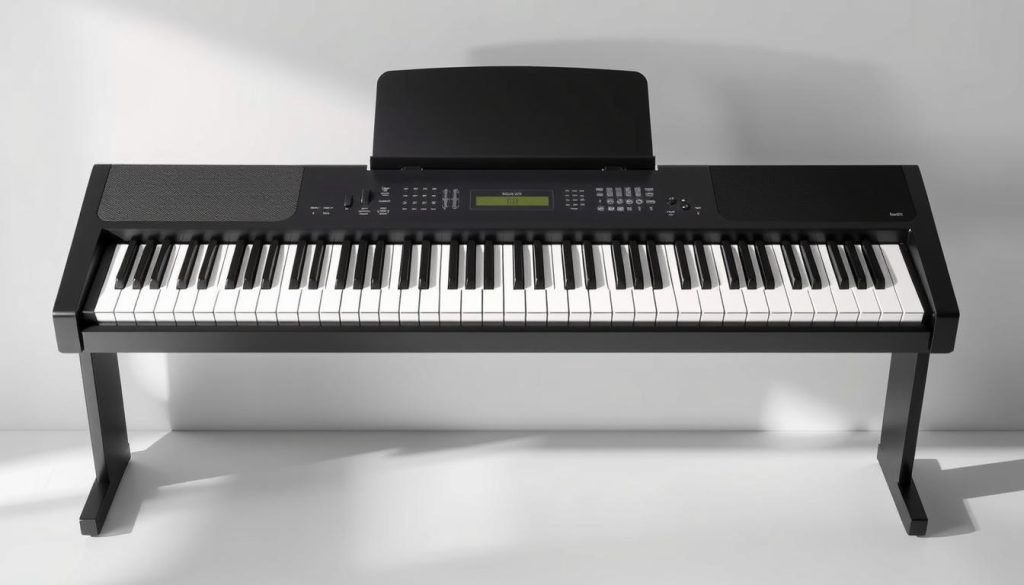
Sound quality and richness: sampling, modeling, polyphony
Sound fidelity depends as much on sampling as it does on the synthesis engine. Multilayer sampling captures nuances at different velocities, while physical modeling recreates string resonance and note release.
Polyphony is the number of notes that can sound at once. 64-note polyphony is enough for simple playing. If you use the sustain pedal, split the keyboard, or layer sounds, choose 128 notes or more to avoid dropped notes.
Some high-end models advertise “unlimited” polyphony for the piano engine. This helps with dense repertoire and virtuosic passages without losing sustained harmonies.
- Sampling or modeling: affects resonance, release, and harmonic response.
- Multilayer samples: produce more natural changes in tone at different velocities.
- Test the built-in speakers and headphones to judge clarity and check for distortion.
- Amplification of 2 × 8 W or more provides comfortable sound indoors.
“Converters and speakers shape how the sound fills the room.”
Compare several models at the same price. Even when prices match, differences in sound quality are often obvious and decisive.
Useful features or gimmicks: what to insist on
To choose well, distinguish useful learning features from attractive gimmicks from the outset.
Practical tools help you progress faster. Look for a reliable metronome, a simple recorder (audio and MIDI), and transposition.
Metronome, recording, keyboard split, sound layering, and practice tools
Built-in metronome: accurate tempo and subdivisions for rhythm practice.
A recorder and internal sequencer let you listen to your progress and isolate passages that need more work.
A keyboard split assigns different sounds to its two sections; layering combines two sounds to enrich your playing.
Effects and settings that make a difference
Useful effects: reverb for depth, chorus for a fuller sound, and delay for controlled echoes.
Simple, accessible settings matter more than a long list of effects you will not use. Polyphony should be at least 64 notes; aim for 128 if you layer sounds or use accompaniment styles.
- A front-facing headphone jack and smooth volume control without crackling.
- USB/MIDI and stable software for using music programs and taking online lessons.
- Choose easy controls and quick navigation over a flashy design.
“Good technical choices support practice and motivation.”
Connectivity and modern uses: headphones, MIDI, USB, Bluetooth
Connecting a keyboard to a computer or tablet opens up a world of apps and recording options. Connection features now shape what you can do when learning, composing, and performing.
USB/MIDI makes it easier to use music production software (GarageBand, Logic Pro) and virtual instruments. MIDI connectivity lets you record MIDI data, control virtual instruments, and use learning apps such as Smart Pianist.
The headphone output should sound clean. Test it in a store for hiss and accurate reproduction of the sounds. Latency and stability are practical criteria to check.
Bluetooth audio/MIDI makes it easier to play backing tracks and control devices wirelessly. Check compatibility with your tablets and how easily they pair. Favor a brand that provides regular software updates.
| Port | Use | What to test |
|---|---|---|
| USB | Music production software, audio/MIDI recording | Stability and drivers |
| MIDI (DIN) | Professional equipment, external modules | Compatibility and routing |
| Headphone output | Quiet practice, monitoring | Quality, hiss, volume |
| Bluetooth | Wireless playback and control | Latency, pairing |
“A full range of connections matters if you plan to learn, compose, or record regularly.”
Budget, price, and total cost: from entry level to high end
A sound budget covers the instrument and everything around it: accessories, transport, and maintenance. Comparing options means looking beyond the listed price. Consider the total cost before completing your purchase.
Realistic price ranges for 2025
Here are some benchmarks for buying in France in 2025:
- Beginner portable model: €400 to €800.
- Compact console model: €800 to €2,000.
- Stage or professional model: often several thousand euros.
- Hybrid or high-end model: among the most expensive, with prices varying according to quality.
Hidden costs and practical advice
Add about 10% of the instrument’s price for an adjustable bench, stand, pedal, and headphones. Delivery and transport can add considerably to the bill, especially for a console model.
For an acoustic piano, allow €90 to €120 per tuning. Also budget for covers, learning software, and possible future upgrades.
“Paying a fair price once” is often better than buying another instrument soon afterward.
Financing tip: installments, rental, or rent-to-own arrangements let you spread the cost without sacrificing quality. Also consider discontinued new models or cashback offers before finalizing your purchase.
For a detailed guide to prices and comparisons, see our page on digital piano prices.
Brands to consider in France: Yamaha, Roland, Casio, Kawai, Korg
Choosing established manufacturers helps ensure long-term support, parts, and updates. These brands offer proven reliability and good after-sales service in France.
Reliable entry-level and midrange models for getting started
Yamaha: a broad range (P, Arius, and Clavinova series), dedicated apps, and a dependable choice for families.
Roland: modern sound engines, PHA keyboards, and highly competitive FP models for key feel and connectivity.
Casio: excellent value with the compact CDP-S and Privia series, both practical starting points.
Kawai: known for its key actions; the ES and CA series come close to an acoustic feel.
Korg: a versatile portable alternative suited to travel and studio work.
Tip: look at entry-level or midrange instruments from these brands for a good balance of price, features, and longevity. Compare equivalent models or sound engines from two or three brands before buying.
“Choosing a recognized brand reduces risk and makes maintenance easier.”
Models to know and recent developments: Yamaha P-145/P-145BT, YDP-145, CLP-825; Roland FP-10/FP-30X/FP-90X; Casio CDP-S110/PX-S1100/PX-770/AP-470
These instruments offer a good balance of key feel, sound, and connectivity, giving you good value for the price.
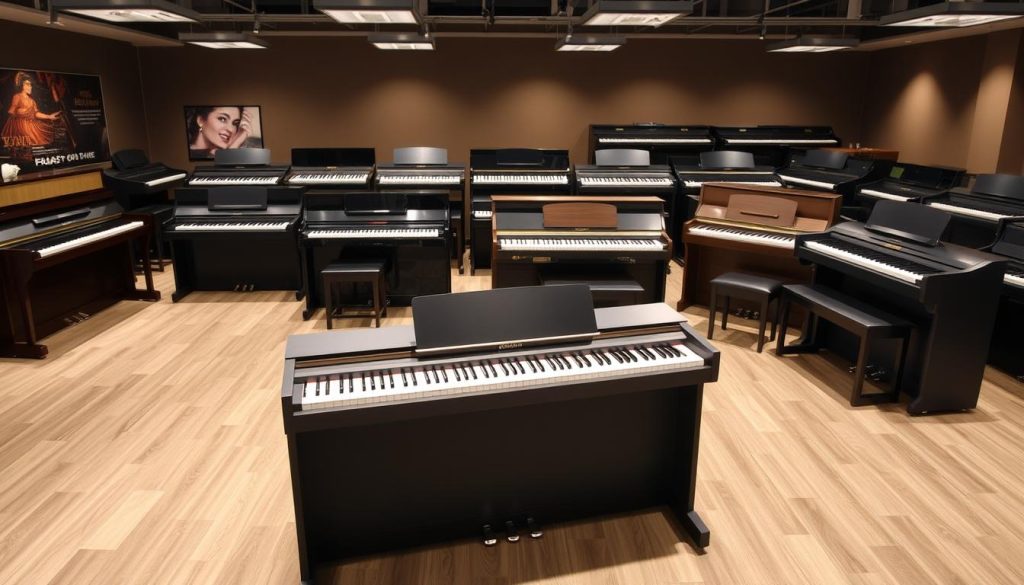
Yamaha has updated its entry-level range: the P-145 replaces the P-45, and the P-145BT adds Bluetooth for controlling apps and listening through headphones.
The YDP-145 is a reliable console model for study: 88 GHS keys, 192-note polyphony, and three pedals. The CLP-825 steps up with advanced modeling and a 16-track recorder for working on expression.
Roland covers a range of needs: the FP-10 for beginners, the FP-30X for an excellent balance of performance and price, and the FP-90X for the high end (PHA-50, expanded polyphony).
Casio offers compact, capable options: the highly portable CDP-S110, the elegant and musical PX-S1100, the PX-770 (128-note polyphony, 2 × 8 W), and the AP-470 for discerning home use.
Most offer USB/MIDI and Bluetooth. Their sound quality and tones differ: try them in a store or through headphones to find the best model for your needs.
Yamaha promotion: cashback until October 31, 2025 (€40 for the P-145BT, €60 for the YDP-145, €70 for the YDP-165).
Buying secondhand without making a mistake: complete checklist
A simple, methodical check is often enough to uncover hidden faults. Before closing the deal, follow these short, practical steps.
Physical inspection
Inspect the exterior: cracks, chips, chassis stability, and hinge condition. Check the supports and fasteners too.
Test each key one by one: look for an even response, no sticking keys, and no clicking. Check that the velocity response is consistent.
Check the pedals: smooth travel, effective sustain, and no creaking. On a console model, confirm that all three pedals are present.
Age and storage conditions
Ask about the year of manufacture and the instrument’s history. Ideally, look for one that is under 5 to 8 years old, bearing in mind that its average lifespan is around 12 years.
Avoid instruments stored in damp cellars or garages subject to large temperature changes.
Sound tests and connections
Listen through headphones, then through the speakers: check for hum or distortion at higher volumes.
Test every function: screen, buttons, and volume knob. Check MIDI connectivity, USB ports, the headphone output, and Bluetooth if present.
- Confirm polyphony of at least 64 notes; choose 128 or more for complex playing.
- Ask for the receipt and repair history to assess the quality of its upkeep.
“A thorough test often prevents unpleasant logistical and financial surprises.”
Negotiating a fair secondhand price: benchmarks and logistics
Start by checking the model’s current new price. An up-to-date reference helps you avoid accepting a price that is too high or an offer that seems too good to be true.
Rule of thumb: aim for 50% to 70% of the original price, depending on age, condition, brand reputation, and local demand.
New-price reference and expected depreciation
Find the new price, then apply the 50% to 70% range. Adjust for visible defects: scratches, a worn pedal, or missing accessories.
Use these findings in negotiations, putting a price on replacements or minor repairs.
Transport and disassembly: prevent unwelcome surprises
Estimate transport costs before agreeing to buy. Arrange a suitable vehicle, protection (blankets, straps), and at least two people to move it.
- Check whether the cabinet or stand can be disassembled; protect the keyboard and remove the music rest.
- Measure doorways, the elevator, and staircases against the instrument’s dimensions and weight.
- Ask for the original items (power supply, pedal, manual) and price any replacements.
| Item | What to check | Effect on price | Recommended action |
|---|---|---|---|
| Overall condition | Scratches, cracks | −5% to −20% | Document defects and account for them in negotiations |
| Operation | Keys, pedals, connections | −10% to −30% | Test everything before paying |
| Accessories | Pedal, power supply, music rest | −5% to −15% | Ask for them to be included or price replacements |
| Transport | Disassembly, carrying | Additional cost | Get a mover’s quote or arrange help |
“Put the sale in writing with a receipt stating the model, serial number, condition, and included accessories.”
Essential accessories for progressing without disturbing others
Good supporting equipment helps you progress while respecting your neighbors. These simple choices improve posture, perceived sound quality, and how long you can practice comfortably.
Adjustable bench: it supports stable posture, reduces fatigue, and helps you maintain a consistent height for greater precision.
Stable stand: choose a sturdy Z-style or model-specific stand to prevent vibrations and ensure an ergonomic height.
Pedal, headphones, and practical items
Sustain pedal: choose a reliable piano-style pedal without looseness to practice legato and resonance.
Headphones: choose a neutral-sounding, comfortable pair for long sessions. A suitable cable and good isolation help prevent listening fatigue.
A music rest and lighting: a sturdy rest and dedicated lamp protect your eyes and help you focus.
Covers and cases: if you often move your instrument, protect it from knocks and dust to preserve its quality over time.
Practical budget: allow about 10% of the instrument’s price for these accessories to avoid urgent, costly purchases.
“Good equipment encourages regular practice, quieter playing, and motivation.”
For advice on planning and practicing on your own, consult our guide to organizing self-directed piano practice.
Where to buy in France: shops, online retailers, Le Bon Coin
Shops, online retailers, and classified ads each offer different advantages depending on your needs.
In a shop, you can test several models side by side. A salesperson’s advice can help you assess key feel and quality. Shops often offer installment plans and delivery with setup, and the price may be negotiable.
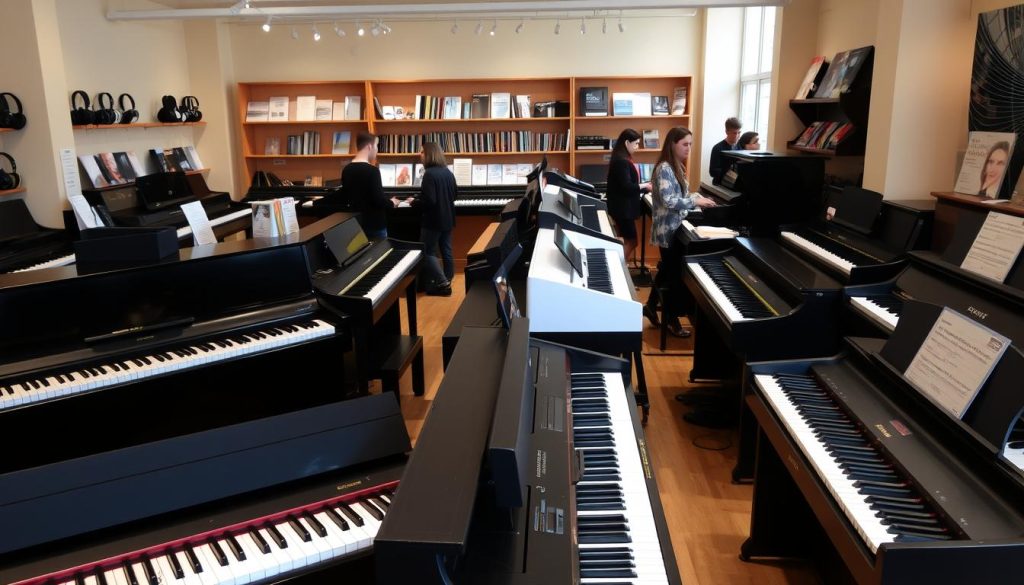
Online, you can choose from a wide range, find promotions, and benefit from a defined returns process. Always check the warranty, return conditions, and delivery and return fees before buying.
Le Bon Coin and other secondhand listings can put better models within the same budget. Caution is still essential: ask for photos, videos, and the serial number, then agree on a suitable place to test the instrument.
- Call before traveling and confirm the instrument’s condition.
- Compare online delivery fees with the immediate availability of an in-store purchase.
- Check delivery times and after-sales service, especially for a gift or the start of term.
Tip: try models in a shop, then watch for an online promotion or a good local secondhand deal to get the best price.
Try before you buy: an in-store test procedure
Before buying, plan a structured in-store test so you do not overlook anything.
Set a simple procedure. Play scales, arpeggios, chords with sustain, and pianissimo and fortissimo passages to assess the dynamics.
Graded action, key response, and pedal responsiveness
Check the grading: lower keys should offer more resistance than higher ones. Assess velocity response and listen for clicking.
Pedal test: check that each pedal engages cleanly, that sustain changes smoothly, and that the stand stays stable when you press it.
Compare models at the same price: speakers and headphones
Listen through the speakers: assess the stereo image, clarity of the midrange, fullness of the bass, and absence of distortion at a substantial volume.
Then compare them through headphones to judge the subtlety of the velocity layers, background noise, and comfort during longer listening sessions.
- Compare two or three models at the same price to identify differences.
- Check ease of use: access to features, startup speed, and user memories.
- Note your impressions and, if possible, return a few days later to confirm your choice.
“A methodical test often reveals the true sound quality and playing comfort.”
Conclusion
Your choice should rest on a realistic keyboard, sufficient polyphony, and reliable connections.
Priorities: 88 keys, convincing key feel, and precise sensitivity before any other feature. Aim for at least 64-note polyphony, ideally 128 for sustain and layering, plus USB/MIDI for modern uses.
Set an overall budget that includes a bench, pedal, and headphones. Compare Yamaha, Roland, Casio, Kawai, and Korg, and make use of 2025 promotions to get the best value.
Always test the instrument in a shop and through headphones. For secondhand purchases, follow the checklist: inspect it, play it, check its ports, and review its history before negotiating.
In short: narrow your options to one or two models, try them, and make an informed purchase so you can play often, improve, and enjoy playing for years to come.