
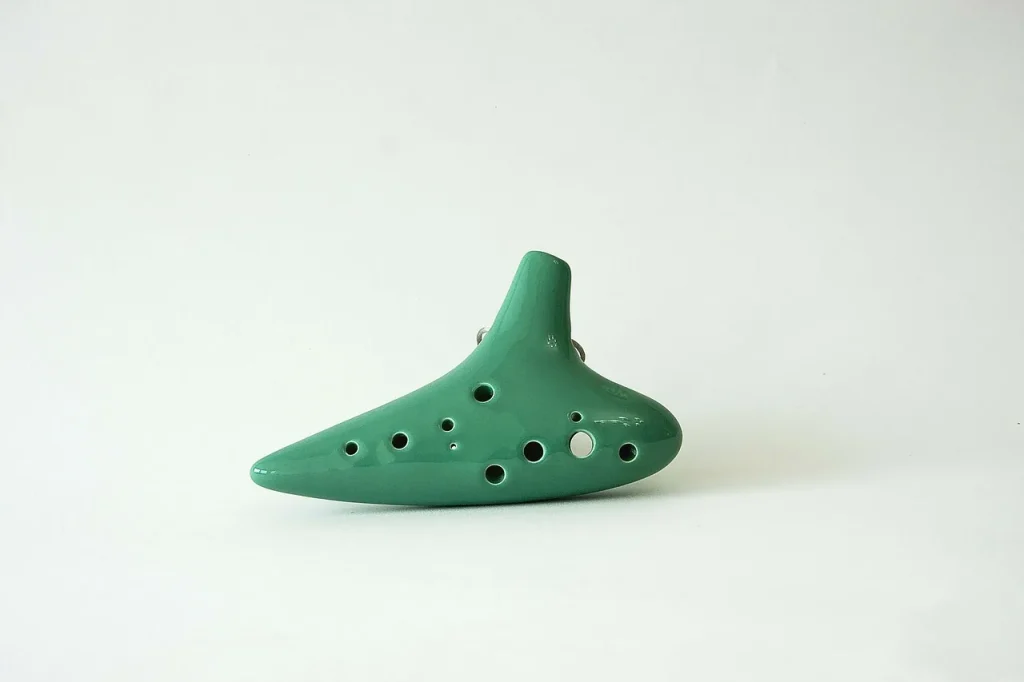
The double ocarina is intriguing for its compact size and wide range of sounds. This wind instrument has a mouthpiece and two internal chambers. Each has its own openings, allowing the player to move from low notes to high notes.
Its modern form comes from Giuseppe Donati. He designed it in Italy in 1853 with ten holes. Similar instruments existed much earlier, however. Rudimentary versions capable of producing two to six notes have been found in ancient Kosovo, Egypt, China, and South America.
Made mainly from ceramic, the ocarina is also available in wood, plastic, and other materials. This variety meets the needs of beginners and experienced musicians alike.
Its popularity grew further thanks to the game The Legend of Zelda: Ocarina of Time, released in 1998. Since then, it has continued to appeal to music lovers.
This page offers a clear method for understanding the structure, breath control, finger placement, and use of this model step by step.
Double ocarina: how does this two-chamber instrument work?
It works by directing air through two separate passages. Each cavity has its own air channel and receives the player’s breath through a dedicated mouthpiece. Air should flow into only one passage at a time. This keeps notes steady and prevents shrill sounds.
How the two chambers and airflow work
The left cavity produces low notes. The right cavity takes over for high notes. Opening and closing the holes changes the internal resonance rather than the length of a tube. This design distinguishes the wind instrument from a recorder.
Common models have 12 holes. These add notes to each register without replacing the second cavity. Blowing into both chambers at once often produces a shrill sound.
How it differs from a single-chamber ocarina
In C, a single-chamber model often has a range from low A to high F. A double ocarina generally extends it to high C. To understand the difference better, read our guide to the ocarina.
| Type | Typical range | Structure |
|---|---|---|
| Single-chamber in C | Low A to high F | One cavity |
| Double-chamber in C | Low A to high C | Two separate passages |
| Common model | Extended registers | 12 holes |
The essential parts of this wind instrument
Every part of the ocarina contributes to a clear sound. Their arrangement guides the breath and makes it easier to move the fingers.
The mouthpiece, fipples, and finger holes
The mouthpiece receives the air blown by the musician. The air channel directs it toward the fipple inside the ocarina. This small feature creates the vibration that produces the sound.
The finger holes, also called tone holes or resonance holes, change the pitch of the notes. The player opens some holes and carefully covers others. Giuseppe Donati’s model already had 10 holes.
The role of the sound opening in producing notes
The sound opening is the main outlet through which air escapes. Its shape helps project the sound and gives the notes more presence. Some ocarinas also have a hole running through the body near the mouthpiece for attaching a wrist strap.
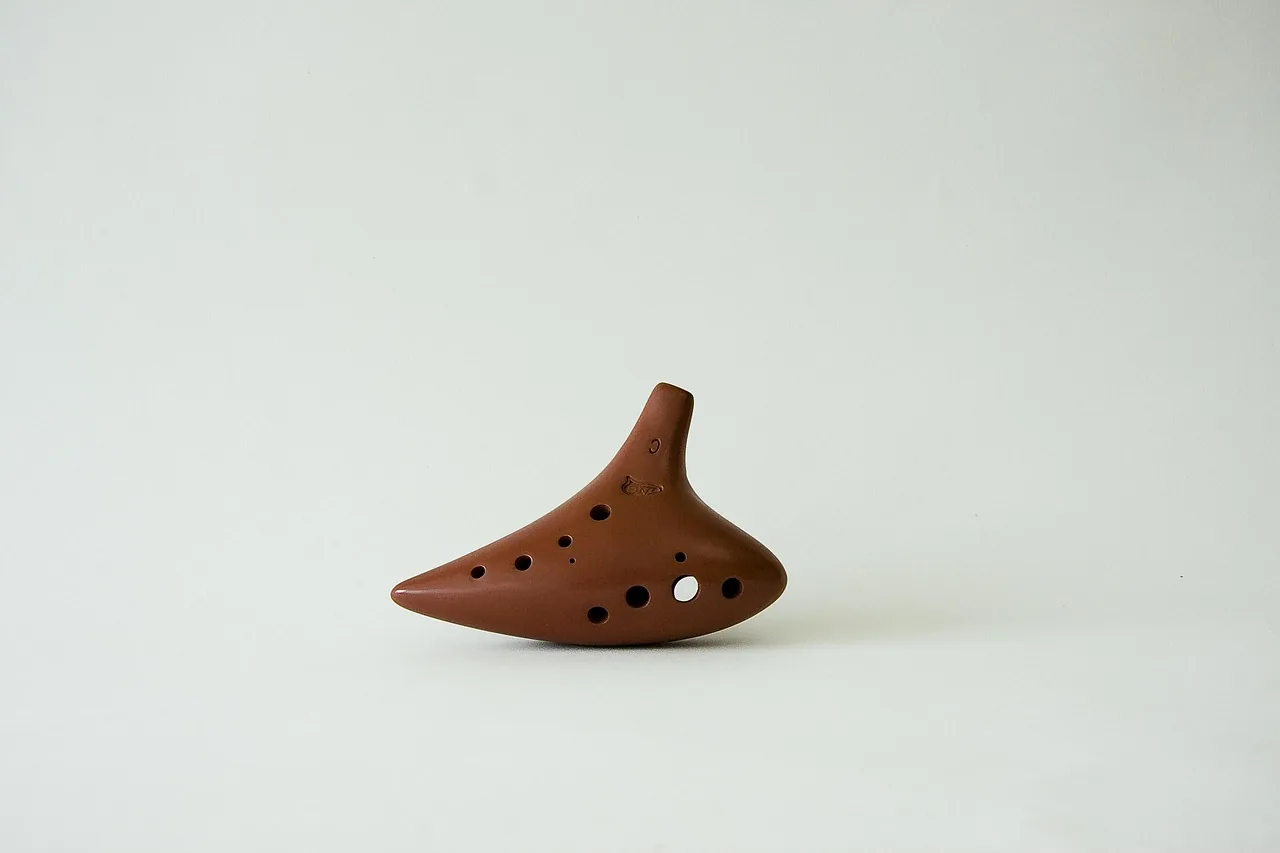
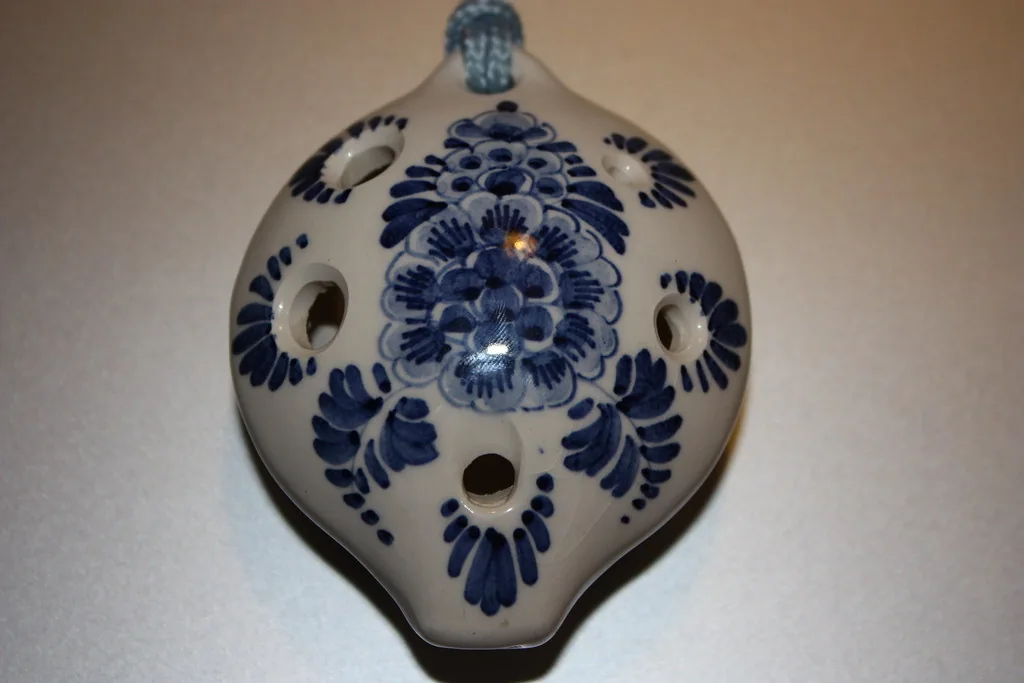
Materials vary by model: ceramic, terracotta, porcelain, wood, metal, bone, or plastic. They change how the instrument feels and how durable it is without changing the basic way it produces sound. These choices also matter for beginner ocarinas.
| Part | Main role | Useful detail |
|---|---|---|
| Mouthpiece | Receives the breath | Connected to the air channel |
| Fipple | Creates the vibration | Located inside |
| Holes | Control pitch | Covered by the fingers |
| Sound opening | Releases air | Helps project the sound |
The role of each chamber in the note range
Dividing the registers between chambers makes this instrument more flexible. Each chamber covers a specific range, depending on the desired pitch and air pressure. The ocarina can therefore follow a melody with fewer abrupt changes.
The lower chamber for low and middle notes
The lower chamber generally produces notes from low A to high D. Its holes control the low and middle notes. This range works well for the beginnings of melodies, accompaniments, and quiet passages.
The upper chamber for reaching high notes
The upper chamber takes over for high E, F, G, A, B, and C. The musician switches air channels and continues the phrase. This arrangement makes it possible to play pieces that exceed the range of a simple model.
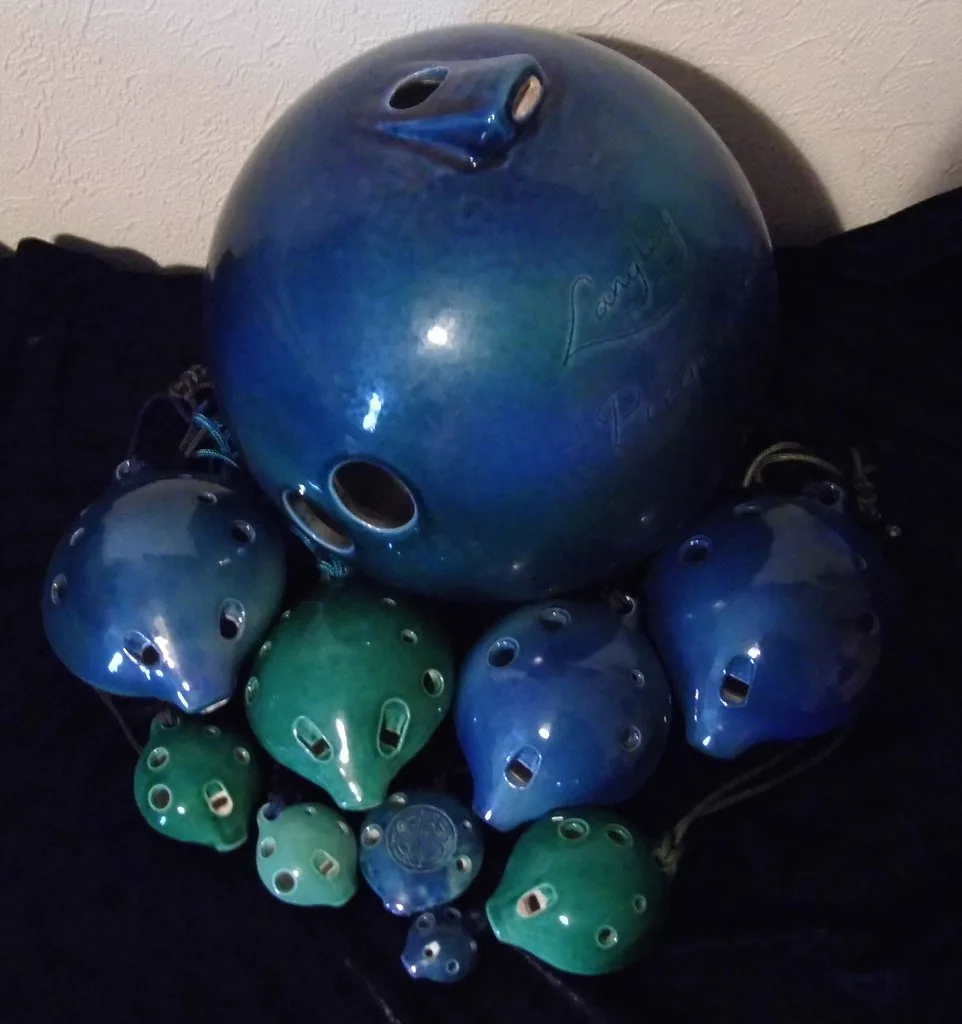
The second chamber therefore extends the range without necessarily improving every note. Ocarinas are also classified by register: soprano, alto, tenor, or bass. The choice depends on the overall pitch desired, not just the number of holes.
| Range | Main notes | Musical use |
|---|---|---|
| Lower | Low A to high D | Low and middle register |
| Upper | High E to high C | High register |
| Overall register | Alto or tenor | Overall tone |
How to position your fingers and hold a double ocarina
To hold the instrument steadily, the player places the left thumb over the single hole beneath the hand. The right thumb mainly supports the instrument. This position frees the other fingers and reduces fatigue while playing.
Locate the holes before playing. The lower group controls the low notes. The upper group controls the high notes. Each section works almost like a small independent ocarina. This helps the player remember each area without confusion.
- Keep your fingers relaxed and cover each opening with a fingertip.
- Try several angles to find a comfortable position.
- Begin the scale using the lower holes, then add those for the high register.
- Practice slowly to remember the movements and hand position.
The model’s size and the player’s hand shape affect the grip. There is therefore no single perfect method. A wrist strap can help secure the ocarina while moving, especially if it has a hole near the mouthpiece. A relaxed grip makes each transition more precise.
How to blow into the right chamber
The ocarina calls for calm, well-directed breath. Each chamber has its own air opening. The musician places their lips on the mouthpiece, then directs the airflow toward the chosen passage.
Direct air into one chamber at a time
The air channel, fipple, and chamber form a passage inside the instrument. Blowing into both passages at once often creates unstable or shrill sounds.
- Start with the lower chamber, using a gentle, steady breath.
- Pay attention to volume: an ocarina produces around 70 decibels, depending on its size and how hard you blow.
- Then try the upper chamber. High notes respond quickly to changes in pressure.
- Keep your lips still and adjust your breath rather than your finger position.
Good control of the instrument produces a better sound. Cover each hole without tension and check the position of your fingers over the holes before each attempt. The ocarina’s sound will become steadier. You can then approach melodies with more confidence.
Learning to switch between chambers
Moving between registers becomes easier with a short routine. This exercise helps you play pieces with a wider range while keeping the melody flowing. A slow metronome helps the ocarina player maintain a steady rhythm.
Practice transitions with a progressive scale
Start with a C major scale across two octaves. The lower chamber covers notes from low A to high D. Then switch to high E and continue up to high C on the upper chamber.
- Repeat the move from D to E without speeding up.
- Coordinate your breath, fingers, and lip position.
- Increase the tempo only after several accurate attempts.
Keep your breath and intonation steady
Blow gently into the mouthpiece. Constant pressure improves intonation and makes the sound clearer. This exercise also develops muscle memory.
Avoid unstable and shrill sounds
Never blow into both passages at the same time. Blowing too hard produces shrill sounds. To expand your repertoire, try melodies from The Legend of Zelda: Ocarina of Time, released in 1998. You can also explore the advantages and limitations of extended-range models.
Choose a model suited to your skill level and repertoire
Your choice mainly depends on your skill level, comfort, and preferred style of music. For beginners, an alto is a reliable choice. Its range makes early exercises easier and suits many common pieces.
Before buying, read this guide to choosing your first ocarina. It helps you compare size, weight, and material according to how you plan to use the instrument.
- Ceramic offers a soft sound but needs careful handling.
- Wood feels warm to the touch and has a comfortable weight.
- Plastic withstands knocks better and is suitable for travel.
- A tenor produces lower notes, while a soprano favors higher ones.
A model with 12 holes is not necessarily easy to handle. Coordination between registers remains essential. For a wider repertoire, choose a range that reaches high C.
The Instruments du Monde store offers more than 50 models. This variety lets you compare instruments designed for learning, performance, or collecting. A suitable model makes playing the ocarina more enjoyable.
| Player | Recommended choice | Main advantage |
|---|---|---|
| Beginner | Plastic alto | Comfort and durability |
| Regular player | Ceramic alto | Rich tone |
| Low-range repertoire | Wooden tenor | Deep notes |
Conclusion
The ocarina is a compact, two-chamber wind instrument. Its range extends from low A to high C. The lower chamber produces low and middle notes. The upper chamber covers the high register.
Calm breath and gradual transitions keep the notes steady. This model lets you play pieces with a wider range and render melodies accurately. Practicing a C major scale across two octaves helps players build confidence.
The choice between an alto and a tenor depends on skill level and repertoire. Ceramic, plastic, and wood each feel different. Ocarina players can choose according to their preferences and intended use.
Since the creation of its modern form, the ocarina has grown in popularity around the world. This page helps people who want to discover the instrument. Regular practice also makes each stage of learning easier.