

Goal: this guide helps you make the right piano choice by clearly explaining the range, its models and their benefits for players.
Since the YP-40 of 1983, this range has remained a benchmark among premium console digital pianos. The CLP, CSP and CVP series aim to give the keyboard and keys a feel close to that of an acoustic piano.
The new CLP-800 generation (CLP-825/835/845/875/885 and GP 865/895 models) brings GrandTouch actions, advanced sound modelling and multidirectional sound projection.
This article provides an overview of the range, the essential criteria for making the right choice, recommendations by skill level and the practical benefits in terms of quality and playing experience.
To trace the range’s development and discover its landmark series, read the history of Clavinova.
Why choose a Yamaha digital piano today?
For anyone seeking a reliable instrument that can support their progress, a Yamaha digital piano offers an excellent balance of touch, sound and features.
Quality: weighted actions and concert grand piano samples (CFX, Bösendorfer) provide a realistic result. A recommended polyphony of 128 to 256 notes lets you play richly textured pieces without notes dropping out.
Practical for everyday use, this type of piano makes playing easier with adjustable volume, a headphone connection, built-in recording and learning apps such as Smart Pianist.
“Quality and versatility for every skill level.”
Features and budget: from the entry-level P-145 to premium console models, there are instruments for every budget and need. As of January 2025, the range includes the latest developments: the new CLP-800 series, Bluetooth and modelling.
- Key criteria: weighted action, polyphony, samples and practice features.
- Sounds: varied voices for exploring styles beyond piano alone.
To make the right choice, first define how you will use the instrument (practice, performance or leisure) and set your budget. For more on recent models, explore the new CLP-700 models.
Clavinova: Understanding Yamaha’s Range
Combining realism with advanced features, the range has three main series designed to meet different needs.
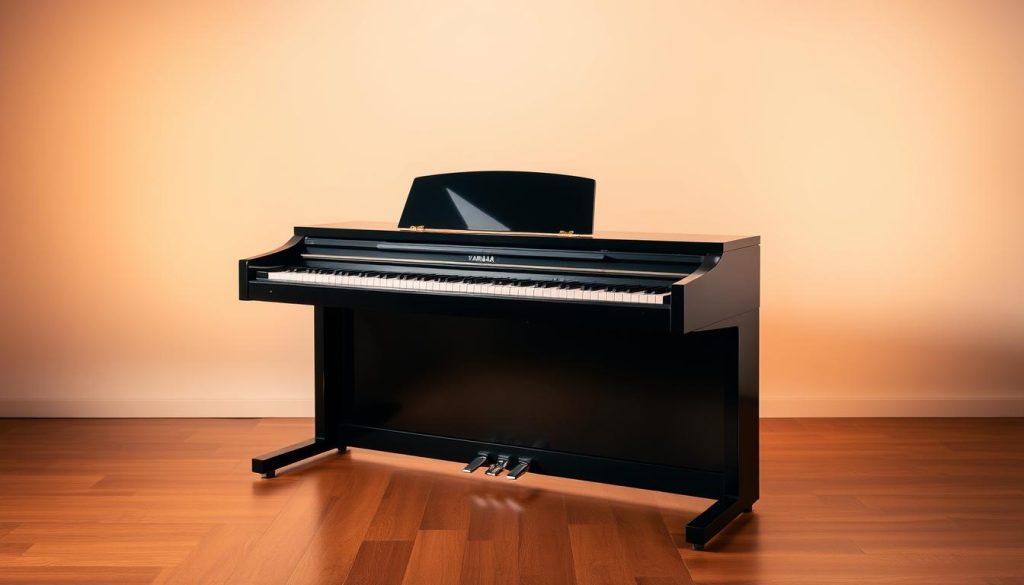
CLP series — realism and touch
CLP‑800 includes models from the CLP‑825 to the CLP‑885, along with the GP versions. The keyboard improves from one model to the next: GrandTouch‑S, wooden keys and then counterweighted GrandTouch on the flagship model.
Sounds include samples of the CFX and Bösendorfer Imperial, with binaural listening. Amplification and sound projection improve across the range to provide an experience close to playing a grand piano.
CSP series — guided learning
The CSP models (255/275/295) focus on Smart Pianist and an illuminated guide. They are ideal for progressing without sheet music, with GrandTouch‑S keyboards on higher-end versions.
CVP series — all-in-one arranger
The CVP models combine a realistic piano, accompaniments, styles and vocal features. They offer a creative, family-friendly way to play “with a band” at home.
November 2024–2025 — key developments
The CLP‑800 update brings VRM and Grand Expression modelling, multidirectional sound projection, Bluetooth and improved pedals. The grand-shaped GP versions add visual presence and an acoustic character.
To compare options for your budget and needs, read our guide to choosing a digital piano.
Essential criteria for making the right choice
The right criteria help you choose a digital piano suited to your space and skill level.
Touch and action
Compare the actions: Graded Hammer, GH3, GrandTouch‑S and GrandTouch respond quite differently. Try them to judge the feel and comfort.
If you want to make serious progress, look for a touch close to that of an acoustic piano.
Concert piano sounds
Prioritize Yamaha CFX and Bösendorfer Imperial samples. Through headphones, these binaural sounds provide natural immersion.
Polyphony, amplification and sound projection
Aim for polyphony of 128 or 256 notes for dense textures.
Multiway amplification and multidirectional sound projection better recreate the presence of a piano in the room.
Features and connectivity
Useful features include a metronome, MIDI/audio recording, Bluetooth audio/MIDI and Smart Pianist. Check how the pairing system works with your smartphone.
“Always try the keyboard and listen to its sounds in your room before deciding.”
Design, size and budget
Choose a console or portable piano according to the space available. The finish and music rest affect both everyday use and appearance.
Balance price against your priorities: touch, tone and the keys matter more than extra features if your budget is limited.
| Criterion | Priority | Recommendation |
|---|---|---|
| Touch / action | High | GH3, GrandTouch‑S or GrandTouch, depending on skill level |
| Sounds | High | CFX and Bösendorfer with binaural sound |
| Polyphony / amplification | Medium | 128 to 256 notes, multiway amplification |
| Connectivity | Medium | Bluetooth, USB, Smart Pianist |
To compare models and prices, consult our practical guide to Yamaha pianos before trying them in a store.
Clavinova, Arius, P series and Portable Grand: the differences
To compare your options, group the range by purpose: realism and immersion, a compact console, portability or arranger versatility.
Premium models: realism, expression and immersion
Clavinova remains a benchmark for a sound and feel very close to those of an acoustic piano. GrandTouch‑S and GrandTouch actions provide precise touch and greater dynamic control.
Benefit: CFX and Bösendorfer sounds, multidirectional amplification and advanced features for recording and expression.
Arius YDP: compact consoles and controlled costs
The Arius series (YDP‑145 ≈ €860, YDP‑165 ≈ €1,150) is for players who want a console piano at a manageable price.
GH/GH3 actions offer a touch suited to beginners and developing pianists.
P series: portability for performances and rehearsals
The P models (P‑145 ≈ €400, P‑225 ≈ €555, P‑525 ≈ €1,699) emphasize mobility.
The P‑525 offers up to 256 notes of polyphony and connectivity suited to lessons, rehearsals and concerts.
Portable Grand (DGX): accompaniment and creativity
The DGX‑670 (≈ €798; ≈ €979 with stand and pedals) is a versatile arranger.
It includes accompaniments, a microphone input and USB recording to make composing and recording easy.
“First decide what matters most to you: touch, mobility, budget or creativity.”
- Price and value: Arius and the P series cover entry-level and midrange needs; premium models emphasize realism.
- Playing feel: the keyboard and keys make the difference to musical expression.
- Features: check recording, Bluetooth and microphone inputs against your needs.
| Type | Use | Strengths | Indicative price |
|---|---|---|---|
| Premium | Studio, concert, demanding home use | GrandTouch-S/GrandTouch, CFX/Bösendorfer sounds, immersion | CLP‑835 to CLP‑885 (premium range) |
| Compact console | Starting or progressing at home | GH/GH3, understated design, good value | YDP‑145 ≈ €860, YDP‑165 ≈ €1,150 |
| Portable | Performance, lessons, rehearsals | Lightweight, connected, high polyphony (P‑525) | P‑145 ≈ €400, P‑525 ≈ €1,699 |
| Arranger (Portable Grand) | Creativity, accompaniment, recording | Accompaniments, microphone, USB recording | DGX‑670 ≈ €798 (≈ €979 with accessories) |
Recommendations by skill level and use
A well-chosen piano encourages regular practice and faster progress.
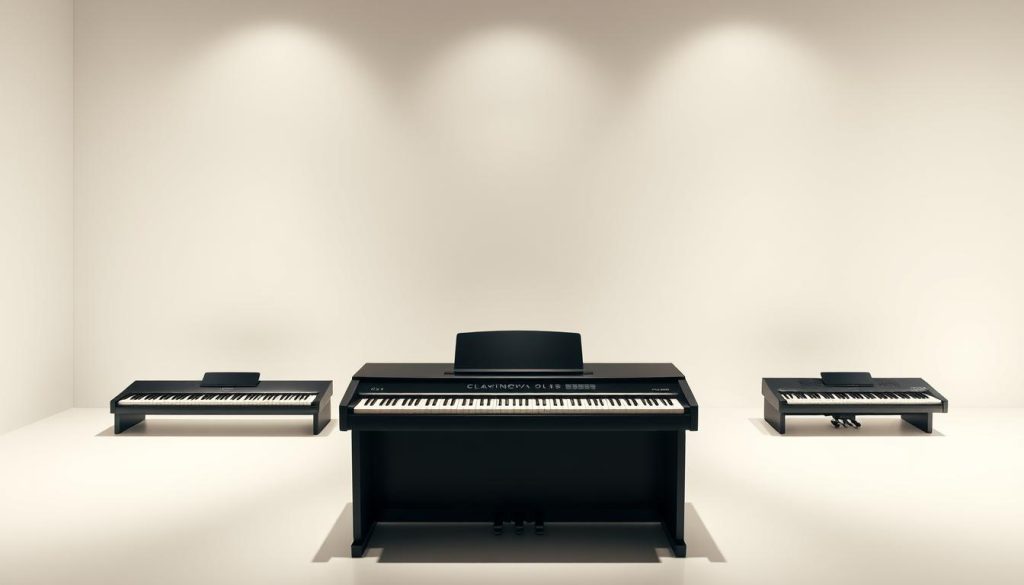
Beginners
To get started, choose a balanced, affordable instrument. The YDP‑145 (around €860) is realistic and compact, making it ideal for an apartment.
The YDP‑165 (around €1,150) offers a GH3 action and more room to grow. Among portable models, the P‑145 (around €400) remains an economical choice; the P‑225 (around €555) offers more polyphony.
Intermediate players
CLP‑835 (≈ €1,700 to €1,800) represents a substantial step up in quality. Its GrandTouch‑S keyboard and binaural CFX/Bösendorfer sounds provide an immersive experience.
It is an excellent step before considering even more advanced actions.
Advanced pianists and performers
For concerts, prioritize mobility and power. The P‑525 (around €1,699) combines wooden keys, 256-note polyphony and extensive connectivity.
If realism and sound projection are your priorities, the premium models (CLP‑845/875/885) meet demanding requirements for sound and amplification.
- A sound choice: prioritize touch and polyphony for an instrument that will serve you well over time.
- Uses: apartment: headphones; stage: outputs and durability; studio: audio/MIDI.
- Accessories: a sturdy stand, good headphones and a pedal unit improve everyday playing.
“Above all, choose the instrument that makes you want to play every day.”
A technical look at the new CLP-800 series
The CLP-800 series takes the mechanical and sonic realism of digital pianos to a new level.
Actions and keyboard: the GrandTouch‑S and GrandTouch actions have been refined. Weight, key travel and materials have evolved. A three-sensor algorithm and a more powerful processor provide more consistent key travel and finer control under the fingers.
Wood and keys: depending on the model, increased use of wood and a longer pivot point bring the feel closer to a grand piano. The flagship model adds counterweights for better dynamic response.
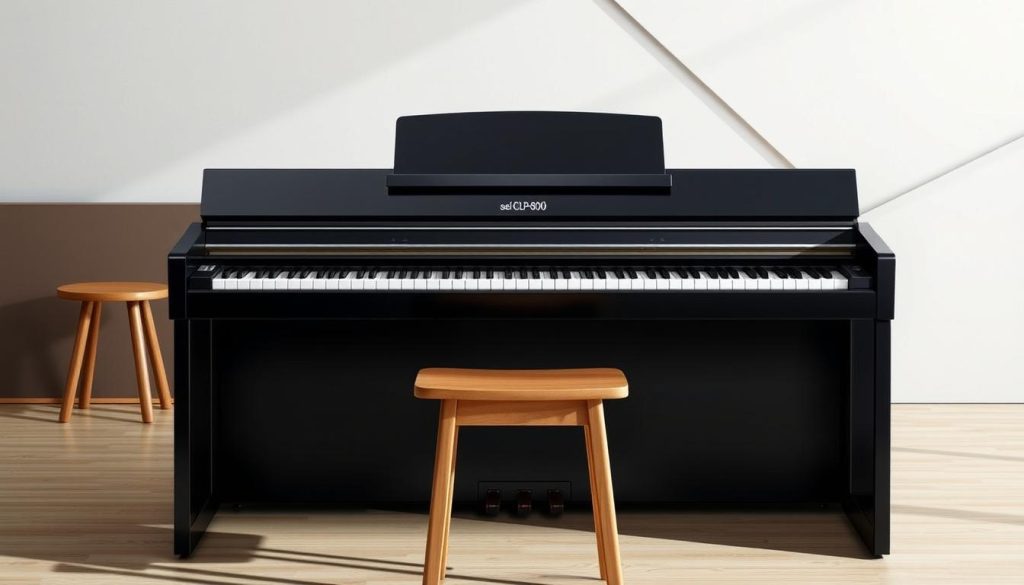
Sound engine and modelling
The sound generator includes optimized versions of VRM and Grand Expression. Resonances respond more closely to the nuances of playing.
New samples expand the selection: C7X, Chillout and Lo‑Fi sounds, alongside established concert grands such as the Bösendorfer Imperial.
Amplification and sound projection
The system uses multiway, multidirectional sound projection to create a stronger presence in the room.
On the flagship model, spruce cones and horns improve sound projection and warmth.
Pedals and ergonomics
The pedal unit uses advanced pivot mechanics and springs to simulate the resistance of grand piano pedals.
The design draws on the CX series: a wider music rest from the CLP‑845 upward, discreet panels and Bluetooth connectivity for recording and pairing.
| Component | Key improvement | Benefit for the player |
|---|---|---|
| Action | GrandTouch‑S/GrandTouch, three sensors | More consistent touch, better dynamic precision |
| Sounds | VRM, Grand Expression, C7X | Natural resonances, greater expressiveness |
| Amplification | Multiway system, horns, spruce (CLP‑885) | Immersive projection, stronger presence |
| Pedals / ergonomics | Advanced pivot, wider music rest | A feel closer to a grand piano, easier score reading |
“Technical advances bring the digital piano experience closer to playing a concert grand.”
Price guide and perceived value in France
To set a realistic budget, here is a summary of prices observed in France for different levels of use. These figures help you compare options and anticipate the total cost of the instrument and accessories.
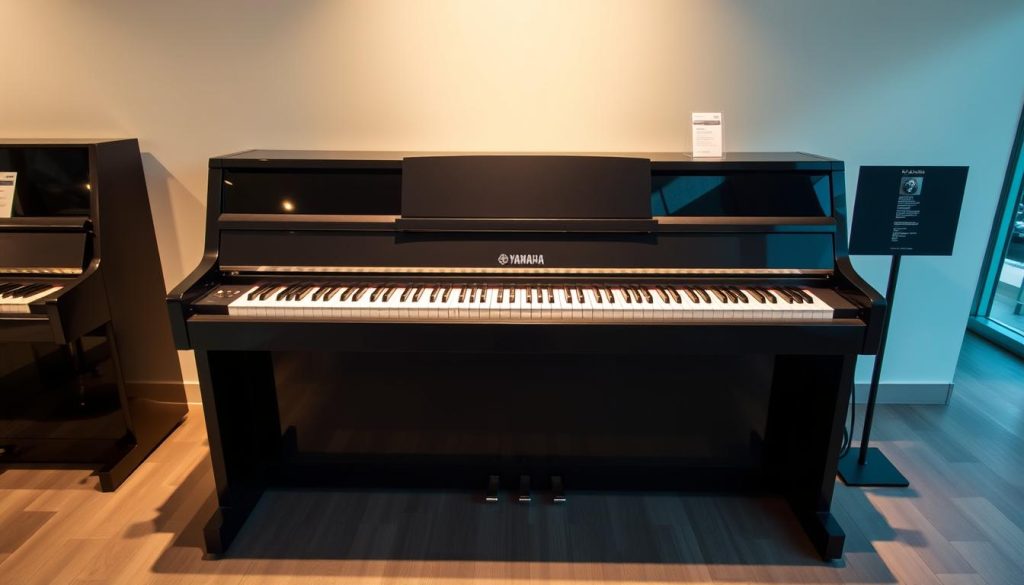
Entry-level and midrange models
At entry level, the P‑145 (around €400) and YDP‑145 (around €860) provide an affordable introduction to digital pianos. They offer a good touch and the essential features beginners need.
In the midrange, the YDP‑165 (around €1,150) and P‑225 (around €555) offer more features, polyphony and sounds. The P‑525 (around €1,699) provides strong performance for portable use and the stage.
Premium digital models
The CLP‑835 to CLP‑885 models (around €1,690 to €4,730, depending on the version) and the GP versions occupy a clearly higher price bracket. Here, keyboard quality, sound reproduction and amplification account for the price difference.
- Perceived value: as the price rises, the feel comes closer to that of an acoustic piano.
- Allow extra room in your budget for headphones, a bench, a pedal unit or a stand: these purchases improve everyday use.
- At similar prices, compare a console piano (YDP) with a portable model (P) according to your need for mobility.
| Segment | Examples | Indicative price |
|---|---|---|
| Entry level | P‑145, YDP‑145 | ≈ €400 / €860 |
| Midrange | YDP‑165, P‑225, P‑525 | ≈ €555 to €1,699 |
| Premium | CLP‑835 to CLP‑885, GP | ≈ €1,690 to €4,730 |
“Matching price, skill level and intended use supports a lasting purchase and better resale value.”
Yamaha hybrid alternatives for taking the next step
Hybrid instruments bridge acoustic touch and digital flexibility. They retain a real action while adding modern features for practice, recording or entertainment.
Silent Piano (SC3 / SH3)
Silent Piano lets you play through headphones while retaining the acoustic action. The SC3 system offers 10 sounds on B1/B2/B3/GB1K models. The SH3 adds 25 sounds, including the CFX and Bösendorfer Imperial, for highly immersive binaural listening.
TransAcoustic (TC3 / TA3)
TransAcoustic uses the soundboard to project digital sounds. Volume control retains an acoustic character, while resonance in the wood strengthens the sensation of playing a grand piano.
AvantGrand and Disklavier
AvantGrand (NU1X, N1X, N3X…) combines a grand piano action with compact electronics. It is an excellent option for the home or studio.
Disklavier offers ENSPIRE PRO/ST: high-resolution recording, automated playback and a concert library. It brings the concert experience into the home.
| System | Key feature | Compatibility |
|---|---|---|
| SC3 | 10 sounds, headphone playing | B1 / B2 / B3 / GB1K |
| SH3 | 25 sounds, CFX and Bösendorfer Imperial | U / YUS / SE / SX / CX / GC |
| TransAcoustic | Digital sound projected through the soundboard | YUS / U / CX / GC |
| AvantGrand | Acoustic action and electronics | NU1X, N1X, N2, N3X |
| Disklavier ENSPIRE | High-resolution recording and reproduction | CFX / CF / CX / GC / GB |
“These hybrid options suit demanding pianists seeking acoustic touch, silent playing and advanced features.”
To learn more about silent pianos and their benefits, read our guide to silent pianos.
Quick tips to improve your playing experience
Good settings and suitable accessories make a considerable difference to how the keyboard feels. These adjustments make playing easier and help you progress without changing the instrument.
Choose the right accessories
Stand: choose a stable stand set at the right height to protect your back and posture.
Pedal unit: choose a compatible three-pedal unit to make full use of the instrument’s expressive potential.
Headphones: a comfortable pair helps prevent fatigue and lets you hear details when recording.
Set up Smart Pianist and Bluetooth
Smart Pianist lets you personalize the sound (VRM, voicing and tuning). Record your performances and track your progress through a clear interface.
Pair your smartphone over Bluetooth to play music through the speakers and perform along with accompaniment tracks.
- Metronome and recording: use them to assess rhythm and expression during every session.
- Velocity curves: adjust the keyboard response so its touch suits your technique.
- Positioning: place the instrument where you can benefit from multidirectional sound projection, if available.
Finally, establish a short, regular practice routine using the metronome and recording features. Dust the keyboard and keys, and install firmware updates to maintain the instrument’s quality and stability over time.
“With these settings and accessories, you improve your comfort, progress and the instrument’s longevity.”
Conclusion
Ultimately, the best piano is the one that makes you want to play every day.
The range offers clear options: CLP for the piano-playing experience, CSP for learning and CVP for accompaniment. Depending on your needs and budget, compare actions, sounds and sound projection to make the right choice.
There are options at every price, from the P‑145 to premium models. To discover the CLP‑800 series and its advances in action and modelling, explore the features of the Yamaha CLP‑800 digital piano.
Listen and try the instrument in a realistic setting. Prioritize touch and sound quality if your music calls for expressive playing. These qualities will help make your keyboard a lasting musical companion.