
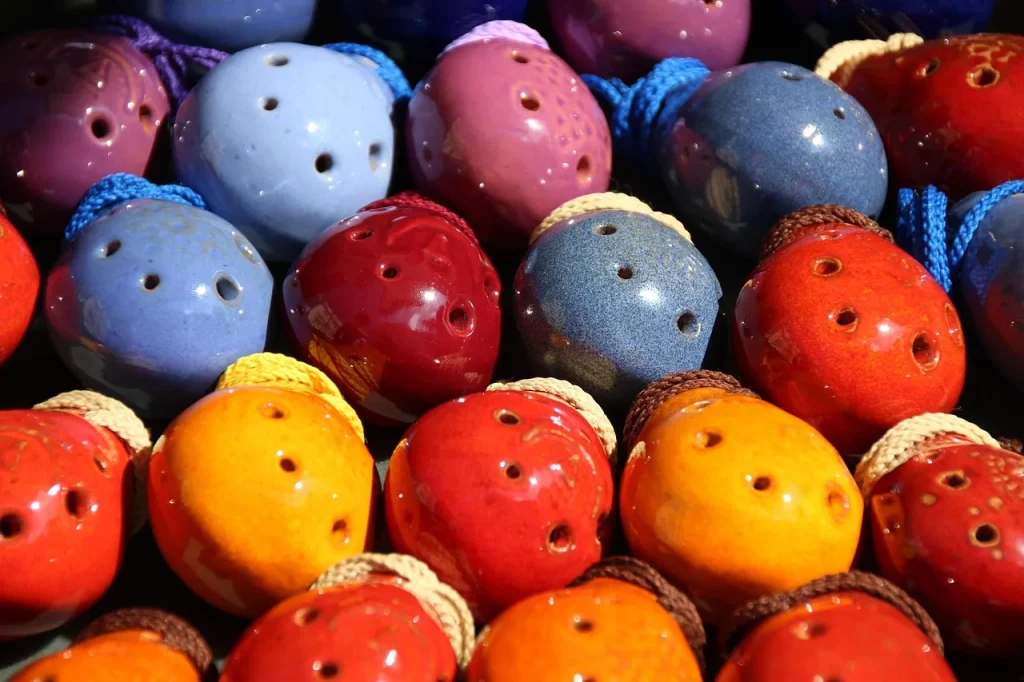
A small musical instrument, the ocarina has a globular shape. This wind instrument produces sound when the player blows into an internal chamber rather than a long tube. To understand the globular flute better, see this guide to the ocarina.
Its history extends far beyond Italy. Traces of globular instruments dating back 12,000 years have been found in several parts of the world. In Central Africa, a clay whistle dating back 30,000 years offers a striking clue to early ways of making sound.
In 1853, Giuseppe Donati designed a modern version in Budrio, with a compact body suited to playing melodies. This marked the official emergence of its present name, while its roots remain much older.
Several cultures developed comparable forms in Africa, Asia, Europe and Mesoamerica. Blowing creates a vibration inside the chamber. The ocarina therefore belongs to the wind instrument family, with a gentle, clear and sometimes almost magical voice.
Ocarina: Definition, Origins and How This Instrument Works
Its enclosed body acts as a small resonating chamber. This wind instrument has no long tube. Its egg-shaped, transverse or pebble-like form distinguishes it from a conventional flute. An ocarina can look much like a little goose, especially in some older models.
A Wind Instrument with Distinctive Shapes
Each model has a particular range. The number and position of its holes affect which notes are available. A beginner can choose a simple model, while an experienced musician may seek a wider range. This introduction to the ocarina also provides useful background.
Terracotta, Plastic and Other Materials
Terracotta retains a warm sound often associated with clay instruments. Plastic appeals because it is durable, lightweight and easy to maintain. Wood, stone, ceramic and porcelain versions aim for particular sound qualities.
The choice therefore depends on the player’s level, musical style and setting. A sturdy model is practical for learning. For collectors, each material offers its own texture, appearance and sonic character.
The Ocarina’s Ancient Origins Across Cultures
Long before its modern version, the ocarina appeared in several forms in ancient societies. These objects show that breath was already used for music, rituals and the transmission of culture.
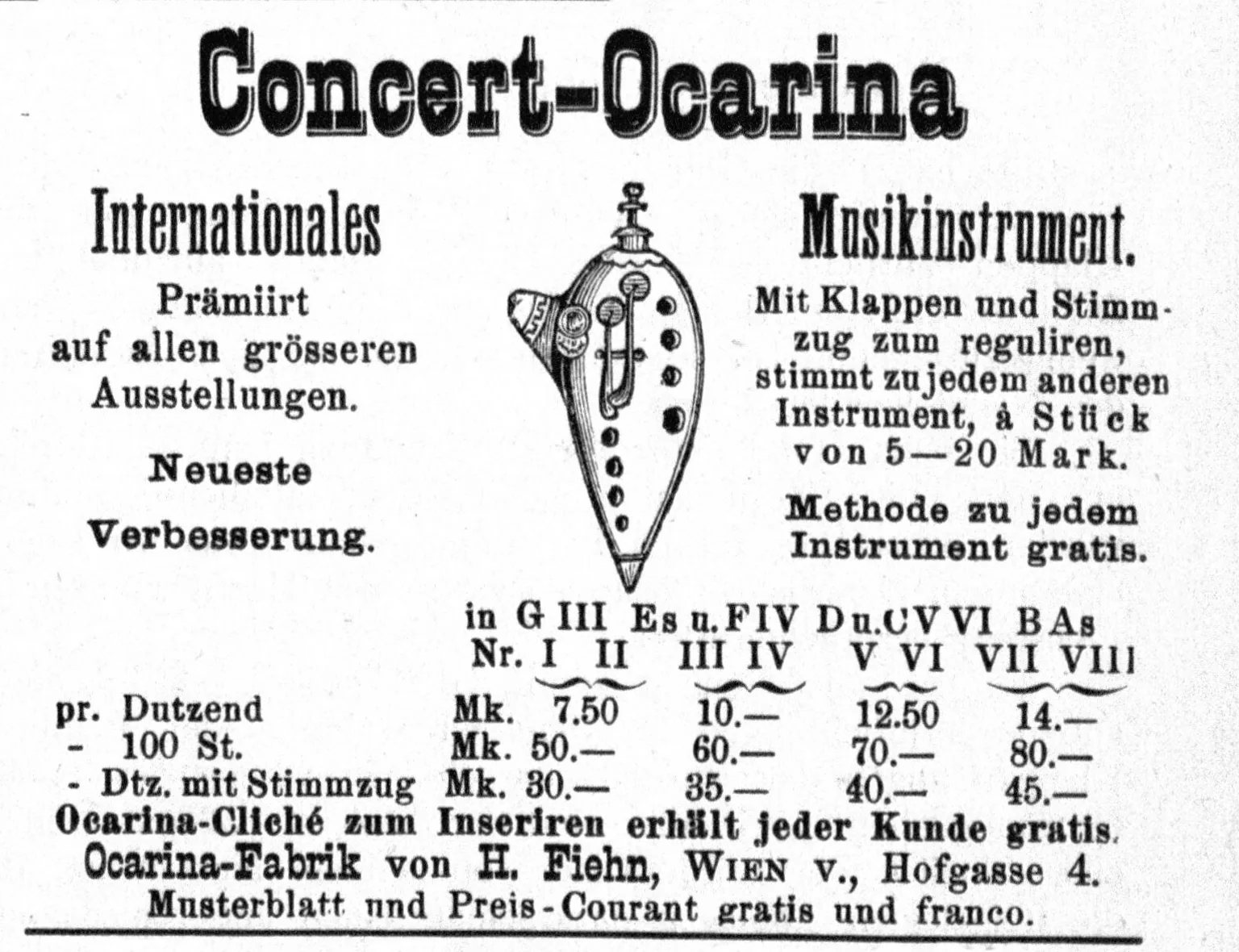
Globular Flutes in Africa, the Americas and Europe
A whistle from Central Africa dates back 30,000 years. The oldest known Egyptian globular flutes date back 12,000 years. In Colombia, the Chibcha made clay models, sometimes in gold, before similar instruments spread among the Maya, Inca and Aztec peoples.
The Chinese Xun and Related Forms
The Chinese xun has been used for more than 7,000 years. Players blow directly across its opening, unlike the mouthpiece of some ocarinas. In Europe, the Runik ocarina measures 8 centimetres, has 4 holes and is more than 8,000 years old. The one from Liubcova Orniţa in Romania dates back more than 5,000 years.
Musical, Ritual and Funerary Uses
“Breath gives the earth a voice.”
These instruments accompanied ceremonies, funerary rites and melodic playing. The German gemshorn, which appeared in the 15th century, works along similar lines. Explore the origins of the ocarina for a closer look at this history.
| Region | Date | Use |
|---|---|---|
| Africa | 30,000 years ago | Ancient whistle |
| China | 7,000 years ago | Ritual xun |
| Europe | 8,000 years ago | Runik flute |
The Birth of the Modern Ocarina with Giuseppe Donati
A major turning point came after 1527. Hernán Cortés arranged for Aztec and Maya musicians to perform before Charles V. Their instruments inspired Europeans before the model made in Budrio appeared.
From an Egg Shape to Budrio’s Little Goose
In 1853, Giuseppe Donati, a 17-year-old Italian brickmaker, shaped a modern terracotta ocarina. Its outline resembled a little goose. The name comes from a Bolognese dialect: ucarèina means “little goose.” This development turned ancient precedents into a fully fledged musical instrument.
Holes, Notes and the Expanding Scale
His model had ten holes. Musicians could use their fingers to play notes precisely. In 1928, Takashi Aketagawa added two upper openings. The 12-hole model then offered a wider range.
Its Spread Across Europe and the World
In 1864, Giuseppe Donati founded the Gruppo Ocarinistico Budriese. Through this group, the ocarina spread across Europe and then the world. American soldiers played it during wars. Schools began teaching it in the 1950s. In 1986, Nomura Sojiro popularised it in Japan. A 1998 video game further increased its fame. You can also explore the history of the ocarina.
How the Ocarina Works and How to Learn to Play It
Learning starts with a simple action: directing air into the sound chamber. Steady breathing makes the air vibrate, while the fingers control the pitch. To explore this principle further, see this guide to how it works.
The Role of the Mouthpiece, Breath and Holes
The mouthpiece directs air into the cavity. A steady breath improves intonation. Each hole must be covered without letting air leak out. Blowing too hard raises the pitch; a weaker breath gives the sound a darker quality.
“Steadiness turns an uncertain breath into a musical phrase.”
A model in C suits beginners well. It makes fingering, reading sheet music and learning first pieces easier. Practise for ten minutes a day: long notes, short scales and slow changes between notes. Playing simple notes then helps you follow a recording or play with a group.
Double- or triple-chamber models extend the range over several octaves. Some even let players perform a melody with accompaniment. Terracotta offers a warm voice; plastic withstands knocks better.
| Choice | Main advantage | Recommendation |
|---|---|---|
| Model in C | Accessible fingering | First purchase |
| Double chamber | Extended range | Advanced player |
| Plastic | Easy maintenance | Playing on the go |
Conclusion
Distinctive in shape, the ocarina connects very ancient origins with a global history. Africa, Asia, Europe and Mesoamerica have all shaped its identity. This study of Mesoamerican examples reveals the richness of this musical culture.
Giuseppe Donati created the modern version in 1853. Takashi Aketagawa then added two holes in 1928, making the twelve-hole model an important development. Compact and light, the instrument remains accessible through gradual learning, good sound quality and its small size. Its goose-like outline is as appealing as its range of sounds.
In 1998, The Legend of Zelda: Ocarina of Time introduced the ocarina to people around the world. To continue exploring it, practise with sheet music, play varied pieces, join a group or play alongside other instruments. A few minutes each day are enough to keep this musical instrument alive across Europe and beyond.