
In 1998, The Legend of Zelda: Ocarina of Time arrived on the Nintendo 64. The video game left a lasting impression with its world, puzzles, and Koji Kondo’s music. Its darker themes gave depth to Link’s journeys and the temples he explored. A review of the game also looks back at its enthusiastic reception.
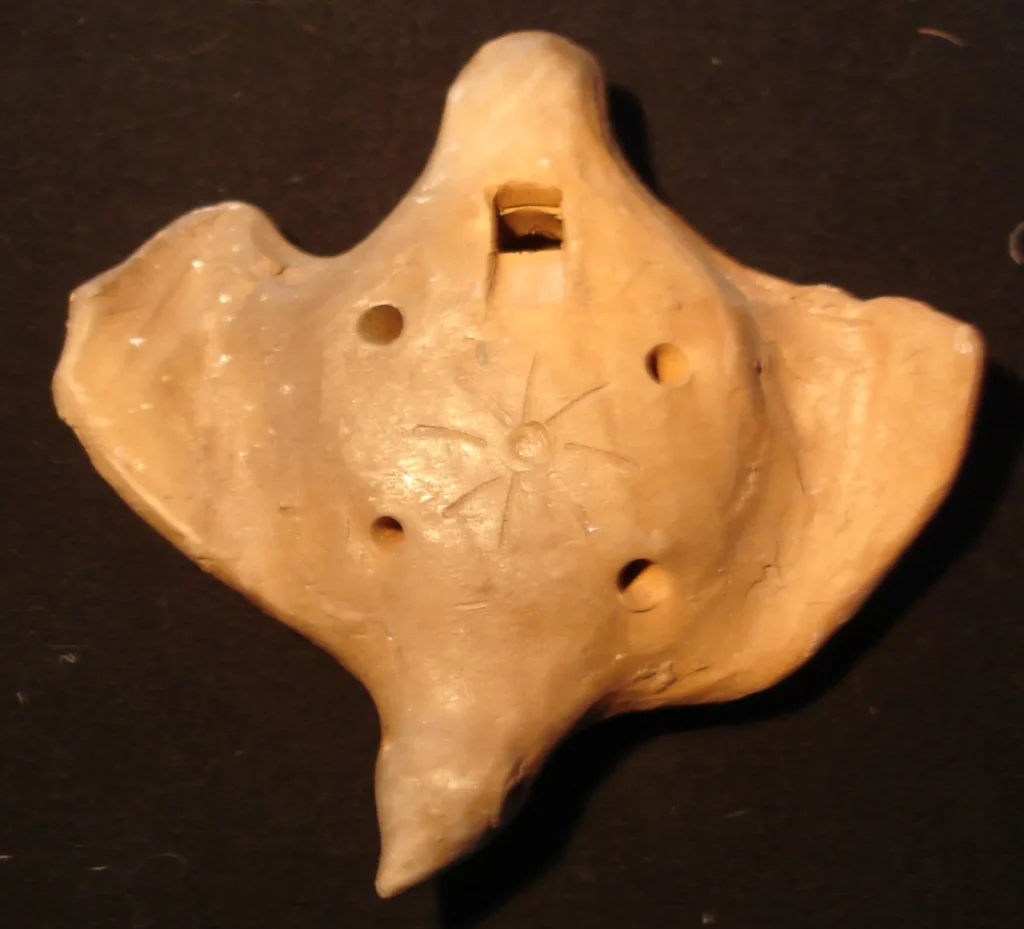
Yet the ocarina did not originate on a screen. Its origins stretch back thousands of years across the Americas, Europe, and Asia. This small instrument can be egg-shaped, shaped like an animal, or resemble a bird. It crossed continents before reaching a wide audience through Nintendo’s console.
Emmanuelle Aymès emphasizes how easy it is to use: simply blow into it and cover a few holes. A beginner can soon produce gentle sounds and play melodies. This article traces the instrument’s journey from ancient object to a symbol at the heart of players’ imaginations. The sections below also explain how it works and its place in video games.
The ocarina’s ancient origins across continents
Long before consoles existed, people made objects capable of producing gentle music. These discoveries show that the ocarina has very ancient origins connected to earth, breath, and ritual.
Vessel flutes in Mesoamerica and Asia
Between 500 BCE and 1536, the Chibcha people of present-day Colombia made examples from clay, terracotta, and gold. In Asia, the Chinese xun has been used for more than 7,000 years. Related forms also appeared in China, Japan, and Korea. This variety shows the importance of wind instruments to peoples around the world.
Prehistoric finds in Africa and Europe
A 30,000-year-old clay whistle was discovered in Central Africa. The oldest known Egyptian vessel flutes date back about 12,000 years. In Europe, the Runik ocarina measures 8 centimetres and is more than 8,000 years old. A similar example found in Romania is more than 5,000 years old.
The Italian revival led by Giuseppe Donati
In 1853, Giuseppe Donati refined the modern form in Budrio. At 17, he made his first ten-hole model. The name comes from ucarèina, meaning “little goose” in a Bologna dialect. The Gruppo Ocarinistico Budriese was founded in 1864. You can also read this account of its history.
How does this distinctive-sounding instrument work?
Its enclosed shape sets the ocarina apart from a straight flute. A resonant chamber amplifies the player’s breath, making it possible to produce a sound quickly, even as a beginner.
The role of the mouthpiece, windway opening, and resonance
Air enters through the mouthpiece, then travels along a small channel to the windway opening. It strikes the edge, a narrow strip of clay cut at an angle close to 45 degrees. This interruption of the airflow creates the vibration that produces sound.
Pitch then depends on which holes are open or closed. Their arrangement lets the player produce different notes with steady breath pressure.
- Breath enters through the mouthpiece.
- The edge turns the airflow into vibration.
- The chamber amplifies the sound.
How it is made also affects the playing experience. Ceramic offers a consistent response, while wood gives a warmer tone. Stone, bone, and bark can also be used. A large model produces lower sounds; a small one favours higher notes. Among musical instruments, this simple design gives the ocarina a voice of its own.
| Part | Main effect | Example |
|---|---|---|
| Chamber | Determines pitch | Larger volume: lower sounds |
| Edge | Starts the vibration | Angle close to 45 degrees |
| Material | Changes the tone | Ceramic, wood, or stone |
Zelda Ocarina: Why Did This Instrument Become Iconic?
A game controller was enough to turn an ancient practice into a worldwide phenomenon. Released for the Nintendo 64 in 1998, The Legend of Zelda: Ocarina of Time gave the ocarina unprecedented visibility. Players take the role of Link and learn several songs to make progress, open passages, and save Princess Zelda.
Each melody accompanies a memorable moment. The notes evoke magic, travel, and time. The music creates a direct connection between action and emotion. You can also read an analysis of the game’s place in video game history.
Its appeal rests on three things:
- fingerings that are easy to remember;
- short, recognizable melodies;
- a small instrument tied to a heroic quest.
“Time becomes a melody that the player learns to master.”
Before this renewed interest, the recorder was more prominent because it was sturdy, inexpensive, and had a wider range. Giuseppe Donati’s legacy, however, goes much further back: the instrument’s name recalls the “little goose” that inspired it. In just a few years, Nintendo introduced a nineteenth-century instrument to a new generation. Its sounds then moved beyond the screen and into everyday music-making.
An accessible instrument that still appeals to musicians
Choosing a model depends on your experience, hand size, and preferred tone. Its ease of use appeals to beginners and experienced musicians alike.
The different models and materials available
Ceramic appeals to players for its traditional appearance and precise response. Lightweight, durable plastic works well for a first instrument. Wood offers warmer sounds and often comes in handcrafted shapes.
- The 12-hole model resulted from an improvement introduced by Takashi Aketagawa in 1928.
- Double- and triple-chamber versions extend the range across several octaves.
- Emmanuelle Aymès makes custom ocarinas to suit the desired scale and use.
These models meet different musical needs. Weight, size, and familiarity with the recorder can help guide your choice.
An easy start for playing your first melodies
Simply blow gently and cover the holes with your fingers. The first notes come quickly. To improve, consult this guide to reading ocarina tablature.
“A calm breath is enough to bring the first melodies to life.”
In Japan, Nomura Sojiro also popularized the ocarina with a composition created in 1986 for The Great Yellow River.
Conclusion
Millennia separate the ocarina’s earliest known forms from modern consoles. In Asia, its history stretches back more than 7,000 years, while Europe preserves traces more than 8,000 years old. In Budrio, Giuseppe Donati gave it its present form in 1853.
In 1998, The Legend of Zelda: Ocarina of Time had a decisive impact. The video game placed this small instrument at the centre of an adventure enjoyed around the world. Its melodies reached a wide audience and renewed interest in playing music.
Today, ceramic and plastic models suit beginners and experienced musicians alike. Light, expressive, and easy to play, the ocarina retains a place among musical instruments. Its story continues through the years, in music-making and video games.